
Category: Wellness & Beauty Trends

November 9, 2026

Looking for a Hydrafacial alternative? What DermaFuse does differently for winter skin

If you typed “Hydrafacial near me” into a search bar and landed here, you should know straight away that our office doesn’t offer it. What we do offer is a Hydrafacial alternative built on a different idea, and for skin that feels tight and dull once the heat comes on indoors, that difference is worth understanding before you book anything.

This guide compares the two treatments as fairly as we can. Both are good facials. They simply solve slightly different problems, and knowing which problem you have makes the decision easy.

Two facials, two different starting points

A Hydrafacial is a vacuum based treatment. A handpiece cleanses and exfoliates the skin, uses suction to lift debris out of pores, and then infuses hydrating serums. Many spas add extra steps such as a gentle peel or LED light, depending on the package. The appeal is easy to see: pores look clearer and the skin looks fresh the same afternoon.

The DermaFuse facial starts from the opposite end. Rather than pulling things out of the skin, it concentrates on getting active ingredients in. DermaFuse uses controlled electrical pulses that temporarily open tiny pathways in the outer layer of the skin, so a serum chosen for your skin can travel deeper than it would if you simply massaged it on at home. There are no needles and no suction.

That approach is why you may also hear it called an electroporation facial. The effect is temporary, and the skin returns to its normal state on its own, so it is not left open or raw.

Side by side

HydrafacialDermaFuse
Main actionCleanses, extracts with suction, then hydratesUses electrical pulses to push serums deeper
NeedlesNoneNone
Best known forClearing congested poresDelivering hydration and actives below the surface
Typical feelLight suction and cool serumsA mild tingling or tapping sensation
AfterwardFresh, glowing skinPlumper, calmer skin with mild redness for a few hours
Offered at Elite Women’s CareNoYes

If blackheads and clogged pores are your main frustration, extraction matters, and we will say so plainly during your visit. In that case we often talk about pairing DermaFuse with a series of V-IPL acne clearance sessions rather than relying on a facial alone.

If your skin feels dry, reactive, uneven in tone or simply tired, DermaFuse tends to be the better match.

Why winter changes the conversation

Cold air holds very little moisture. Indoor heating dries it out even further. Spend a winter in the northwest suburbs moving between frozen parking lots and overheated offices, and the outer layer of your skin loses water faster than it can replace it. The result is the familiar winter mix of flaking around the nose, makeup that clings to dry patches and a face that feels tight an hour after moisturizing.

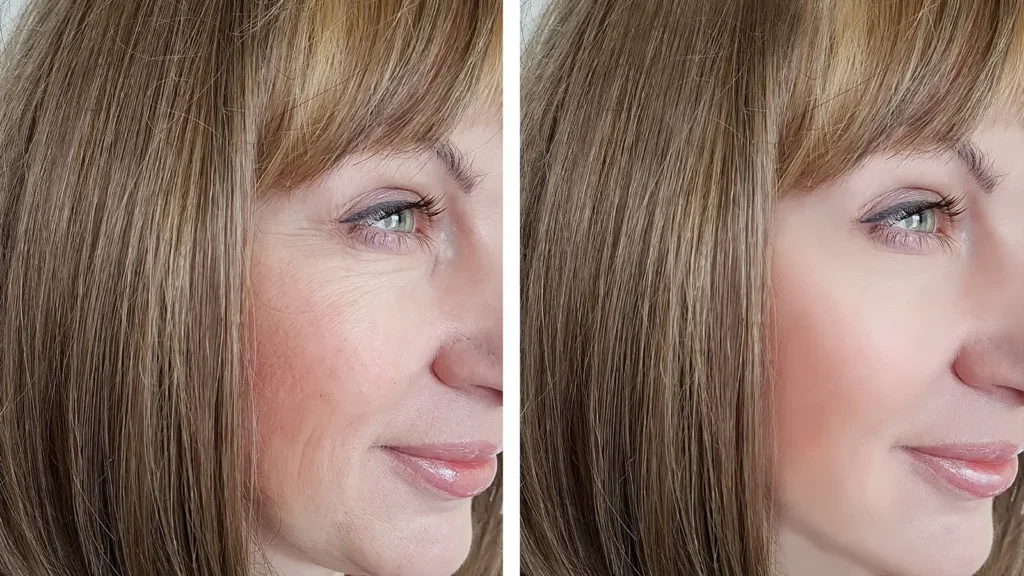
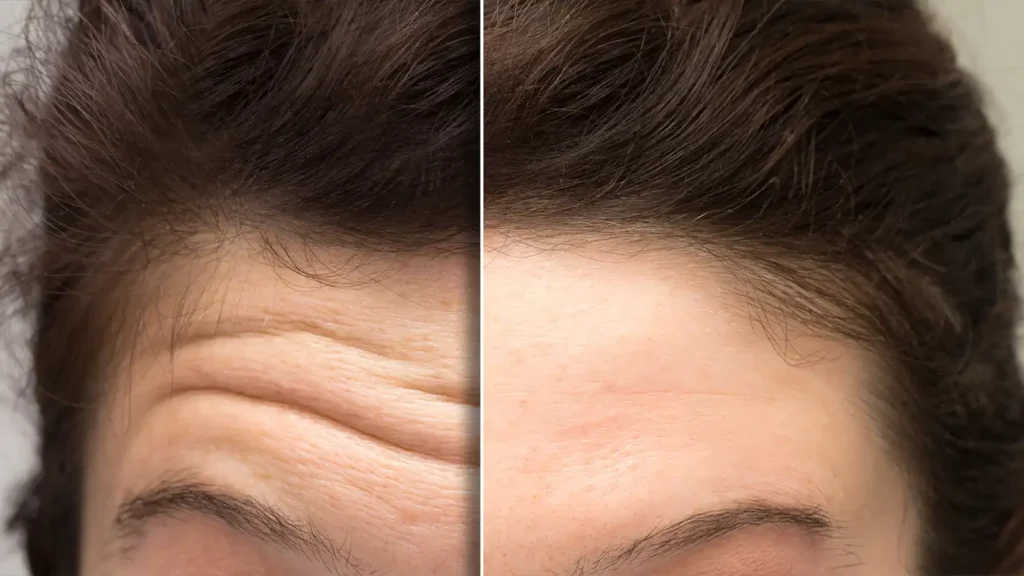
Close-up of hydrated, glowing skin after a winter skin treatment

A good winter skin treatment has one job: put water and repair ingredients back where they are missing, without irritating a barrier that is already stressed. Exfoliating harder usually backfires once the cold sets in, while delivering hydration more efficiently tends to help.

When winter skin feels tight, the answer is usually better hydration, delivered to the layer where moisture is actually lost.

This is where DermaFuse earns its place on our menu. Because the serum is carried deeper, ingredients such as hyaluronic acid have a better chance of doing their work where the skin needs them, rather than sitting on top and evaporating in a dry room.

What a visit looks like

Your appointment begins with a conversation and a close look at your skin. We ask what bothers you most, what you are already using at home and how your skin has reacted to past treatments. That information decides which serum goes into the device.
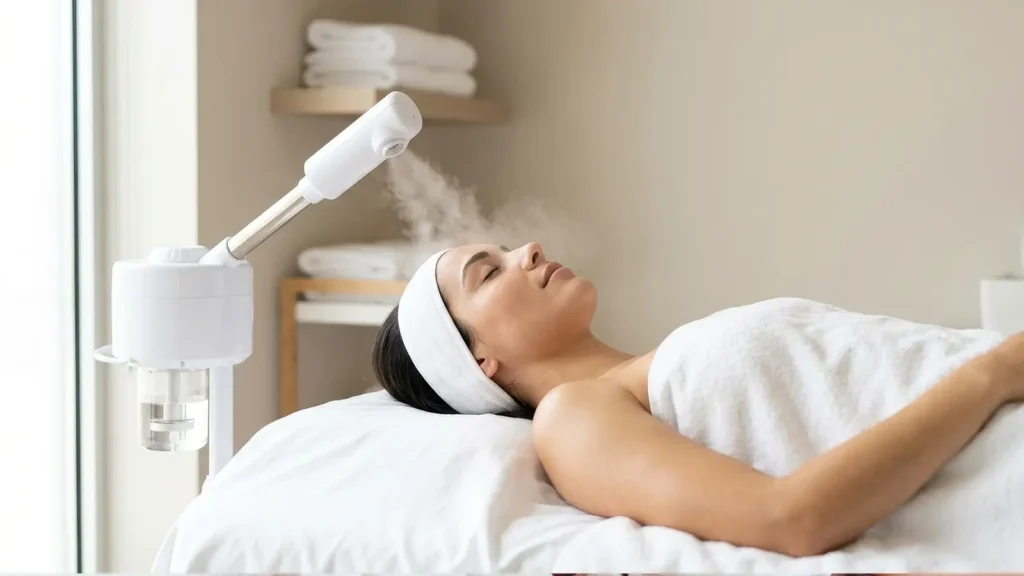
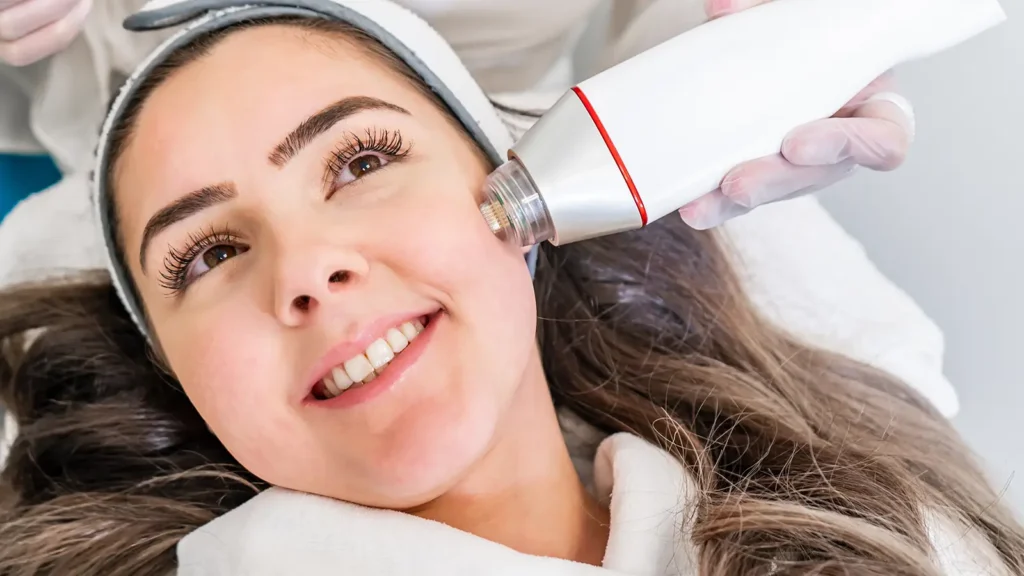
Woman relaxing during a hydrating facial at a med spa in Hoffman Estates

The skin is then cleansed, and the provider works across the face with the DermaFuse handpiece. The sensation is usually a light tingling, and the provider adjusts the intensity until it feels comfortable. The whole visit is gentle enough to fit into a lunch break.

Afterward, mild redness or a little sensitivity is normal and usually settles within a few hours. In practical terms, it is a no downtime facial you can schedule before an evening out.

A few aftercare steps help the results last:

  • Cleanse gently with lukewarm water and a fragrance free cleanser for the first day or two
  • Skip makeup for 24 hours
  • Pause retinoids, exfoliating acids, vitamin C serums and scrubs for five to seven days
  • Wear broad spectrum SPF 30 or higher every day, even on gray winter mornings
  • Avoid saunas, steam rooms, hot showers, alcohol and heavy sweating for about 48 hours

Who tends to love it

DermaFuse suits a wide range of patients, which is part of its appeal. It is a natural fit for dehydrated or dull skin, for sensitive skin that reacts badly to stronger facials, and for early fine lines or uneven tone when you want a gentle option between more intensive treatments. Our earlier article on the skin concerns DermaFuse can help with goes deeper into each of those groups.

It is also a sensible starting point for anyone who has never had a medical grade facial and wants to see how her skin responds before trying something more involved.

Some patients need a different plan. Treatments that use electrical current are not right for everyone, so tell your provider before your visit if you are pregnant, have a pacemaker or another implanted electronic device, or have an active skin infection. We will decide together whether DermaFuse is appropriate.

Switching from a Hydrafacial routine

If monthly Hydrafacials have been part of your routine elsewhere, moving to a Hydrafacial alternative does not mean starting from zero. Bring the names of the serums and boosters you liked, and tell us when your last facial, peel or laser treatment took place. Those details help your provider choose the right serum and decide how soon your first DermaFuse session can happen.

Some women keep both in rotation, using an extraction facial when pores feel congested and DermaFuse when hydration is the bigger issue. There is no rule against it, as long as the treatments are spaced sensibly.

Making results last through the season

One session leaves skin noticeably more comfortable. A short series usually gives a more lasting change, and your provider will suggest a rhythm based on how your skin behaves over the first visit or two.

What you do at home matters just as much. A barrier friendly moisturizer, a gentle cleanser and daily sunscreen protect the work done in the treatment room. Our ELITE® medical grade skincare line was put together with that kind of routine in mind, and we are happy to build a simple plan around the products you already like.

Booking your visit

If you have been searching for a facial in Hoffman Estates that does more than make your skin look nice for a day, a consultation is the easiest way to find out whether DermaFuse fits your skin.

Elite Women’s Care is at 1555 Barrington Road, Suite 415, close to Schaumburg, Hoffman Estates, Barrington and Streamwood. Book a free consultation online or call (847) 781-1894.

Winter will keep trying to take moisture from your skin. DermaFuse simply gives you a better way to put it back.

October 26, 2026

The Holiday Treatment Calendar: When to Book Botox, Filler and Skin Treatments Before Thanksgiving and New Year’s

Every holiday season, our phones fill with the same request: “Can you fit me in this week? The party is Saturday.” Scheduling Botox before an event is one of the simplest ways to look rested in photos, but only when the appointment lands at the right moment, and that moment is almost never the week of the party.

The holiday season moves fast. Thanksgiving dinner, a run of office parties and New Year’s Eve tend to arrive in one long blur, usually before most of us feel ready for them. As a med spa in Hoffman Estates with appointments Monday through Thursday, we watch holiday availability disappear earlier every year. Working backward from your dates is the easiest way to show up looking refreshed rather than freshly treated.

Lead Times at a Glance

Here is how far ahead each treatment realistically needs to sit on your calendar.

TreatmentBook at leastWhy the lead time
Secret RF microneedling6 to 8 weeks aheadRedness fades within days, but collagen builds over weeks
IPL photofacial6 weeks aheadTreated spots darken and flake for 7 to 10 days
Laser hair removalStart nowSessions are spaced weeks apart
Botox3 to 4 weeks aheadFull effect takes about two weeks, plus time for a touch up
Dermal filler3 to 4 weeks aheadSwelling and possible bruising need time to resolve
Medical grade skincareStart nowVisible change takes consistent daily use

Eight Weeks Out: Texture and Tone First

This is the window for anything that changes texture and tone, because those treatments need the longest runway. Real holiday skin prep begins here, well before anyone has bought a dress.

If acne scarring, enlarged pores or crepey skin is on your list, Secret RF microneedling belongs at the very start of your calendar. The visible redness usually settles within a few days. The meaningful change, firmer and smoother skin, develops over the following weeks as new collagen forms.

Brown spots and redness from summer respond well to IPL, and fall is the ideal season for it. We covered the full process in our IPL guide, but for planning purposes the key detail is simple. Treated spots darken and then flake away over roughly a week to ten days, so this is not something to try the week of a party.

This is also the moment to adjust your routine for an Illinois winter. Dry indoor heat and wind off the prairie strip moisture from the skin barrier quickly, and a barrier in good shape responds better to every treatment that follows.

The week before the party is for touch ups, never first appointments.

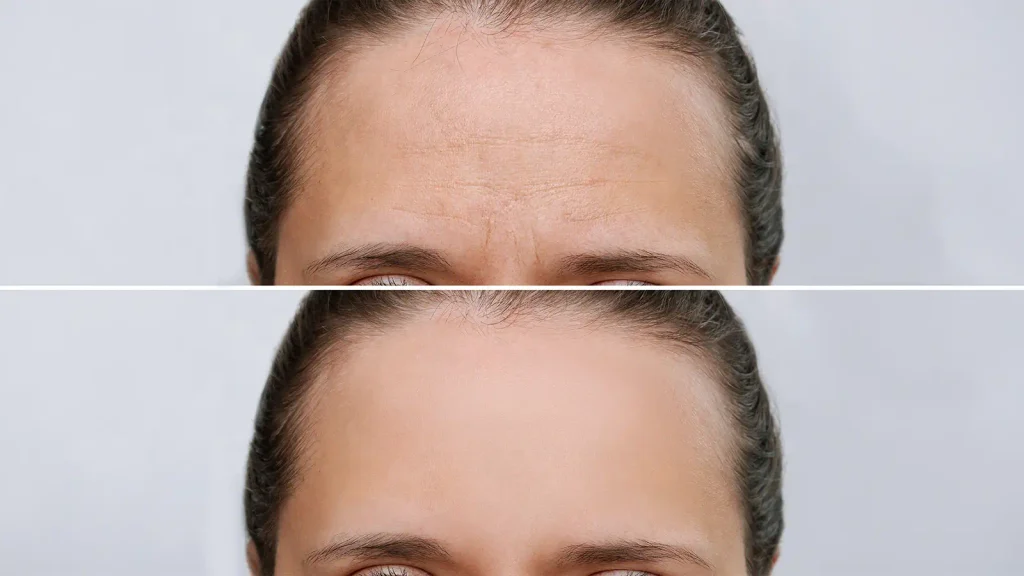
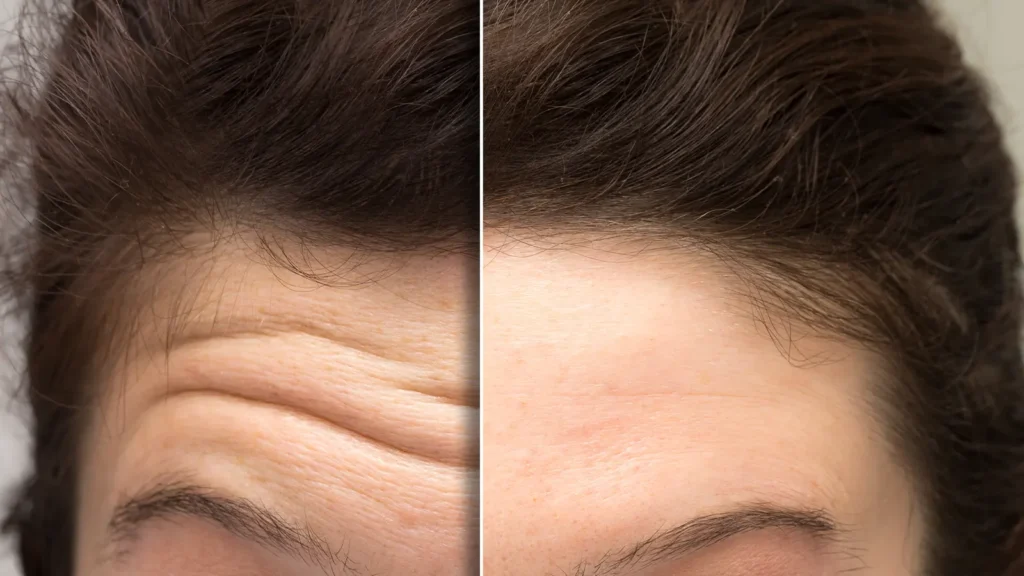
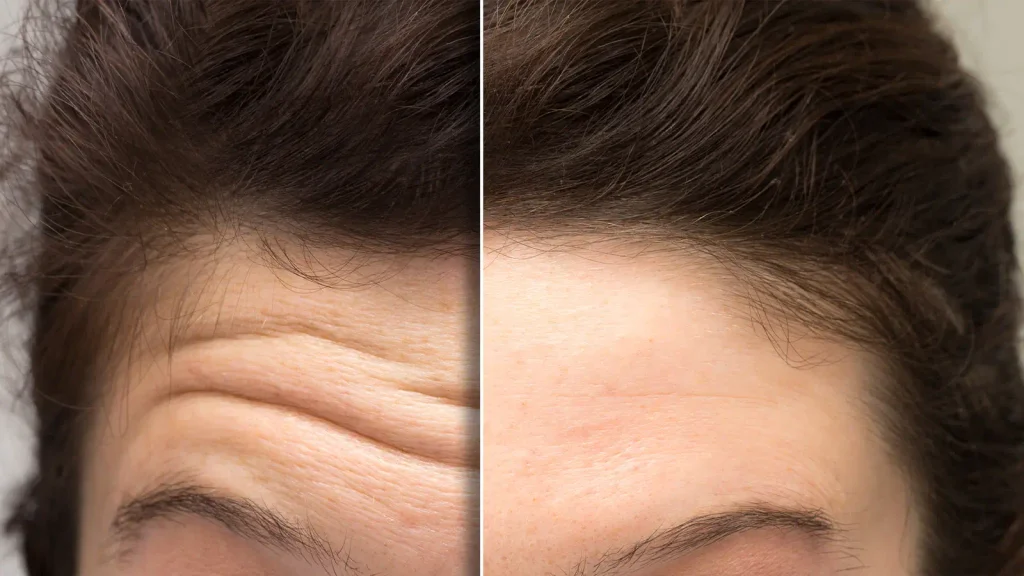
Before and after Botox for forehead lines, planned between Thanksgiving and New Year's

Four to Three Weeks Out: Injectables

Injectables take their turn here, and the order matters.

Botox typically starts to show within three to five days and reaches its full effect at around two weeks. Booking three to four weeks ahead gives the product time to settle and leaves room for a quick follow up if one brow sits a little higher than the other. If this would be your first time, give yourself the full four weeks. You’ll want to see how your face responds before the photos start. Our provider explains the full timeline in How Long Does Botox Last.

The most common mistake we see with Botox before an event is treating it like a blowout: booked a day or two ahead for an instant result. Neuromodulators simply don’t work that way. On the day of your injections, stay upright for about four hours, skip strenuous exercise until the next day, and resist the urge to rub or massage the treated areas. Those small habits help the product stay exactly where it was placed.

Planning dermal fillers before the holidays follows a similar logic, with one extra consideration. Filler adds volume immediately, but the first several days can bring swelling, tenderness and sometimes a bruise. Most of that resolves within one to two weeks, although lips tend to take the longest to settle.

At Elite Women’s Care we use Restylane filler, a hyaluronic acid gel, for areas such as the lips, cheeks and the folds around the mouth. Hyaluronic acid draws in water, so results can look slightly fuller in the first days before softening into their final shape. That is exactly why booking filler four days before a holiday dinner is a gamble we would rather you didn’t take.

A few things help reduce bruising, provided your physician agrees. Pause alcohol for a day or two beforehand, and ask about stopping supplements such as fish oil and vitamin E for about a week. Never stop a prescribed blood thinner on your own.

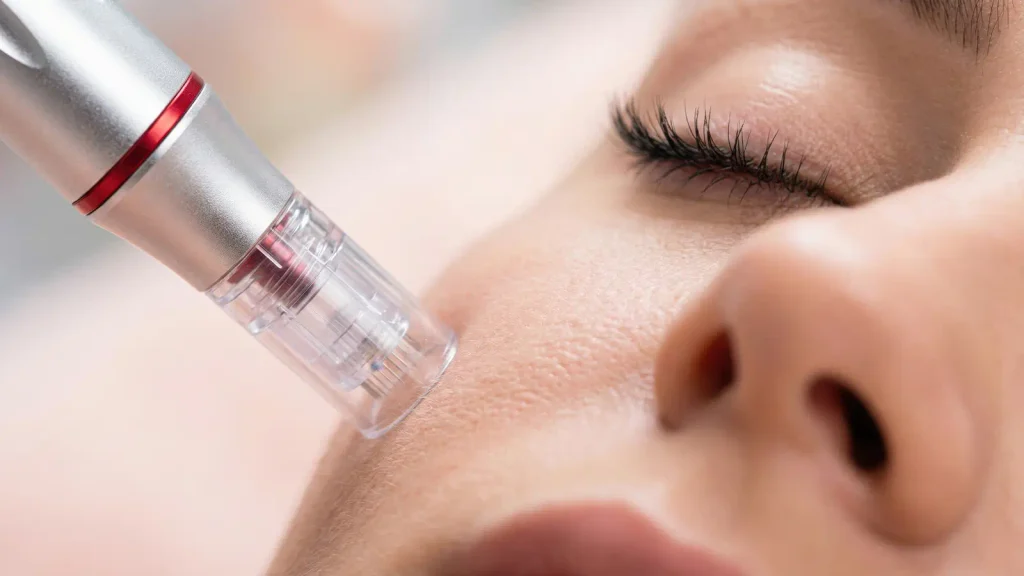
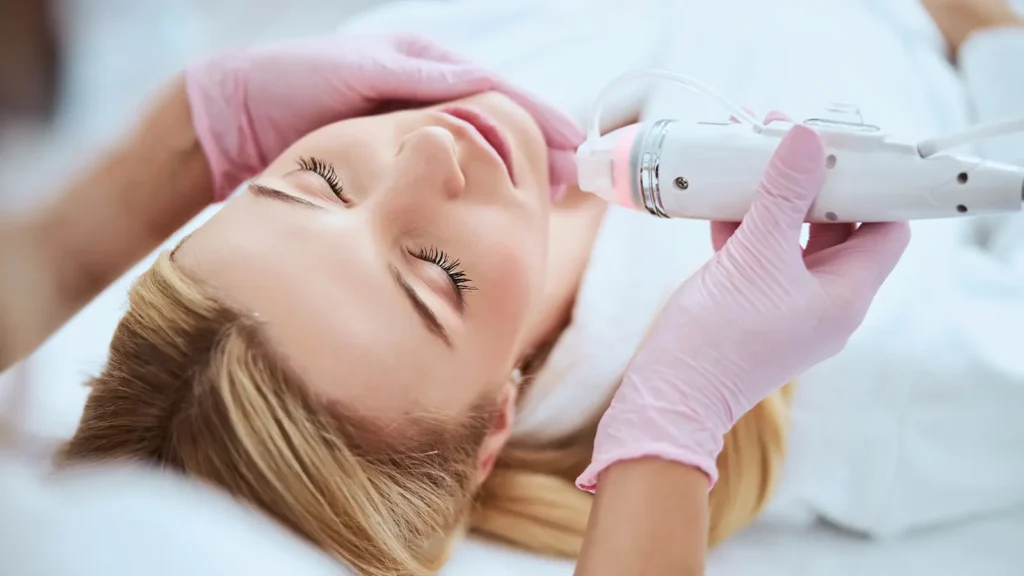
Microneedling skin rejuvenation treatment on a woman's cheek ahead of the holiday season

Matching the timing to your situation

Your situationWhen to book
Trying Botox for the first timeFour weeks ahead, so you can see how your face responds
Returning Botox patientTwo to three weeks ahead is usually enough
Filler in the lipsFour full weeks, since lips swell the most
Filler in the cheeks or smile linesAbout three weeks ahead
Several events in a rowPlan around the earliest one on your calendar

When in doubt, earlier is always kinder to your schedule and to your face.

Two Weeks Out: Fine Tuning

By now the heavy lifting should be done. This is when we see patients for small adjustments, a little more Botox where movement crept back, or a check on filler symmetry once swelling has gone down.

If you want softer lines and a subtle lift without needles, V-ST skin tightening and lip plump can be a good fit in this window, since it doesn’t come with the same healing period as injectables. Hydrating facials and gentle maintenance treatments also belong here. Anything new or aggressive does not.

The Final Week: Hands Off

Every procedure carries its own treatment downtime, and the last seven days before a big event are not the time to discover yours.

Skip new peels, new actives and any treatment you have never had before. Keep your routine gentle and familiar: cleanser, moisturizer, sunscreen. Drink water. Sleep as much as the season allows. If you already have a series underway, your provider can tell you whether your next session should wait until after the holidays.

Rest matters more than most people think. A week of short nights, salty party food and an extra glass of wine shows up as puffiness under the eyes far faster than any wrinkle does, and no treatment fully cancels it out.

And if a breakout or a stray bruise appears anyway, call us before you reach for a home remedy. There is usually a calm, simple fix.

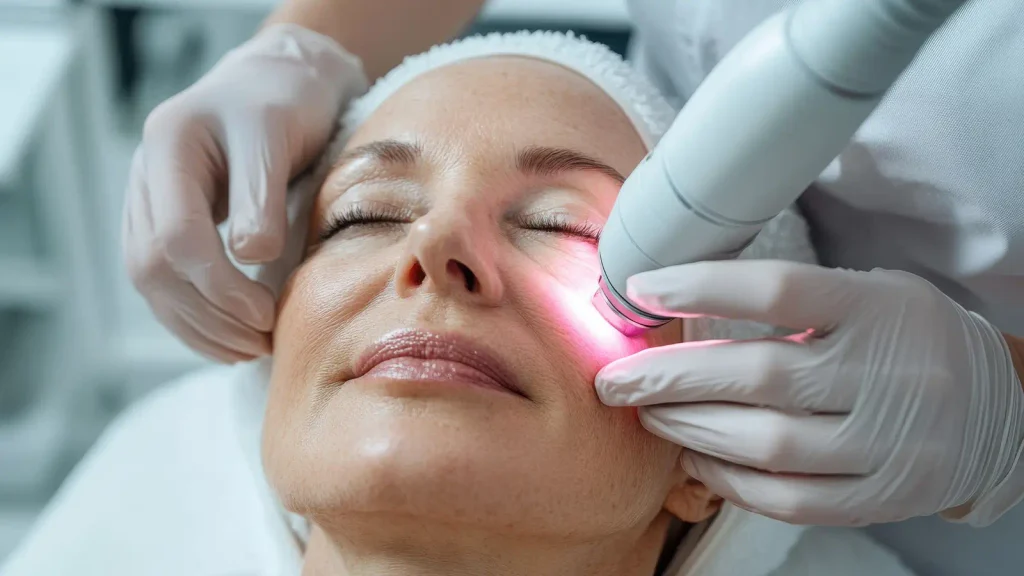
Woman receiving a facial skin treatment, the best time to book Botox and dermal fillers

Planning Beyond the Party

Some treatments are worth starting now even if the payoff arrives after the holidays. With Soprano Titanium laser hair removal, for example, starting now means several sessions are behind you by the time you pack for a winter getaway. Medical grade skincare works the same way. The serum you start this week is the one doing visible work by the new year.

If you tend to treat yourself every season, ask about our membership options during your visit. Members get exclusive perks and better savings, which makes a planned calendar easier to stick with.

Book the Calendar, Not the Panic

Holiday schedules have a way of filling themselves. The women who look the most relaxed at holiday parties are usually the ones who made a few phone calls weeks earlier.

We welcome patients from Hoffman Estates, Schaumburg, Barrington, Palatine, Arlington Heights and the surrounding northwest suburbs at 1555 Barrington Road, Suite 415. Book your free consultation online or call (847) 781-1894, and we’ll build a timeline around your actual calendar.

The best compliment at a holiday party is the one where nobody can quite tell what you did.

October 19, 2026

Cellulite Is Not a Fitness Problem. Here’s What Radiofrequency Does About It

Marathon runners, Pilates instructors and women who haven’t skipped a workout since college all have cellulite, and that single fact changes the whole conversation about non-surgical cellulite treatment. If exercise alone could erase dimpling, nobody with a gym membership would still be searching for answers.

Most estimates put the number somewhere between 80 and 90 percent of women after puberty. It is so common that many physicians consider it a normal feature of female skin rather than a condition. Normal, though, doesn’t mean you have to love it. Wanting smoother thighs is a perfectly reasonable goal, and so is wanting honest information before spending money on it.

Below, we look at what cellulite actually is, which popular beliefs deserve to be retired, and where radiofrequency earns its place.

Why Women Get It and Most Men Don’t

Beneath the skin, fat sits in small chambers divided by bands of connective tissue called septae. In women, those bands tend to run vertically, a bit like the posts of a picket fence. When fat cells enlarge, they press upward between the posts while the bands keep tethering the skin down. The result is that familiar uneven, quilted texture on the thighs, hips and buttocks.

In men, the same connective tissue more often runs in a crisscross pattern that holds fat in place more evenly. Layer on the influence of estrogen on fat storage and circulation, plus skin that gradually loses collagen with age, and you have a structural explanation with very little to do with discipline.

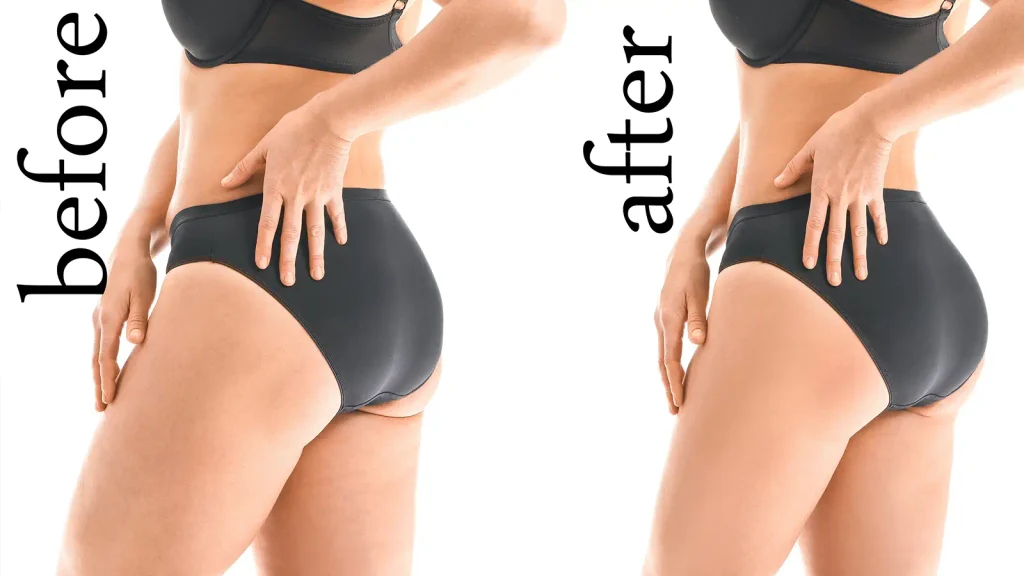
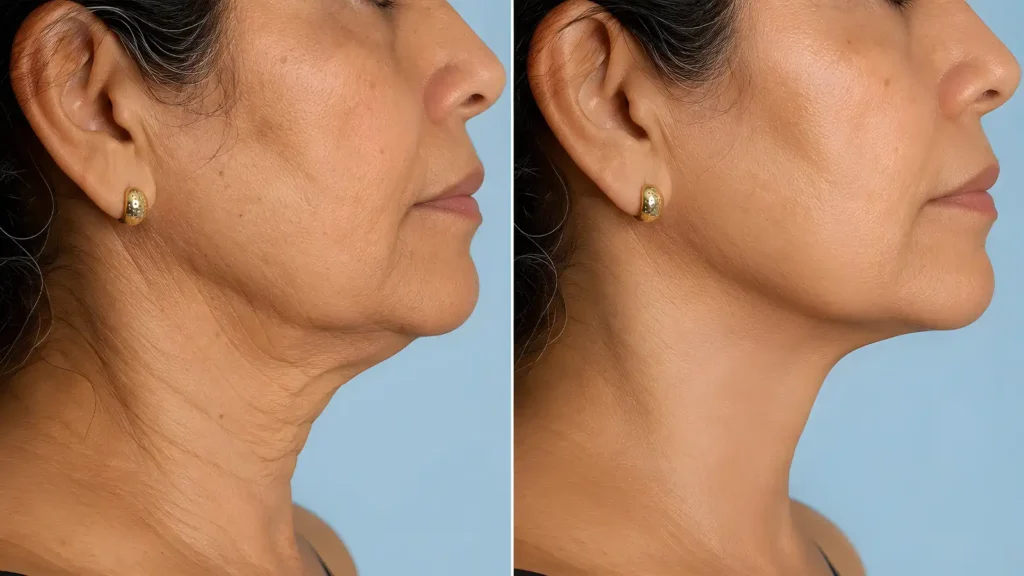
Before and after non-invasive cellulite reduction and skin tightening on buttocks and thighs

Four Beliefs Worth Letting Go Of

“I just need to lose weight.”

Weight loss softens cellulite for some women and makes it more noticeable for others, especially when skin loses volume and firmness faster than it can adapt. Very lean women have cellulite too. If you’re already working with a medical weight loss program, body treatments tend to deliver the best return once you’re closer to your goal.

“The right cream will fix it.”

Creams with caffeine or retinol can temporarily improve the look of the surface, mostly through hydration and mild tightening. None of them reach the connective tissue framework underneath, which is where the dimpling begins.

“Liposuction is the permanent answer.”

Liposuction removes deeper fat. It was never designed for cellulite, and taking out volume without improving skin quality can sometimes make dimpling look worse.

“Nothing works, so why bother.”

This is the belief we hear most, and it’s the least accurate of the four. Plenty of women gave up on non-surgical cellulite treatment years ago, back when the options really were limited. Treatments that firm the skin and reduce stubborn localized fat can make a visible difference when the expectations are realistic and the full series is completed.

What Actually Happens Under the Handpiece

Radiofrequency body contouring uses controlled energy to warm tissue below the surface without cutting or injecting anything. At Elite Women’s Care, we use V-FORM, which works in two phases during each visit.

The first phase brings the deeper fat layer up to a sustained therapeutic temperature. That steady heat is associated with the breakdown of stubborn fat cells, which the body then clears gradually over the following weeks. The second phase shifts attention to the connective tissue and the dermis. Here, heat makes existing collagen fibers contract and signals the skin to produce new collagen.

Firmer skin is smoother skin. When the surface is better supported, it is far less likely to pucker over whatever sits below it. That’s why the same device that addresses dimpling on the thighs also improves crepey texture on the arms and laxity across the abdomen.

Most patients describe a V-FORM session as feeling closer to a hot stone massage than a medical treatment.

There are no needles, no anesthesia and no recovery period. You might notice warmth and some pinkness for a few hours afterward. For the next day or two, skip hot baths, saunas, steam rooms and intense workouts, and don’t put ice on the area. Drink plenty of water, too. Radiofrequency simply performs better in well hydrated tissue.

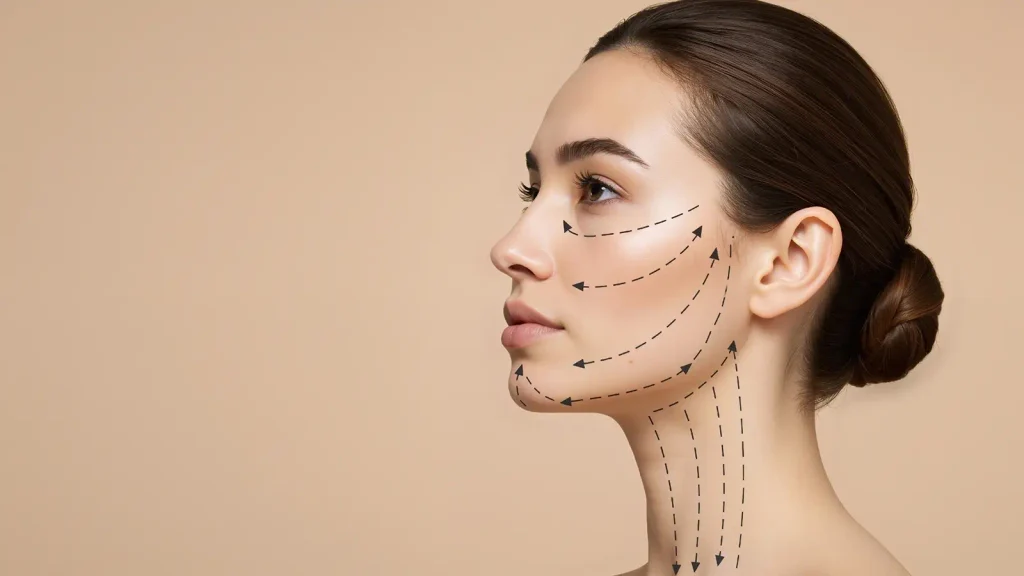
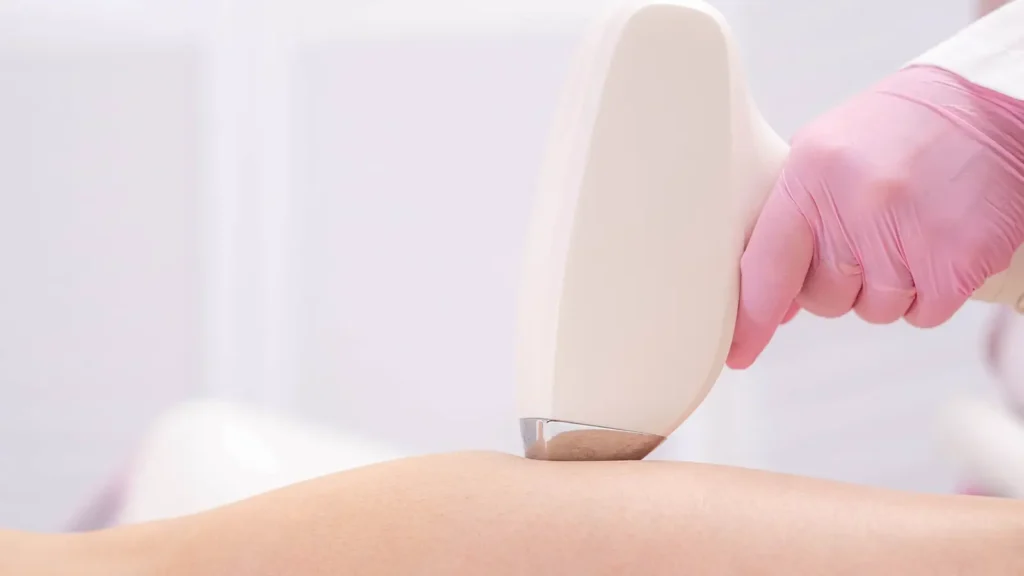
Radiofrequency therapy treatment lines on the thigh and hip for cellulite reduction

The Postpartum Question

A large share of the women we see for body treatments come to us after having children, which makes sense for a med spa that sits inside an OB-GYN practice.

Pregnancy stretches the abdominal skin dramatically, and for many women it never fully snaps back. Loose skin after pregnancy is not a sign that you didn’t do enough. Genetics, the number of pregnancies, your age and the size of your babies all play a part, and none of those are within your control.
For mild to moderate laxity, stomach skin tightening with radiofrequency can firm the area and refine its texture over a series of visits. A significant separation of the abdominal muscles, known as diastasis recti, or a large overhang of skin is a different situation entirely. In those cases we will tell you plainly that a surgical consultation is the better next step.

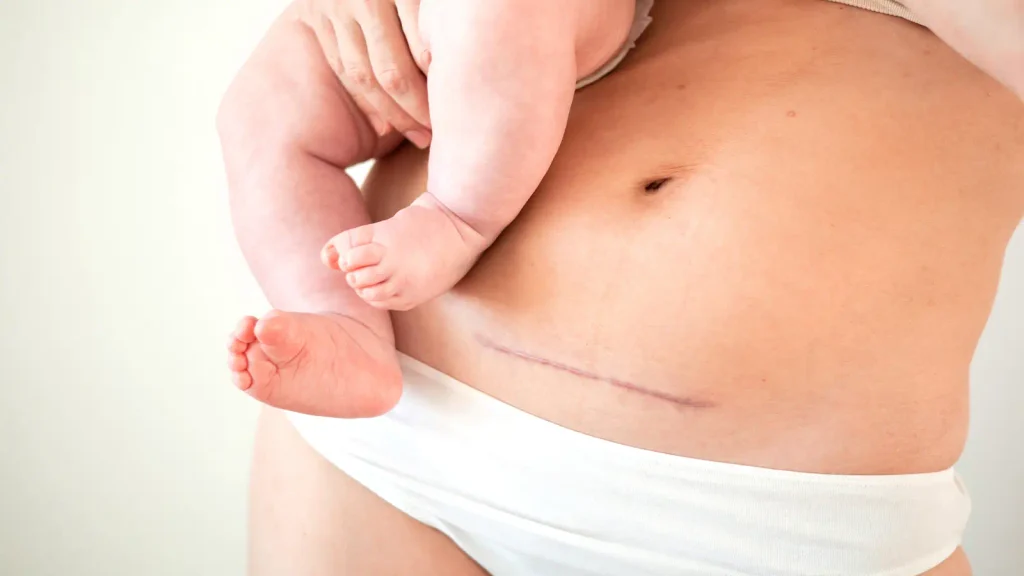
We generally suggest waiting until you’ve finished nursing and your weight has settled before starting a series. If stretch marks or a C-section scar are part of the picture too, we can build a plan that addresses everything in a sensible order.

The Case for a Fall Start

Why talk about cellulite when the shorts are packed away for the season? Because the results are not instant, and the biology needs a head start.

Collagen remodeling unfolds over weeks and keeps improving after your final session. Treatment is typically scheduled weekly, and our V-FORM packages are built around eight visits. Begin now, and the hard part is behind you long before anyone is thinking about swimsuits or spring break.

TimelineWhere you are
Weeks 1 and 2Consultation, measurements and first sessions
Weeks 3 to 6Weekly visits continue, early changes in firmness
Weeks 7 and 8Series wraps up, often before the holiday rush
The next two to three monthsNew collagen continues to build and settle
After thatMaintenance visits every three to four months

Maintenance matters. Cellulite has structural roots, so occasional follow up sessions are what keep the improvement from slowly fading.

What We Look at Before Recommending Anything

Thoughtful body sculpting in Hoffman Estates should begin with an evaluation rather than a sales pitch. During your consultation, we look at the grade of your cellulite, the quality and thickness of your skin, how much of the concern is fat and how much is laxity, and what you are hoping to see in the mirror.

The best candidates are close to their goal weight, have mild to moderate dimpling or looseness, and are prepared to complete the series. Radiofrequency isn’t appropriate during pregnancy, for patients with pacemakers or other implanted electronic devices, over metal implants in the treatment area, or on skin with an active infection. Your provider will go through your complete health history with you before your first session.

Sometimes the best plan combines approaches. A patient who is still losing weight might focus on that first. Another might pair V-FORM on the thighs with skin treatments elsewhere. We would rather design something realistic than promise a transformation the anatomy cannot deliver.

Smiling woman after non-surgical cellulite reduction treatment at Elite Women's Care

Working With Your Biology

You don’t need to declare war on cellulite, and you certainly don’t need to feel guilty about it. If smoother, firmer skin matters to you, a well planned non-surgical cellulite treatment can get you there without surgery or downtime.

Elite Women’s Care is located at 1555 Barrington Road, Suite 415, in Hoffman Estates, convenient to Schaumburg, Elgin, Streamwood and South Barrington. Book a free consultation or call (847) 781-1894 and we’ll walk you through what V-FORM can realistically do for your body.

Your workouts were never the problem. This is simply the part they were never designed to fix.

October 12, 2026

The Summer Receipt: What Your Skin Held On To, and How IPL Clears It

Summer always sends a bill, and for most of us it arrives once the leaves start to turn. If the mirror is suddenly showing freckles that refuse to fade, a flush across the cheeks, or a patchy tone that foundation no longer covers, an IPL photofacial is one of the most efficient ways to settle that account before winter.

The timing matters more than most people expect. Light based treatments perform best on skin that isn’t actively tanned and isn’t about to spend its weekends at the pool. In the northwest suburbs, that window opens right about now and stays open until spring, which explains why questions about pigment and redness fill our consultation calendar every autumn.

What the Sunny Months Leave Behind

Very little of the damage from summer actually shows up during summer. UV exposure wakes up melanocytes, the cells that make pigment, and the extra pigment they produce rarely spreads out evenly. It clusters. Several weeks later it surfaces as sun spots on the face, the chest and the backs of the hands, usually alongside a dullness that makes skin read a few years older than it is.

Heat and sunlight also dilate the small vessels near the surface. For some women that means a few new threadlike capillaries beside the nose. For others, particularly anyone with a tendency toward rosacea, it means a background flush that never quite calms down, even after the weather cools.

None of this is an emergency. It is information, and it happens to be very treatable.

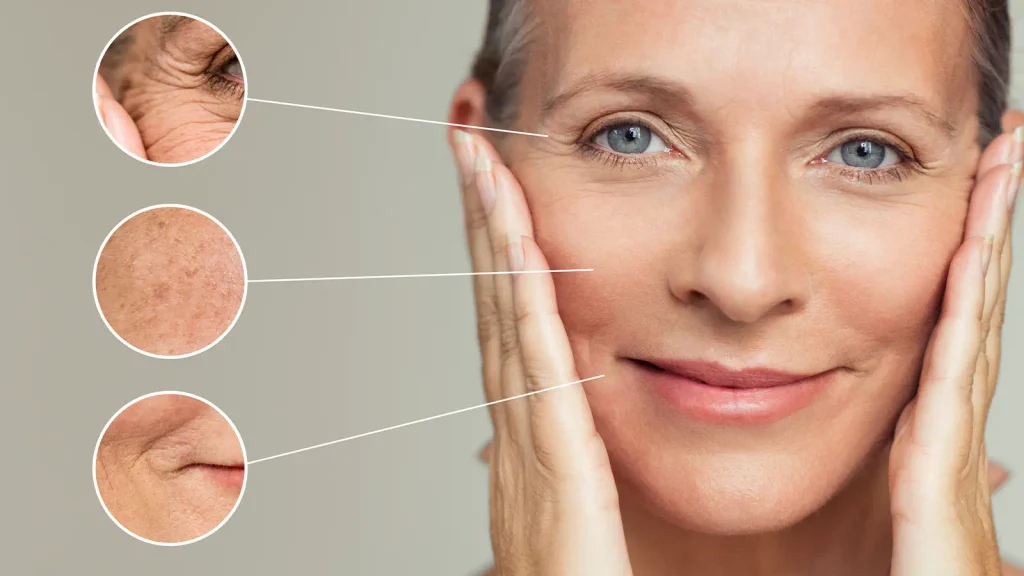
Mature woman's face showing sun spots and fine lines treated with post-summer IPL therapy

Light, Filtered With Intent

The IPL in IPL photofacial stands for intense pulsed light. A laser delivers one precise wavelength, while IPL releases a broad band of light and uses filters to aim it at specific colors in the skin. Brown pigment absorbs that energy and fragments. Hemoglobin inside tiny surface vessels absorbs it as well, which causes those vessels to close and gradually fade from view.

The skin around those targets is left largely alone. That is the reason most patients go back to work, errands or school pickup the same afternoon. Many describe each pulse as a quick warm snap, similar to a rubber band, that is over in a fraction of a second.

When patients come to us for IPL treatment in Hoffman Estates, the first conversation is never about the device. It is about what we see under magnification, how your skin has reacted to past treatments, and what you want to stop noticing in photos. Our V-IPL system lets our providers adjust filters and energy for each concern, so a session aimed at redness looks quite different from one aimed at freckles.

Matching the Concern to the Plan

Every face is different, but the patterns are consistent enough to sketch out.

What you’re seeingWhat IPL doesTypical plan
Age spots and sun spotsBreaks up surface pigment so spots darken, then shedA short series, spaced about a month apart
Freckling and blotchy toneEvens out scattered pigment across the faceSeries of sessions, then periodic maintenance
Persistent flushingReduces diffuse redness and visible vesselsSeries of sessions plus yearly touch ups
Broken capillariesCloses small surface vesselsOften one to three sessions
Active acneCalms inflammation and breakoutsA longer series, up to ten visits
Dull, tired textureEncourages gradual collagen renewalPairs well with other treatments

For many of our patients, rosacea redness is the real reason they book. IPL does not cure rosacea, and anyone promising that is overselling. What it can do is reduce the visible vessels and the constant pink cast that make the condition so frustrating to live with. Plenty of patients find they reach for color correcting primer far less often once their series is complete.

A Brown Spot Is Not Always a Sun Spot

This is the part of the consultation that saves people the most money and the most disappointment.

Melasma, the hormonal pigment that often appears during pregnancy or while taking birth control, can look a lot like sun damage. It behaves very differently. Heat can provoke it, and an aggressive approach can leave it darker than before. Effective hyperpigmentation treatment for melasma usually means conservative settings, medical grade skincare such as our ELITE® line, strict sun protection and patience. In some cases, IPL is not the first tool we would reach for at all.

Skin tone matters too. IPL is best suited to lighter and medium complexions, because deeper skin absorbs more of the light outside the target and the risk of burns or new discoloration goes up. That does not leave you without options. Treatments such as Secret RF microneedling address texture and tone with far less risk for melanin rich skin.

Why Fall Beats Spring

There is a reason aesthetic practices across the Midwest get busy once the leaves turn. The case for fall skin treatments comes down to biology and logistics.

A tan is effectively a contraindication for an IPL photofacial. When the surrounding skin is full of fresh pigment, it competes with the spots you actually want to treat, and the chance of side effects rises. A few weeks into fall, most of that summer color has faded on its own.

Aftercare also asks you to stay out of direct sun for at least two weeks. That is a small request during a gray Illinois autumn and a big one during a summer spent at the lake.

The best season to treat sun damage is the one where you are getting the least of it.

Then there is the calendar. A series that begins in early fall wraps up comfortably before the holidays, which means clearer skin for family photos and fewer minutes spent on makeup during busy mornings.

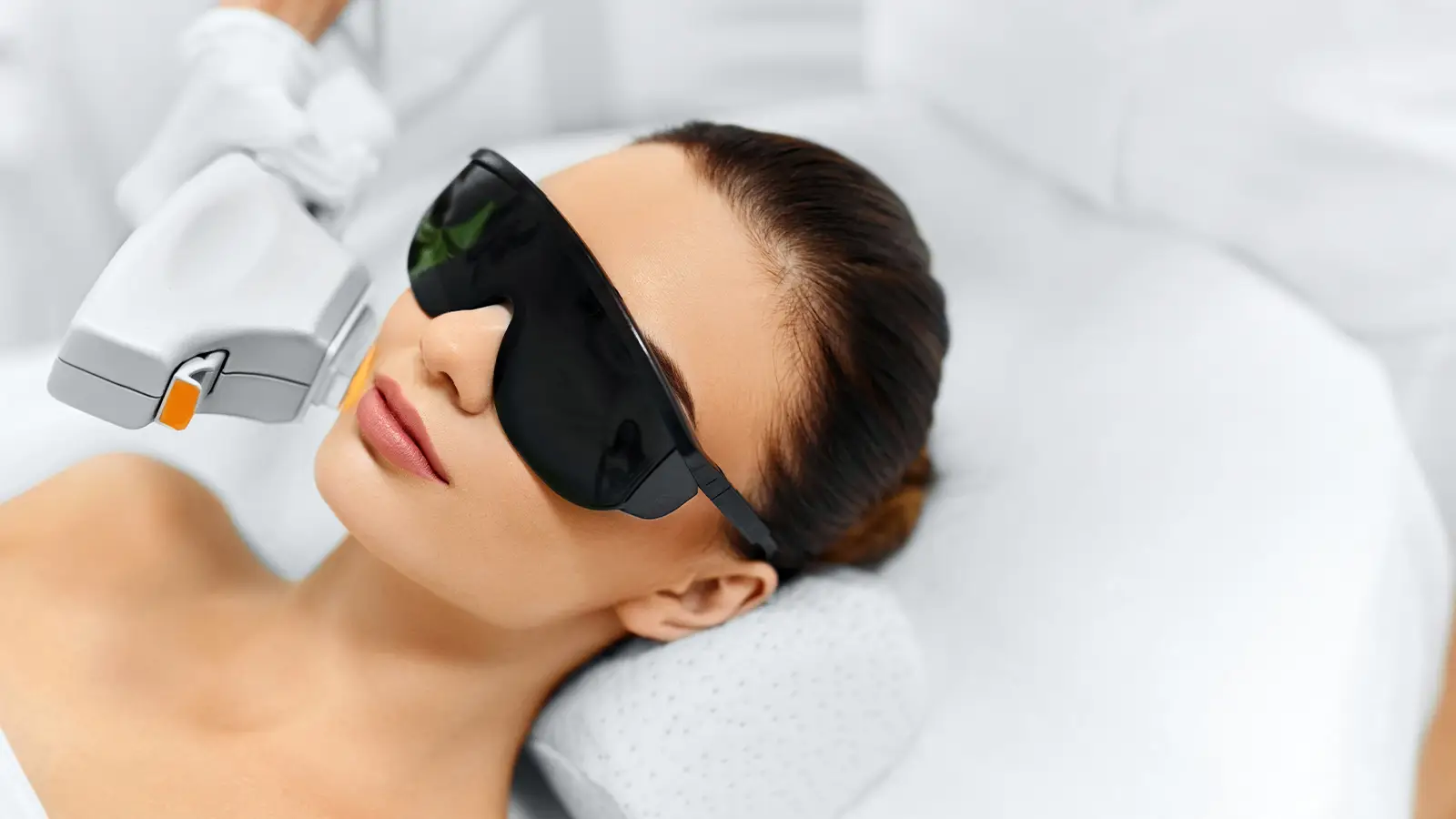
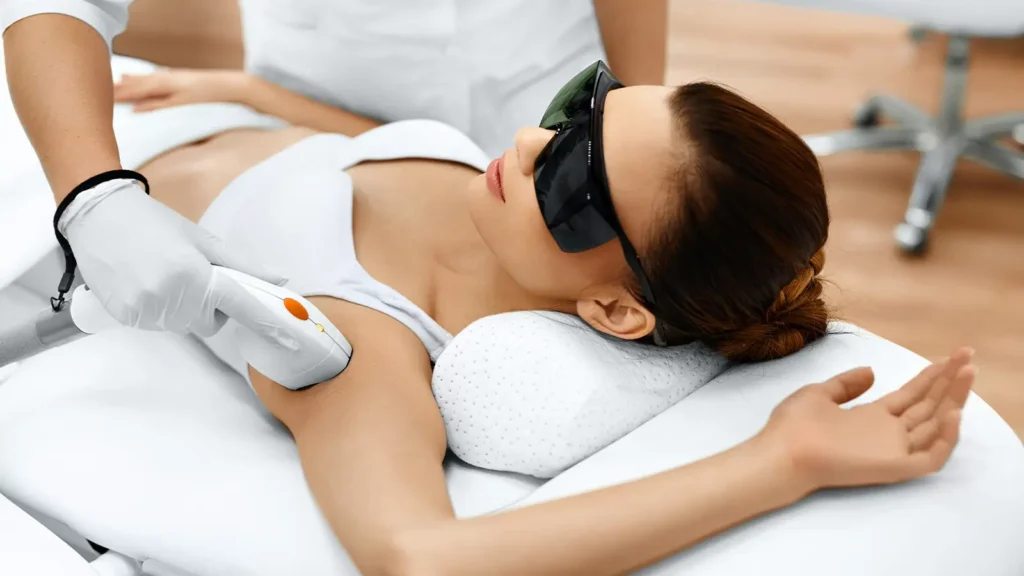
Woman in protective eyewear during IPL treatment for sunspots and hyperpigmentation

The Fourteen Days After a Session

Knowing what is normal makes the healing period far less stressful, so here is what the two weeks after a session usually look like.

In the first hours, skin feels warm, a lot like a mild sunburn. Redness generally settles anywhere from a few hours to two days later, and a cool compress makes that stretch more comfortable.

Around days two through five, treated spots turn darker, sometimes almost like coffee grounds sitting on the surface. That is the pigment rising, and it is exactly what should happen. Treated vessels can also look a little darker before they fade.

Between days seven and ten, those darkened spots flake away. Picking at them is the fastest way to invite irritation, so let them go at their own pace.

Over the following weeks, tone keeps evening out as the skin renews itself. Results build gradually and tend to look better after the second and third sessions than after the first.

A few rules make a real difference during this period:

  • Daily broad spectrum SPF 30 or higher, even on gray days and indoors near windows
  • No retinoids, AHAs, BHAs or vitamin C serums for at least one week
  • No saunas, steam rooms, hot showers, alcohol or hard workouts for 48 hours
  • Acetaminophen for discomfort instead of ibuprofen or aspirin, which can increase bruising

Before You Book: Who IPL Suits Best

IPL tends to be a strong fit if you are dealing with sun spots, freckling, redness or broken capillaries, have a lighter to medium skin tone, and are not carrying a fresh tan. We generally postpone treatment during pregnancy, after recent isotretinoin use, or while you are taking medications that increase sensitivity to light. A history of co

ld sores, keloid scarring or pigment changes after previous treatments should also come up during your visit.

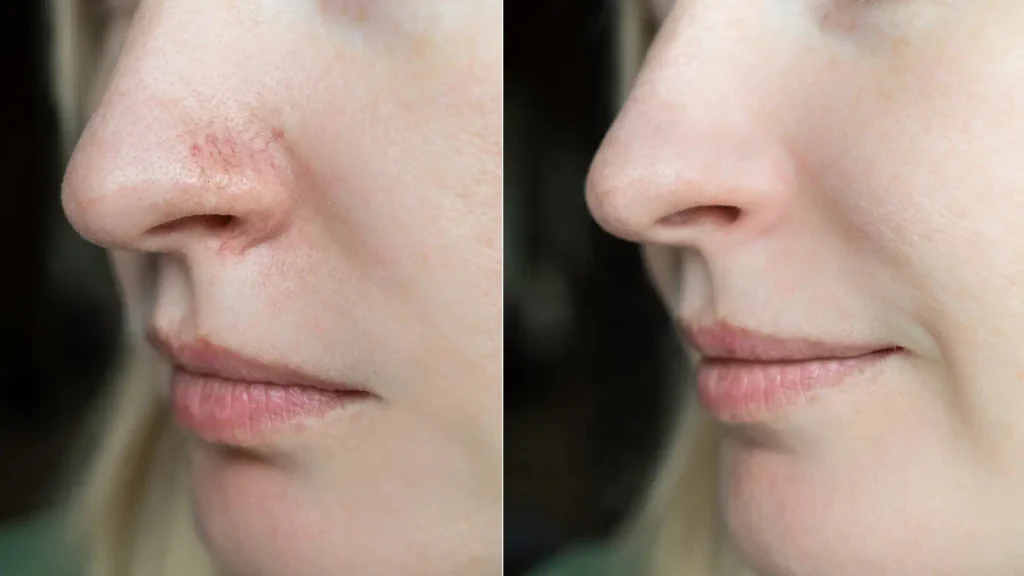
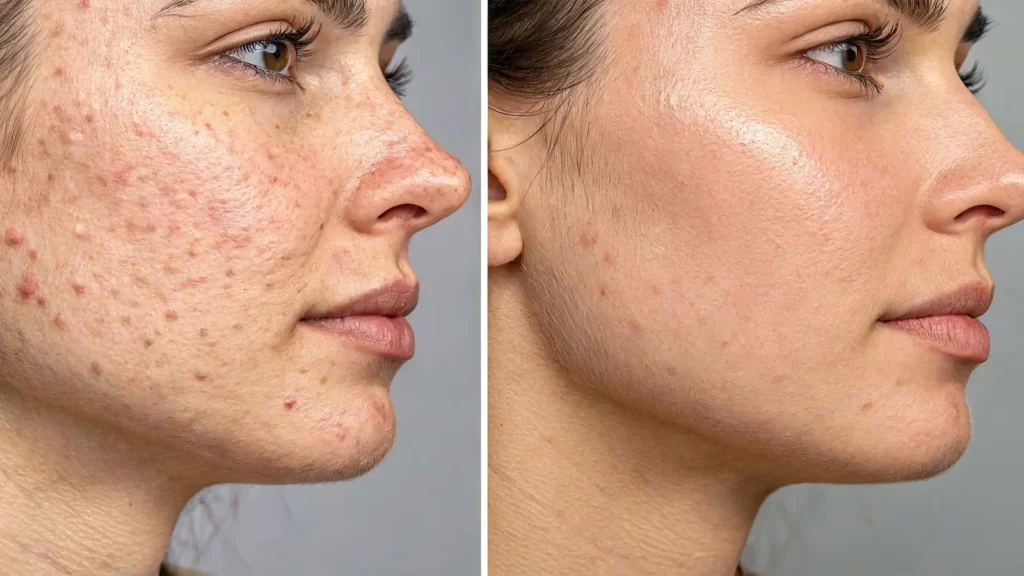
Before and after IPL skin rejuvenation clearing redness and sun damage on the nose

Settling the Account

The spots and redness collected over one summer do not have to become a permanent part of your face. Treated early and in the right season, most of them fade with surprisingly little disruption to your routine.

Our team at Elite Women’s Care sees patients at 1555 Barrington Road, Suite 415, in Hoffman Estates, a short drive from Schaumburg, Barrington, Palatine and Streamwood. Book a free consultation online or call (847) 781-1894 to map out a series while the season is still on your side.

Summer gets the credit for the memories. Fall can take care of the receipt.

September 17, 2026

See Your Results Before You Book: How Ageless AI Works at Our Hoffman Estates Med Spa

Most people who come in for a first aesthetic consultation arrive with a photo on their phone. Someone else’s face, usually. A celebrity caught in good lighting, an influencer, a friend of a friend who had something done and came back looking rested rather than altered. The photo is shorthand for a request that words rarely manage: I want to look like myself, only less tired. Ageless AI exists because a picture of someone else has never been a good way to say that.

The difficulty is that a stranger’s before and after tells you very little about your own outcome. Bone structure, skin thickness, muscle strength, how much your face moves when you talk, all of it changes the result. Two women can receive the same number of units in the same muscle and look nothing alike a week later.

That gap between what a patient pictures and what actually happens is why we brought Ageless AI into the practice. Instead of asking you to imagine a result, it renders one on your own face, before you book, before you pay, and before anyone picks up a syringe.

What Ageless AI Actually Does

Ageless AI is a visualization platform developed with input from board certified physicians and trained on clinical outcomes rather than filtered social media images. You upload a selfie. Within seconds you get a photorealistic preview of how a specific treatment would look on your face, not on a model’s.

Underneath that preview sits an AI skin analysis engine that reads your photograph the way a provider reads your face across the treatment chair. It maps texture, tone, pigment, volume loss, fine lines, and laxity, then models how a given intervention would change each of those variables. The result is not a smoothing filter. It is a simulation built on clinical data, which is a different thing entirely, and it is what makes AI treatment visualization med spa patients can actually trust possible in the first place.

Nearly every first consultation contains the same question, asked a dozen different ways: will this still look like me? An Ageless AI preview answers it before treatment day.

Why Stock Galleries Stopped Being Enough

If you have searched for a med spa Hoffman Estates offers, you have scrolled through a hundred galleries. Those photos are not useless. They prove a provider can do the work, and that matters. What they cannot tell you is anything about your face. You cannot see Botox results before treatment in someone else’s photograph, no matter how many you scroll past.

Practice galleryAgeless AI preview
Whose faceAnother patient’sYours
What it demonstratesThe injector’s skillYour likely outcome
Skin tone and textureRarely a matchExact
Question it answersCan they do this well?Should I do this at all?
Most useful forChoosing a providerChoosing a treatment

Search for virtual before and after aesthetic treatments and most of what surfaces is still the gallery model in newer packaging. An AI treatment visualization med spa tool changes which question the photograph answers, and that is a smaller shift than the marketing suggests but a far more useful one. The face in the after image belongs to the person making the decision.

How a Preview Comes Together

Start with an honest photo

Natural light, minimal makeup, no filter, a relaxed expression. The AI skin analysis reads exactly what you give it, so a heavily edited selfie produces a preview of an edited face, which helps nobody.

Let the analysis run

It takes seconds. The system looks for the signals a provider looks for, and it often names concerns patients have felt without articulating: sun damage across the cheekbones, early volume loss at the temples, a texture that reads as tired in photographs.

Compare treatments side by side

Wrinkle relaxers, filler, skin tightening, resurfacing, and body treatments each render separately. Patients who want to see Botox results before treatment usually start there, then run three more simulations out of curiosity and change their minds. That happens often enough that we now expect it, and it is the point of putting a preview in front of every med spa Hoffman Estates patient before the consultation rather than after.

Bring it to a person

This is the step that counts. Ageless AI produces a starting point, not a prescription. You come in with an image of what you want, and your provider tells you plainly whether the plan behind it suits your anatomy, your budget, and your timeline.

The Treatments Worth Previewing First

Most patients want to see Botox results before treatment, and that is the simulation they run first. It answers the fear that keeps people out of the chair for years, which is not the needle but the frozen forehead.

The platform covers the rest of our menu as well: dermal filler for volume, Secret RF microneedling for texture and acne scarring, IPL for pigment and redness, PRP for thinning hair, and body contouring. Running virtual before and after aesthetic treatments across several categories tends to clarify priorities faster than any consultation script, which is one reason the med spa Hoffman Estates patients visit for gynecology and aesthetics now opens most consultations with the preview already on screen.

The Preview Nobody Expects

There is a second mode worth knowing about. Alongside treatment simulations, Ageless AI can project your face fifteen to twenty years forward, with and without ongoing care. It is a sobering image and an unexpectedly motivating one. Prevention is difficult to argue for in the abstract. It becomes obvious when you can see both versions of your own future in the same frame. The same AI skin analysis that models a treatment can model time.

Where the Technology Stops

A simulation is a model, not a guarantee. Virtual before and after aesthetic treatments cannot predict how your body metabolizes a product, how much movement your muscles retain, or how your skin heals. Ageless AI does not diagnose anything, and an AI skin analysis is not a substitute for a licensed provider examining your face in three dimensions, reviewing your medical history, and telling you when the honest answer is no.

We treat it as a communication tool. It takes guesswork out of the conversation so consultation time goes to the parts that require real expertise: dosing, sequencing, and knowing when to do less.

Run Yours Before You Call

If a treatment has been on your mind for a year and you still have not picked up the phone, a preview is a low stakes place to begin. It costs nothing and requires no appointment, and the AI skin analysis alone is worth the two minutes it takes.

Elite Women’s Care is the med spa Hoffman Estates residents rely on for gynecology, wellness, and aesthetics under one roof, which means the provider previewing your treatment already knows your health history. Having an AI treatment visualization med spa patients can use at home, then reviewing it together in the room, shortens the distance between curiosity and a decision you feel good about. When you are ready to see Botox results before treatment, or anything else on our menu, call (847) 781-1894.

September 11, 2026

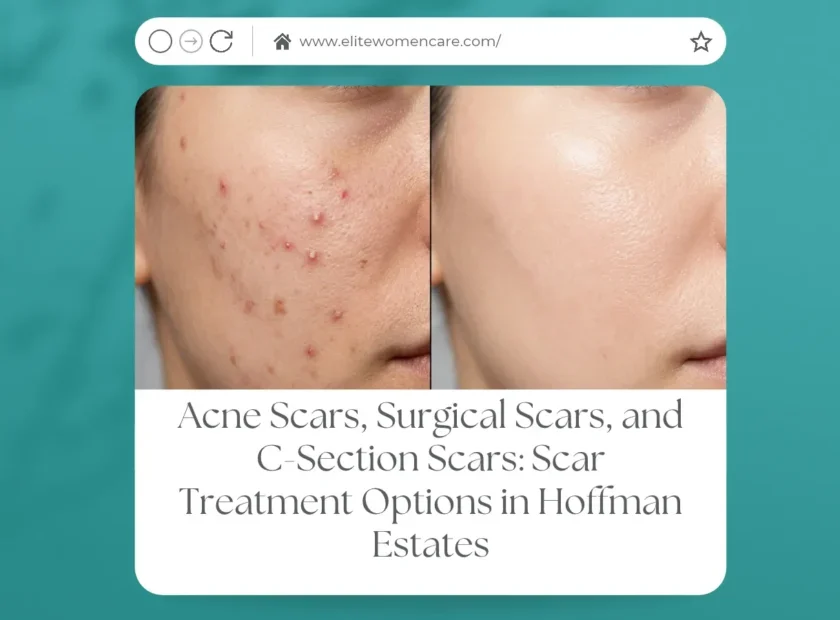
Acne Scars, Surgical Scars, and C-Section Scars: Scar Treatment Options in Hoffman Estates

A scar is the body finishing a repair quickly rather than perfectly. When skin is injured past a certain depth, it does not rebuild the original architecture. It lays down collagen in a hurry, in the wrong direction, and moves on to the next problem. What remains is functional tissue that looks and behaves differently from everything around it, and every acne scar treatment worth paying for starts from that single fact.

That holds whether the injury was a cystic breakout at nineteen, an appendectomy at thirty five, or a cesarean delivery last spring. The mechanism is identical, which is why acne scar treatment and the work we do on surgical scars overlap far more than most patients expect. What differs is depth, age, location, and how much of the scar is texture rather than color.

Three Kinds of Scars, Three Different Answers

Scars that sit below the surface

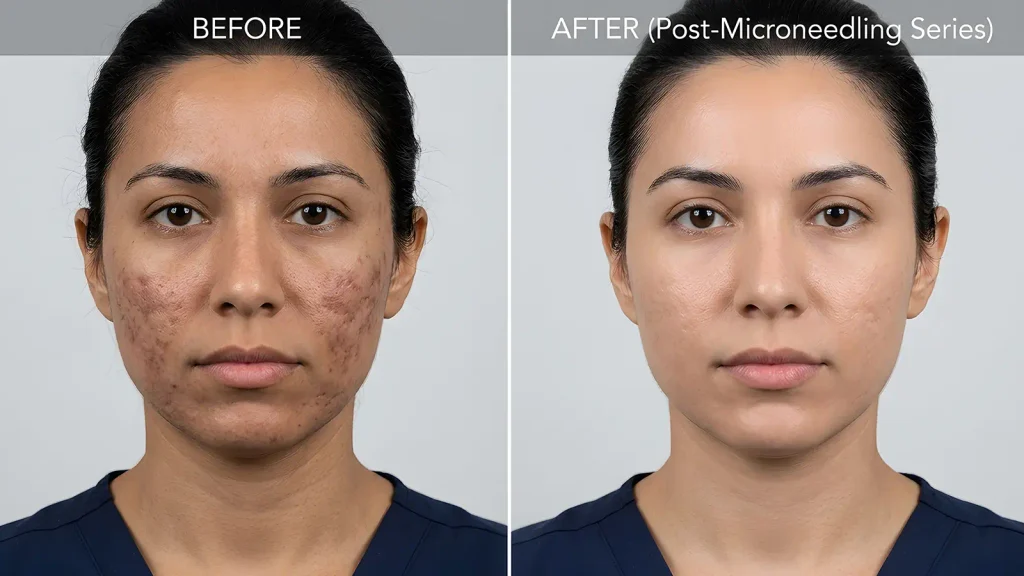
Atrophic scars are the pitted, indented marks most people picture when they say acne scarring. Boxcar, rolling, and ice pick scars all describe the same shortfall: collagen that was never replaced. Anything that helps has to rebuild volume from underneath, which is why microneedling for acne scars targets the dermis and why creams do nothing at all.

Scars that sit above it

Hypertrophic scars and keloids are the opposite failure, collagen overproduction. They are firm, raised, sometimes itchy or tender, and they are far more common along surgical incisions than on the face. Deeper skin tones are more prone to them, which changes how aggressively we treat.

Scars that are only color

Postinflammatory hyperpigmentation, along with the pink or purple of a scar still in its first year, is not a texture problem at all. Run a finger across it and the skin is smooth. The color simply has not resolved yet. These respond to light based tools and to time, and treating them as though they were pitted scars wastes both.

Sorting a scar into the right category is most of the work in any acne scar treatment plan. It is also the step patients skip when they buy a device online and start rolling it across their cheeks at home.

Matching the Tool to the Scar

Acne scar treatment at our practice relies on a combination of technologies selected according to the type of scar, its depth, and the patient’s skin type. The honest answer is that most patients need a treatment plan tailored to what is actually causing the scar’s appearance.

Radiofrequency microneedling

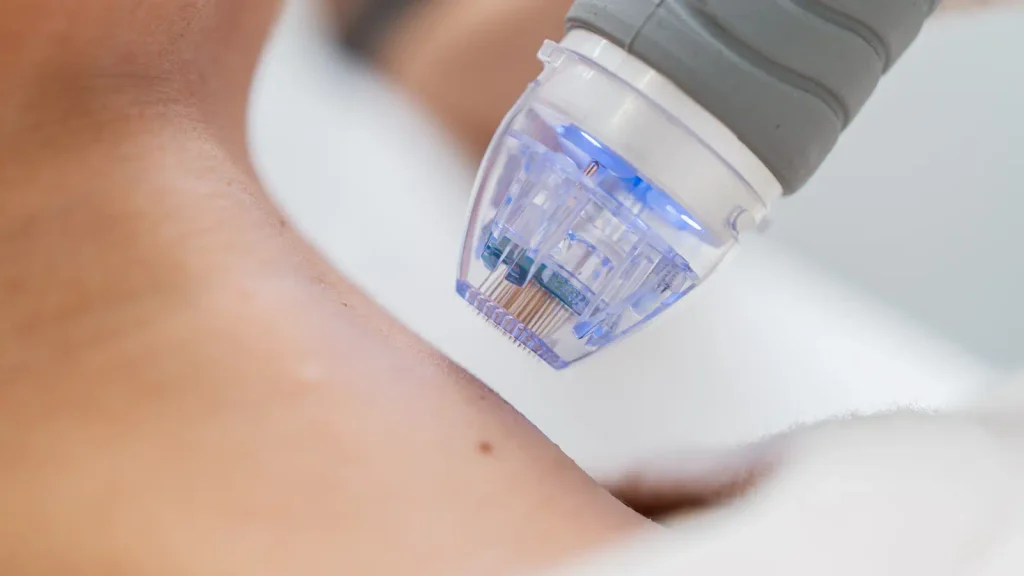
Secret RF drives insulated needles to a set depth and releases radiofrequency energy at the tip, injuring the dermis in a controlled pattern while leaving the surface largely intact. The body answers by producing new collagen over the months that follow. This is the workhorse of microneedling for acne scars, particularly rolling and boxcar types, and it is safe across a wide range of skin tones because so little of the energy is absorbed at the surface.

A course of RF microneedling scar treatment usually runs three to four sessions spaced about a month apart. Redness lasts a day or two. Results arrive slowly and keep arriving, with most of the change visible between months three and six. Patients who judge RF microneedling scar treatment at week two always conclude it did nothing, which is why we photograph rather than ask.

Light for the color that lingers

IPL addresses what texture treatments cannot: the redness of a young scar and the brown marks left behind by inflammation. It does nothing for depth. Used alongside an acne scar treatment plan, it usually delivers the earliest visible difference, because color reads on camera long before contour does.

TechnologyBest forTypical courseDowntimeWhen results show
Secret RF microneedlingRolling and boxcar acne scars, general texture3 to 4 sessions, monthly1 to 2 days of rednessMonths 3 to 6
IPLRedness, brown pigment, young scars3 to 5 sessionsMinimalAfter 2 to 3 sessions

Cesarean and Surgical Scars

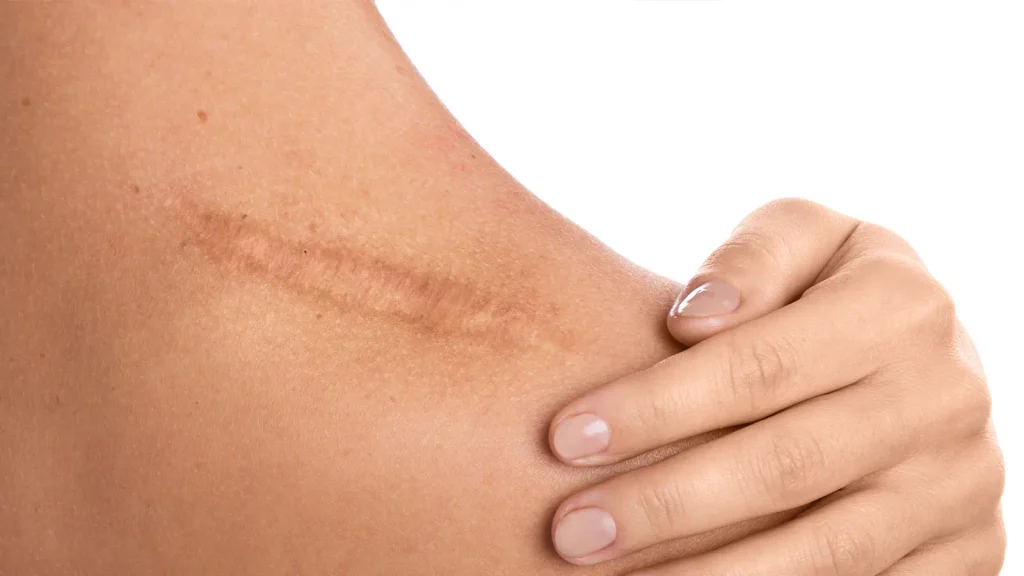
A cesarean scar is a different animal from acne scar treatment and deserves its own conversation. It is long, linear, often numb along one edge, and frequently adhered to the tissue underneath, which is why many women describe a pulling sensation years later rather than a cosmetic complaint.

Effective c-section scar treatment addresses three things in order: the texture, the appearance of the scar tissue, and the color. Treatment is selected according to whether the scar is raised, indented, firm, discolored, or associated with surrounding tissue tightness. RF microneedling scar treatment may help improve texture and soften the appearance of the scar, while IPL can address persistent redness or pigmentation once the scar has matured.

Timing matters here more than anywhere else. A c-section scar treatment started at six months, once the incision has fully closed and the redness has begun to settle, can produce meaningful improvement. Patients who wait until the scar has gone white may still benefit from treatment, although color-based treatments have less to target at that stage.

The phrase surgical scar removal turns up constantly online, and it is worth saying plainly: scars are not removed. They are softened, flattened, faded, and made less noticeable. A realistic goal for surgical scar removal is a scar you stop noticing in the mirror, not one that vanishes from your skin. Any provider promising vanish is selling something. Honest surgical scar removal is measured in shadows that no longer catch the light.

Why Waiting Is Rarely the Right Move

Patients often assume a scar should settle for years before anyone touches it. For color, patience genuinely helps. For texture and firmness, waiting may not always be necessary. Collagen remodels most readily in the first twelve to eighteen months, which is when the same acne scar treatment produces the most change for the least effort. An eight year old ice pick scar can still improve. It simply takes more sessions to get there, and treating acne scars late is more expensive than treating them on time. The scar treatment Hoffman Estates patients delay longest is usually the one that would have worked fastest.

Questions We Hear in Consultation

Is there a way to erase acne scars completely?

No, and anyone who says otherwise should worry you. How to get rid of acne scars is the most searched phrase on this subject, and the truthful answer is that a well built plan typically improves depth and shadowing by half or better, which in practice means scars that no longer catch the light across a room. Complete erasure is not an outcome of acne scar treatment at any price point, and asking how to get rid of acne scars entirely is the wrong question to walk in with.

How many sessions will I need?

Microneedling for acne scars typically runs three to four sessions, occasionally six for deep ice pick scarring. We reassess at the third session using standardized photography rather than memory, which is the only fair way to judge an acne scar treatment course.

Does it hurt?

Comfort is rarely the barrier to acne scar treatment that patients expect it to be. Topical numbing for forty five minutes makes RF microneedling comfortable for nearly everyone. Treatment is generally well tolerated, although the experience and level of discomfort can vary depending on the area being treated and the intensity of the procedure.

Can an old cesarean scar still improve?

Yes. C-section scar treatment can improve the appearance of scars even years after surgery. Texture and firmness may respond to treatment even when a scar is no longer new. Color is the part that responds less well once it has faded to white, because there is less pigment or redness left to target.

Is any of this safe for deeper skin tones?

RF microneedling scar treatment is, because the energy is delivered below the surface rather than absorbed by pigment, which makes microneedling for acne scars a reasonable first choice across skin types. IPL calls for more caution and a careful consultation. Ask any provider this before booking, not after, and be wary of a quick yes. The best acne scar treatment for deeper skin is the one chosen conservatively.

Where to Begin

The scar treatment Hoffman Estates patients ask us about most often is not a single treatment at all. It is a sequence, built after someone has looked at the scar in person and named what type it is, whether that ends in microneedling for acne scars, light therapy, or some combination of the two. Any scar treatment Hoffman Estates offers should begin with a diagnosis rather than a device, and booking without that step is how people end up three sessions into the wrong one. If you have spent a year searching how to get rid of acne scars, this is where that search should end.

Elite Women’s Care keeps gynecology and aesthetics under one roof, which matters more than it sounds for c-section scar treatment, since the providers treating the scar understand the surgery that created it. To talk through scar treatment Hoffman Estates residents can rely on, with someone who will tell you what is realistic before you spend anything, call (847) 781-1894.

August 26, 2026

Secret RF Microneedling: What to Expect Before and After

Secret RF microneedling tends to get lumped in with standard microneedling, and that comparison undersells what it actually does. The two treatments share a needle-based delivery method, but the similarities mostly stop there once radiofrequency energy enters the picture.

Patients considering this treatment for the first time usually have the same two questions: how much does it actually hurt, and how long until the results are worth showing off. Both deserve honest, specific answers rather than vague reassurance.

What Secret RF Microneedling Actually Does Beneath the Surface

Traditional microneedling creates controlled micro-injuries with fine needles, prompting the skin to repair itself and produce fresh collagen. Radiofrequency microneedling adds a second mechanism on top of that: as the needles reach a set depth, they release RF energy directly into the deeper skin layers, heating tissue in a way surface-only tools cannot replicate.

That combination is why the treatment tends to outperform standard needling for concerns like laxity, deeper texture irregularities, and stubborn scarring. The needles do the initial work, and the radiofrequency component reaches structural layers that needling alone rarely touches. It is also why recovery tends to run a little longer for radiofrequency microneedling than for surface-only needling, even though both are considered minimally invasive procedures with a fast bounce-back.
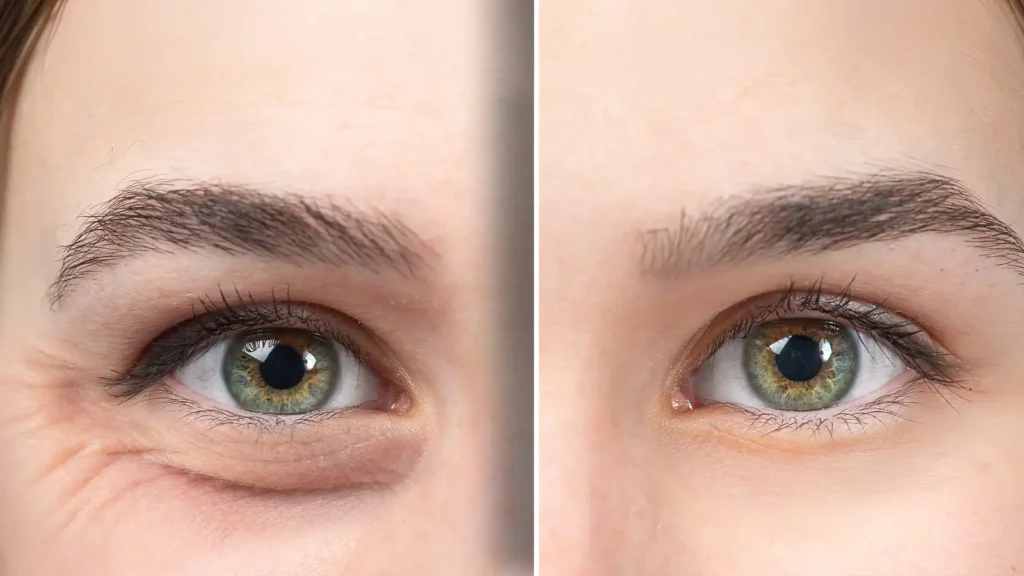
Before Your First Session

Preparation is fairly simple compared to more involved procedures. Most providers ask patients to avoid retinoids, exfoliating acids, and excessive sun exposure for about a week beforehand, since irritated or freshly sunburned skin does not respond well to the additional heat involved. Arriving with clean skin, free of makeup and lotion, also helps the numbing cream absorb evenly.

Patients on certain medications, or with active skin infections in the treatment area, are typically asked to reschedule rather than proceed, which is a normal and appropriate precaution rather than a red flag. It is also a good moment to ask your provider directly what to expect during recovery, based on your specific skin and the areas being treated.

During the Appointment

A topical numbing agent sits on the skin for roughly thirty to forty-five minutes before treatment begins, which is genuinely the least exciting part of the visit but makes the rest of it far more comfortable. The device itself passes over the treatment area in sections, with depth and energy adjusted based on the concern being addressed and the thickness of skin in that particular zone.

Most sessions run somewhere between thirty and sixty minutes. Patients describe the sensation as a rhythmic pressure with occasional warmth, rarely described as sharp pain thanks to the numbing.

Your Recovery, Day by Day

Downtime is one of the most common questions we field, and the honest answer is that it is real but short. Here is the recovery timeline most patients follow after Secret RF microneedling:

Day 0, right after treatment → skin looks flushed, similar to a moderate sunburn, with pinpoint bleeding possible in the first hour.

Day 1 to 2 → redness softens noticeably. Mild swelling, especially around the eyes if that area was treated, typically peaks here before improving.

Day 3 to 5 → fine flaking or peeling can appear as the outer skin layer sheds. This is normal and should not be picked at or exfoliated.

Week 2 → skin generally looks and feels close to normal, often with a visible brightness that patients notice before anything else changes.

Week 4 and beyond → early collagen induction becomes visible, with texture looking noticeably smoother and pores appearing tighter.

Month 3 → deeper structural remodeling continues well after the skin looks fully healed, since new collagen keeps forming for months after the actual appointment.

Following this recovery timeline closely, particularly the sun protection and gentle skincare parts, has a real effect on how even the final results look.
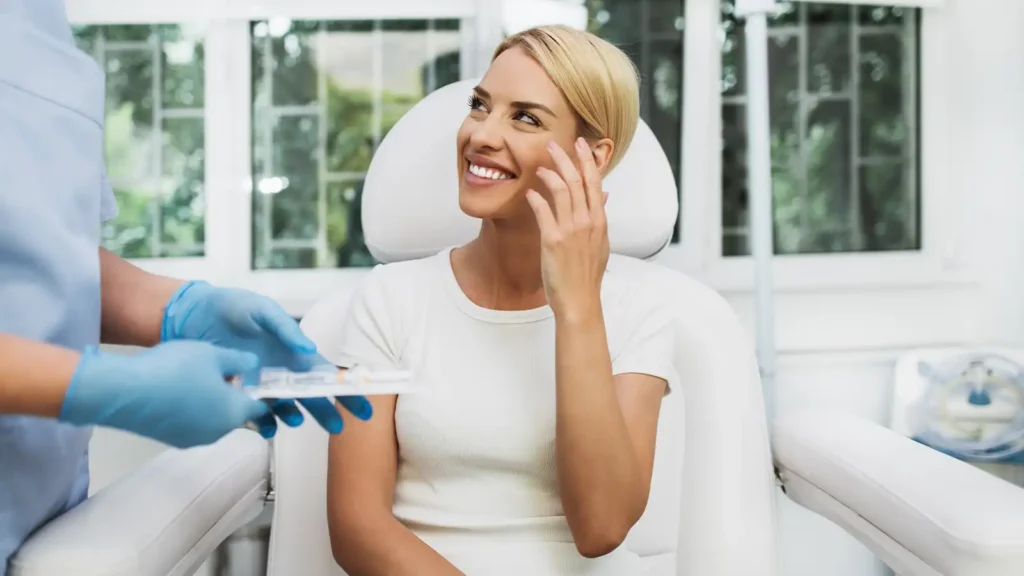
What Results Look Like Over Time

The visible glow patients notice around week two is not the main event. It is a preview. Real collagen induction unfolds gradually over the following months as the body rebuilds structural tissue in response to the controlled heat delivered during treatment. Collagen induction of this depth is simply not something surface-level skincare products can replicate on their own, which is part of why patients who switch from at-home tools to an in-office device are often surprised by the difference.

How Many Sessions Most Patients Book

Most providers recommend a series of three to four sessions spaced four to six weeks apart for meaningful, lasting change. A single session can soften mild concerns, but the layered effect of repeated treatments is where skin texture improvements become genuinely dramatic rather than subtle. Each additional session builds on the collagen induction triggered by the last, which is part of why spacing matters more than most patients initially assume.

Who It Helps Most: Scarring, Texture, and Laxity

Acne scarring is one of the most common reasons patients book Secret RF microneedling, particularly rolling or boxcar scars that have not responded well to topical treatments. The combination of mechanical injury and heat reaches deeper into scar tissue than surface treatments typically can.

Beyond acne scarring, patients also seek it out for enlarged pores, mild skin laxity, and uneven skin texture left behind by sun damage or aging. It is not a substitute for surgical procedures addressing significant sagging, but for early to moderate concerns, results are often meaningfully more noticeable than what standard microneedling delivers alone, and the improved skin texture tends to hold up well over time.

How It Compares to Traditional Microneedling

The core difference comes down to depth and mechanism. Standard microneedling works entirely at the surface, relying on the needles alone to trigger repair. Radiofrequency microneedling adds thermal energy at a controlled depth, which is why recovery, while still short, tends to involve slightly more redness and a day or two more downtime than standard needling alone.

For patients with mild concerns, standard microneedling may be sufficient. For scarring, texture irregularities, or early laxity, the added radiofrequency component generally produces results worth the extra recovery day, and the improvement in skin texture tends to be noticeably more even by the third session.

Quick Answers Before You Book

How many sessions of Secret RF microneedling will I need? Most patients see meaningful change after three to four sessions, though a single treatment can soften minor concerns on its own.

Does radiofrequency microneedling hurt more than regular microneedling? Not significantly, thanks to topical numbing, though some patients notice slightly more warmth during the radiofrequency portion of treatment.

Is Secret RF microneedling safe for acne scarring on darker skin tones? Yes. Because it works beneath the surface rather than targeting surface pigment, it carries a favorable safety profile across a wide range of skin tones.

What does the recovery timeline look like if I have sensitive skin? Expect slightly more redness in the first two days, but the overall recovery timeline rarely extends beyond a week even for sensitive skin types.

Who Should Wait or Choose Something Else

This treatment is not the right fit for everyone, and a good provider will tell you that plainly rather than upselling a series you do not need. Patients who are pregnant, have active skin infections, or have a history of keloid scarring are typically advised to explore other options or wait until circumstances change. Very recent sun exposure, active cystic acne, or certain blood-thinning medications can also push a consultation toward a different treatment path.

For patients who are cleared to proceed, the honest expectation is gradual improvement rather than an overnight transformation. Skin texture rarely changes dramatically after one appointment. What tends to happen instead is a steady accumulation of small gains, session after session, until the cumulative difference becomes obvious in photos taken months apart, even if it was hard to notice week to week in the mirror.

Booking at Elite Women’s Care in Hoffman Estates

Our Hoffman Estates providers build each treatment plan around your specific skin concerns, whether that means acne scarring from years ago or early texture changes you have only recently started noticing. Depth, energy, and session spacing are all adjusted individually rather than run on a single default setting.

If you are curious whether Secret RF microneedling fits your skin’s needs, a short consultation will answer that far more accurately than researching on your own. Reach out to schedule an assessment, and we will map out a realistic timeline for recovery and results, built around your skin, your goals, and how your skin texture responds along the way.

August 20, 2026

Laser Hair Removal on Darker Skin Tones: Why the Device Matters

For years, laser hair removal for darker skin tones carried a reputation it never fully deserved: risky, unpredictable, prone to burns or lingering discoloration. That reputation was not really about the treatment itself. It was about the equipment doing the treating, and a lot of clinics simply were not using the right machine for the skin sitting in the chair.

Technology has moved on considerably since those early warnings became common knowledge, though plenty of patients still walk in with understandable hesitation, and that hesitation deserves a real answer rather than a brush-off.

Why Older Lasers Left Darker Skin Behind

Most first-generation hair removal lasers relied on a single, high-intensity pulse targeting melanin, the pigment responsible for hair color. The problem is that melanin does not only live in the hair follicle. It also sits in the surrounding skin, and in melanin-rich skin, a strong single pulse struggles to tell the difference between the two.

That confusion is where hyperpigmentation risk comes from. When a laser dumps too much energy into the skin’s surface rather than the follicle beneath it, the result can be burns, patchy discoloration, or dark marks that take months to fade. Patients with Fitzpatrick IV through VI skin types were, for a long time, told to simply avoid laser treatment altogether rather than risk it.

That advice was not wrong given the tools available at the time. It is outdated now, and treating it as gospel today does a disservice to patients who could otherwise get excellent, predictable results.

What Actually Makes Soprano Titanium Different

Soprano Titanium approaches the problem from an entirely different angle. Instead of firing one aggressive pulse and hoping the follicle absorbs more heat than the surrounding tissue, it delivers energy gradually, in a slow sweep, using a cooled handpiece that keeps the skin’s surface comfortable throughout the session.

This gradual heating method, sometimes described as an in-motion or sweeping technique, gives heat time to build safely at the follicle without overwhelming the skin above it. Patients typically describe the sensation as a steady warmth rather than a sting, and it is one of the main reasons Soprano Titanium has become the standard many providers now recommend for melanin-rich skin.

“The biggest misconception patients bring in is that laser hair removal for darker skin tones is inherently more dangerous. It isn’t. It’s the device that was dangerous, not the skin. Once you switch to a machine built for gradual heating, the safety profile changes completely.”

That distinction, between skin being risky and outdated equipment being risky, sits at the center of nearly every conversation we have about laser hair removal for darker skin tones.

Where Fitzpatrick Skin Type Comes Into the Conversation

Every laser hair removal consultation should start with an honest look at your Fitzpatrick skin type, a classification scale running from I, very fair, to VI, deeply pigmented. This scale exists precisely because skin does not behave uniformly under laser energy, and a device calibrated for type II skin can genuinely injure someone with type V or VI skin if used carelessly.

Knowing your Fitzpatrick skin type before booking is not a formality. It determines settings, pulse duration, and in older systems, whether treatment should happen at all. With multi-wavelength platforms, that same classification instead becomes a guide for fine-tuning rather than a reason for exclusion, which is a meaningful shift for anyone who was turned away in the past.

The Nd:YAG Advantage for Deeper Melanin

The technical detail that matters most for darker skin is wavelength. Soprano Titanium combines three: 755nm, 810nm, and 1064nm. That last figure, the Nd:YAG wavelength, penetrates more deeply and is far less attracted to surface melanin than shorter wavelengths.

Because Nd:YAG energy bypasses much of the pigment sitting near the skin’s surface, it can reach the follicle beneath without overheating the layers above it. This is the physics behind why laser hair removal for darker skin tones works reliably on a properly equipped multi-wavelength device but carries real hyperpigmentation risk on a single-wavelength alexandrite laser, which was never designed with deep melanin in mind.

Preparing for Your Appointment

A little preparation goes a long way toward keeping hyperpigmentation risk as low as possible. Shave the treatment area within a day of your appointment rather than waxing or plucking, since the laser needs a hair root to target, not surface hair. Avoid sun exposure and self-tanner for at least two weeks beforehand, since freshly tanned or sunburned skin temporarily raises surface melanin and complicates settings.

Retinoid products and certain acne medications can also increase sensitivity, so most providers ask patients to pause these for a few days before treatment. None of this is complicated, but skipping it is one of the more common reasons results end up less even than expected.

What a Session Actually Feels Like

Most appointments run between fifteen and forty-five minutes depending on treatment area. The handpiece stays cool to the touch throughout, and patients frequently comment that the sensation resembles a warm massage more than the snapping-rubber-band feeling associated with older devices.

Redness is possible immediately afterward, generally subsiding within a few hours. There is no meaningful downtime, no blistering, and no reason to avoid daily activities.

How Many Sessions You’ll Actually Need

A typical course, usually six to eight sessions spaced several weeks apart, produces a lasting reduction in hair growth as follicles cycle through their natural growth phases. Fewer sessions than that tend to undertreat the follicle, since hair grows in staggered cycles rather than all at once.

Aftercare That Actually Protects Your Skin

Sun protection matters more after treatment than before it. Freshly treated, melanin-rich skin is briefly more reactive, and unprotected sun exposure in the days following a session raises hyperpigmentation risk unnecessarily. A broad-spectrum sunscreen, reapplied if you are outdoors, is the single most useful habit here.

Keep the area cool for the first 24 hours, skip hot showers and saunas if you can, and moisturize gently rather than applying active skincare ingredients like retinol or exfoliating acids until any redness has fully settled.

A surprising number of the myths still circulating about laser hair removal for darker skin tones trace back to a handful of bad outcomes from a decade ago, long before multi-wavelength devices became widely available.

Common Myths Worth Retiring

Myth: Darker skin should always avoid laser hair removal. This was reasonable advice a decade ago and is no longer accurate for patients treated with modern multi-wavelength equipment built for melanin-rich skin.

Myth: Tanned skin makes any laser safer to use. The opposite is often true. Tanned skin temporarily raises surface melanin, and even devices well suited to darker skin generally recommend avoiding recent sun exposure before treatment.

Myth: More painful means more effective. Comfort and effectiveness are not the same variable. A gradual heating approach can be both more tolerable and more precise than a harsh single pulse.

Quick Answers Before You Book

Is laser hair removal for darker skin tones painful? Most patients describe warmth rather than pain, particularly with in-motion, multi-wavelength devices designed with comfort in mind.

Why does Nd:YAG matter so much for my skin tone? Its longer wavelength travels deeper and skips past most of the surface pigment, which lowers hyperpigmentation risk considerably compared to shorter-wavelength lasers used alone.

What if I’m not sure of my Fitzpatrick skin type? That’s exactly what your consultation is for. A trained provider will assess it in minutes and choose settings accordingly, no guesswork required on your part.

Booking at Elite Women’s Care in Hoffman Estates

Our Hoffman Estates team treats every consultation as an assessment first, not a sales pitch. We evaluate your Fitzpatrick skin type, discuss your hair growth pattern, and walk through exactly how Soprano Titanium settings will be tailored to you before a single pulse is delivered.

If you have been told in the past that laser hair removal for darker skin tones was not an option for your complexion, we would genuinely welcome the chance to have that conversation again with current technology on the table. Reach out to schedule a consultation, and we will show you the device, explain the settings, and answer every question before you commit to anything.

August 11, 2026

How Long Does Botox Last? A Hoffman Estates Provider Explains

Ask ten patients how long does Botox last, and you will likely hear ten slightly different answers, most of them partly right. The honest response sits somewhere between three and four months for the average adult, though the real number depends on your muscles, your metabolism, and how you use the treated area every single day.

At Elite Women’s Care in Hoffman Estates, this question comes up in nearly every injectable consultation. Patients want a number they can circle on a calendar. We can give them a range, but the exact fade date is something only their own face reveals, session by session.

So, How Long Does Botox Last in the First Place?

The three to four month figure gets repeated so often it almost sounds like marketing, but it holds up in practice for most healthy adults treated at a standard dose. How long does Botox last for any one person depends on variables no chart fully captures: muscle strength, treatment area, injection technique, and simple genetics.

What tends to surprise first-time patients is that the fade is not a cliff. It is a slope. Movement returns gradually, in small increments, over several weeks rather than all at once.

The Timeline Nobody Explains Properly

Botox does not work the moment the needle leaves your skin, and it does not vanish the instant you notice a line reappearing. The process runs on its own internal clock, one most patients are never actually walked through.

Within 24 to 72 hours, the neurotoxin begins binding to nerve endings at the treated site. Most people see the first softening of movement around day three, with full Botox results settling in by day 10 to 14. That peak, when results look their smoothest, typically holds steady for six to eight weeks before a slow, gradual decline sets in rather than a sudden drop-off.

By month three, muscle activity usually starts returning in small increments. Some patients notice a faint line when they raise their eyebrows; others do not see movement return until closer to month four. It fades the way daylight fades in the evening, slowly enough that you may not clock the exact moment it happened.

Average Duration by Treatment Area

Not every area of the face responds the same way, and patients are often surprised by how much location changes the math.

Treatment AreaTypical DurationWhy
Forehead lines3 to 4 monthsFrequent muscle use can shorten this slightly
Frown lines (glabella)3 to 4 monthsOften the longest-lasting area for most patients
Crow’s feet2.5 to 3.5 monthsMuscles here are smaller and more expressive
Bunny lines (nose)2 to 3 monthsShorter window due to muscle size
Jawline and masseter4 to 6 monthsLarger muscle mass extends the timeline

Botox duration clearly is not one-size-fits-all, which is exactly why the chart above should be treated as a starting point rather than a promise.

Why Your Results and Your Friend’s Never Quite Match

No two patients metabolize Botox identically, and that difference is the root of most “why did hers last longer than mine” conversations we field at the practice. Botox duration depends heavily on how quickly your body processes the protein, which is largely genetic and mostly outside anyone’s control.

Muscle strength plays an equally large role. Someone who works out heavily, uses very expressive facial movements for their job, or grinds their teeth at night tends to burn through Botox results faster than someone with a calmer facial pattern. The muscle is, in a sense, working against the treatment every time it contracts with force.

Dosage matters too. An injector who underdoses to save cost, or dilutes the product more than recommended, hands you a shorter window before movement returns. This is one of the clearest arguments for choosing a provider who calculates dosing according to your anatomy rather than a fixed template applied to everyone who walks through the door.

Consistency of visits shifts the equation as well. Patients who return every three to four months, rather than waiting until results fully wear off, often report their muscles settling into a more relaxed resting pattern, which can gradually stretch Botox duration over repeated visits. This is not guaranteed for everyone, but we see the pattern often enough at our Hoffman Estates location to mention it during consultations.

Signs You’re Due for a Touch-Up

You do not need to wait until lines return to their pre-treatment depth before booking again. Most patients notice a handful of early signals first: expression lines becoming faintly visible at rest, a subtle return of movement in the treated muscle, or makeup settling differently into forehead creases by late afternoon.

Booking a Botox touch-up around week 10 to 12, rather than waiting for a complete fade, tends to produce a smoother transition and avoids the jarring contrast some patients dislike seeing in the mirror. Spacing each Botox touch-up on a fairly consistent schedule also tends to soften the muscle’s rebound, so results hold a little longer with each visit, and how long does Botox last on the next round often improves slightly as a result.

Getting More Mileage From Every Treatment

A few habits genuinely help extend how long results hold, even if none work miracles alone. Daily sunscreen protects the treated area from UV-driven collagen breakdown, which indirectly supports smoother skin between sessions. Staying hydrated and limiting alcohol in the days following treatment helps the product settle evenly through the muscle tissue.

None of these habits will double your Botox results. Combined, though, they can realistically add a few meaningful weeks between each Botox touch-up, which matters if you are planning around a wedding, a reunion, or simply your own patience for rebooking.

Botox Versus Filler: Why the Clocks Run Differently

Patients frequently ask why their filler seems to last so much longer than their Botox, and the answer comes down to mechanism rather than product quality. Botox works by temporarily relaxing muscle activity, so results fade as nerve signaling gradually returns. Filler physically occupies space beneath the skin and breaks down far more slowly, often lasting eight months to two years depending on the product.

This is why many patients pair the two: filler addresses volume loss, while anti-wrinkle injections handle the dynamic movement that creates expression lines in the first place. For patients newer to anti-wrinkle injections, starting with a slightly lower dose is often the smarter first move, since it makes future sessions easier to calibrate.

Quick Answers to the Question Everyone Asks

How long does Botox last for a first-time patient? Often a touch shorter than for repeat patients, sometimes closer to eight or ten weeks, since the muscle has not yet adjusted to a relaxed pattern of movement.

Are anti-wrinkle injections safe to repeat every few months? Yes, for most healthy adults. Regular, appropriately spaced anti-wrinkle injections are standard practice and typically well tolerated.

How soon can I book my next Botox touch-up? Most providers recommend waiting until you notice the earliest signs of fading, generally around week 10 to 12, rather than booking on a fixed calendar date.

Does Botox duration change as I age? Somewhat. Skin thickness and muscle tone shift over the years, and both factor into how the treatment settles and how gradually it wears off.

What Booking Looks Like at Elite Women’s Care

Our team in Hoffman Estates treats injectables as a precision service rather than a one-size-fits-all appointment. Dosing is mapped to your muscle strength, your goals, and how your Botox results have held up after previous sessions, whether this is your very first visit or your fifteenth return trip.

If you are trying to plan around a specific event, or you are simply tired of guessing how long does Botox last for your particular face, a quick consultation will give you a far more accurate personal timeline than any general chart. Our approach to Botox duration is individual by design, built around your muscle patterns rather than a generic average. Reach out to schedule an assessment, and we will walk through exactly what your face, and your schedule, actually need.

July 19, 2026

You Just Got Botox. Now What Actually Matters for Your Results

The injections took ten minutes. You barely felt them. You are already back in your car checking your forehead in the rearview mirror, wondering if anything is different yet. Here is the truth nobody tells you. Those ten minutes in the chair were the easy part. What you do over the next few hours and days will determine whether your Botox aftercare gets you the smooth, natural results you paid for or leaves you disappointed.

At Elite Women’s Care Med Spa in Hoffman Estates, we have seen the difference proper aftercare makes. We have also seen what happens when patients ignore it. This guide is everything we wish every patient knew before they walked out our door.

Your Aftercare Timeline: The First 48 Hours

TimeframeDo ThisAvoid This
First 4 HoursStay upright. Keep head above heart. Light walking only.Lying down, bending over, touching face, strenuous exercise.
First 24 HoursGentle skincare, broad spectrum sunscreen, hydration.Alcohol, blood thinners, heat exposure, aggressive products.
First WeekNormal facial expressions, consistent skincare, patience.Facial massage, lasers, peels, sleeping face down.

Why the First Four Hours Are Everything

Botox is a neurotoxin. It works by blocking the signals between your nerves and your facial muscles. But here is the catch. Right after injection, it is still moving. It has not fully attached to your muscle receptors yet. That means gravity, pressure, and blood flow can all shift it to places you do not want it to go. Your Botox aftercare during this window is not optional. It is the foundation of your entire result.

Stay Vertical

Do not lie down. Do not bend over to tie your shoes. Do not do that thing where you hang your head upside down to dry your hair. For four solid hours, keep your head above your heart. Gravity is either your ally or your enemy right now. Choose ally.

Hands Off

Your skin feels weird. Small bumps might appear at the injection sites. You want to touch them. Do not. Rubbing or massaging can push the product into adjacent muscles. Next thing you know, your eyelid is drooping or one eyebrow sits higher than the other. Let the Botox settle exactly where your provider placed it.

Skip the Gym

We know. You had a workout planned. But intense exercise increases blood flow and raises your heart rate. That circulation boost can cause Botox to migrate beyond the targeted muscles. Light walking is fine. Anything that makes you sweat heavily or gets your heart pumping hard needs to wait until tomorrow.

The First Twenty Four Hours: Your Checklist

Do ThisAvoid This
Use gentle cleanser and simple moisturizerHarsh exfoliants, retinoids, active ingredients
Apply broad spectrum sunscreenSaunas, hot tubs, steam rooms, tanning beds
Stay hydrated with waterAlcohol and blood thinning supplements
Sleep on your back if possibleSleeping face down or on your side

“I got Botox twice before and never noticed much difference. Then my provider at Elite actually explained aftercare to me. Third time was completely different. I finally understood why it matters.”
— Elite Women’s Care Med Spa patient, age 35

The First Week: Setting Yourself Up for the Long Game

Manage Your Expectations

Botox does not work instantly. Most people start noticing changes around day three to five. Full results appear at about two weeks. Do not panic if you still see movement after a few days. Do not judge your outcome prematurely. If something genuinely concerns you after the two week mark, call us. We would rather adjust than have you worry silently.

Use Your Face Normally

Old advice used to say make exaggerated expressions to work the Botox in. That is nonsense. Just use your face normally. Smile, frown, raise your eyebrows. Natural movement helps the product integrate properly. Forced, repeated expressions do nothing helpful and might actually cause uneven distribution.

Keep Up Your Skincare

Healthy skin makes Botox look better and last longer. Continue with medical grade products that support collagen production and hydration. Daily broad spectrum sunscreen is non-negotiable. UV damage breaks down collagen and accelerates the return of wrinkles. You just invested in smoothing them. Protect that investment.

Plan Your Next Appointment

Results typically last three to four months. The patients who maintain the most consistent, natural appearance book their next appointment before the current treatment fully wears off. Over time, many people find their results last longer because the treated muscles become trained to stay relaxed.

Side Effects: What Is Normal and What Is Not

Normal (No Action Needed)Call Us Immediately
Mild redness at injection sites
Slight swelling or tiny bumps
Minor bruising
Mild headache or tenderness
Drooping eyelid or eyebrow
Difficulty swallowing or breathing
Severe or persistent headache
Signs of infection
Uneven results after 2 weeks

These are rare, but they matter. At Elite Women’s Care Med Spa, we are always available to address concerns. Your safety and satisfaction are not afterthoughts. They are the point.

“My first Botox experience was a disaster because I went to a party the same night and drank wine. Bruised everywhere and the results were uneven. Second time I followed every rule. Completely different story.”
— Elite Women’s Care Med Spa patient, age 44

The Habits That Make Botox Last Longer

Sun Protection Every Single Day

This cannot be overstated. UV exposure is one of the fastest ways to undo everything Botox does for you. Broad spectrum SPF 30 or higher, every morning, rain or shine. Reapply if you are outside for extended periods. Your skin will age slower, and your results will hold longer.

Hydration Inside and Out

Drink water. Use hydrating serums and moisturizers. Dehydrated skin looks dull and emphasizes fine lines. Well hydrated skin looks plump and smooth. The difference is visible, and it is entirely within your control.

Stress Management

Chronic stress causes facial tension. That tension deepens expression lines over time. Meditation, adequate sleep, regular exercise, whatever works for you. Your mental state shows on your face. Taking care of one helps the other.

Consider the Bigger Picture

Botox handles dynamic wrinkles from muscle movement. It does not replace volume or improve skin texture. For comprehensive rejuvenation, many patients combine it with dermal fillers, microneedling, or medical grade facials. We can design a plan that addresses everything you want to improve, not just one piece of the puzzle.

The Hard No List

To protect your results, completely avoid these for the specified timeframes:

Activity/ProductHow Long to Avoid
Facial massages or aggressive skincare2 weeks
Laser treatments or chemical peels2 weeks
Blood thinning medications (unless prescribed)24 hours minimum
Sleeping face downFirst night
Excessive alcohol consumption24 hours minimum

Your provider will give you a tailored list based on exactly what was treated and how.

“I used to think Botox was just for celebrities. Now I get it every four months and my skincare routine actually works better because the wrinkles are not fighting against everything I put on my face.”
— Elite Women’s Care Med Spa patient, age 39

The Bottom Line

Botox aftercare is not complicated. It is not time consuming. But it does require paying attention for a few days and making small choices that protect your investment. The patients who follow these guidelines consistently get smoother, more natural, longer lasting results. The ones who do not sometimes end up needing correction or simply seeing their results fade faster than necessary.

At Elite Women’s Care Med Spa, we do not just inject and send you on your way. We partner with you through the entire process, from your first consultation through every follow up. If you are considering Botox or have questions about your upcoming appointment, call our Hoffman Estates office. Ask us anything. We will give you honest answers, realistic expectations, and the guidance you need to get the most from every treatment.

Network Insurances
  • Aetna HMO
  • Aetna POS
  • Aetna PPO
  • Ambetter
  • Ascension Health
  • BCBS
  • BCBS HMO & PPO
  • Bright Health
  • Cigna
  • CIGNA Healthspring Medicare Advantage
  • Cigna HMO
  • Cigna POS
  • Cigna PPO
  • Clear Spring
  • GEHA
  • Health Network Option (Open Access)
  • HealthLink PPO
  • Humana
  • Medicare Advantage
  • MultiPlan
  • PHCS
  • SmartHealth
  • Unite Here Health
  • United Health Care
  • WellCare