
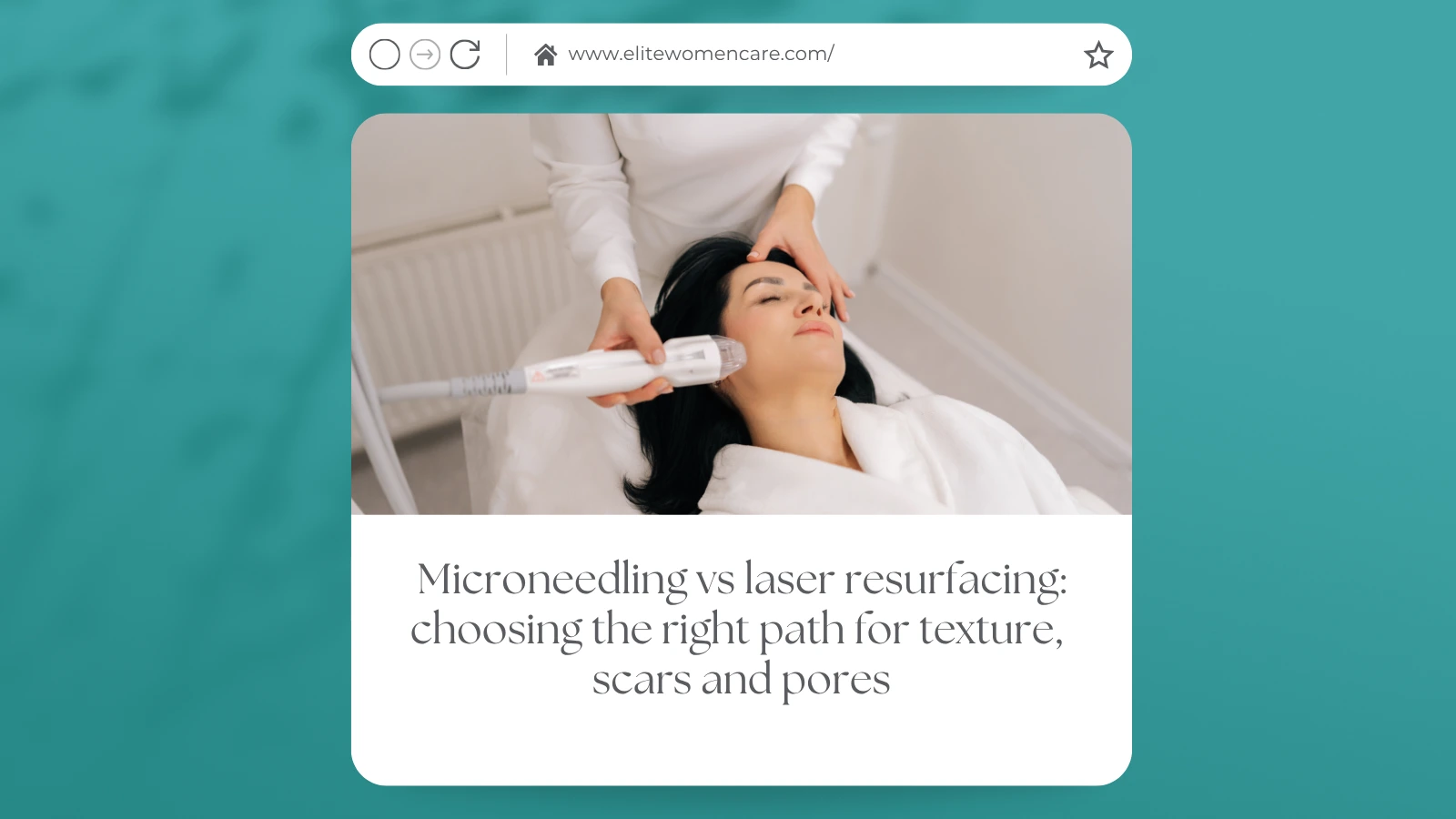
Microneedling vs laser resurfacing: choosing the right path for texture, scars and pores
Ask three friends how they smoothed out acne scars and you may get three different answers, which is exactly why the microneedling vs laser question comes up in so many consultations. Both approaches can soften scars and refine pores. They get there by different routes, and the route matters a great deal depending on your skin tone, your schedule and the problem you are trying to fix.
Instead of a list of pros and cons, this guide works through the situations that usually decide the choice. Find the one that sounds most like you.
The common ground
Every resurfacing treatment relies on the same principle. A controlled injury prompts the skin to repair itself, and that repair produces new collagen and elastin. Over the following weeks, skin becomes firmer and smoother, and indented scars gradually lift.
The difference lies in how the injury is created.
Laser resurfacing uses light energy. Ablative lasers, such as CO2 and erbium, remove thin layers of the skin’s surface. Nonablative fractional lasers leave the surface intact and heat narrow columns of tissue underneath it.
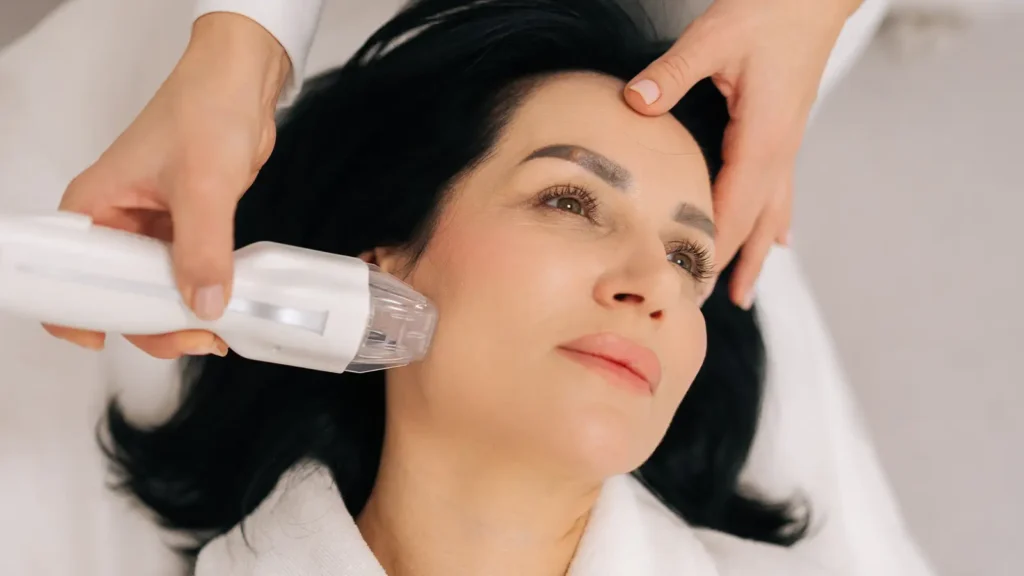
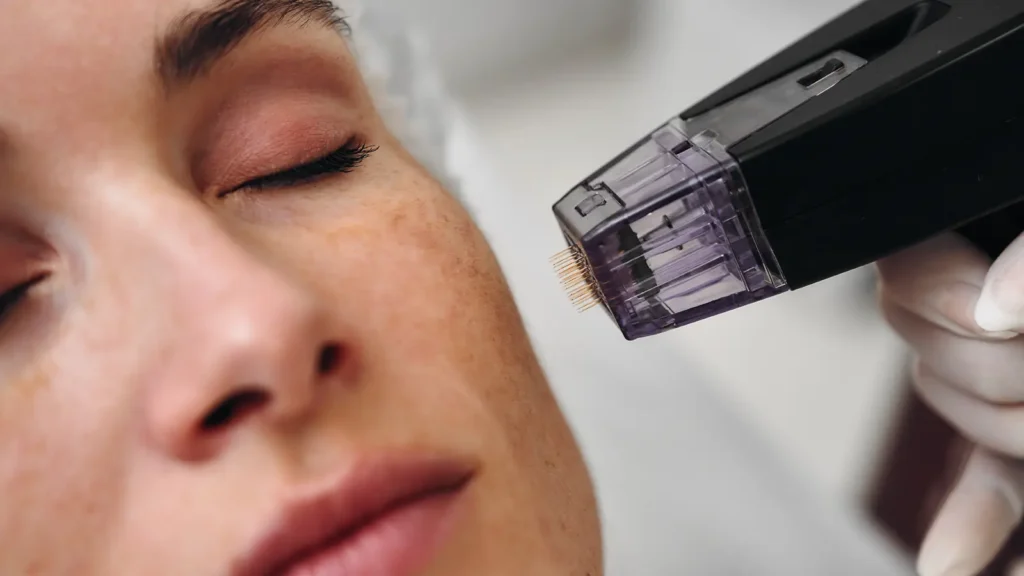
Microneedling uses tiny needles to create controlled channels in the skin. RF microneedling adds radiofrequency energy delivered through those needles, so heat reaches the deeper layers while the surface takes far less of the impact. At Elite Women’s Care we use Cutera Secret RF for this.
“I can’t disappear for a week”
For many people, this constraint settles the question by itself.
Laser resurfacing downtime depends heavily on the type of laser. Ablative treatments typically involve a week or more of raw, crusting or peeling skin, and redness can linger beyond that. Nonablative fractional lasers are gentler, usually with several days of redness and swelling.
With Secret RF, redness, swelling and mild irritation generally last 24 to 72 hours, and most people return to normal routines quickly. Makeup is usually fine again after a day or two. If your calendar is packed with work and family commitments, that difference counts for a lot.
“My skin tone is medium to deep”
This is where the comparison becomes more than a matter of preference.
Lasers work by delivering energy that pigment absorbs. In deeper skin tones, the melanin in the surface layer absorbs some of that energy too, which raises the risk of burns and postinflammatory hyperpigmentation, the dark patches that can appear after skin is irritated. Lasers can still be used on darker skin in experienced hands, but settings must be conservative and the margin for error is smaller.
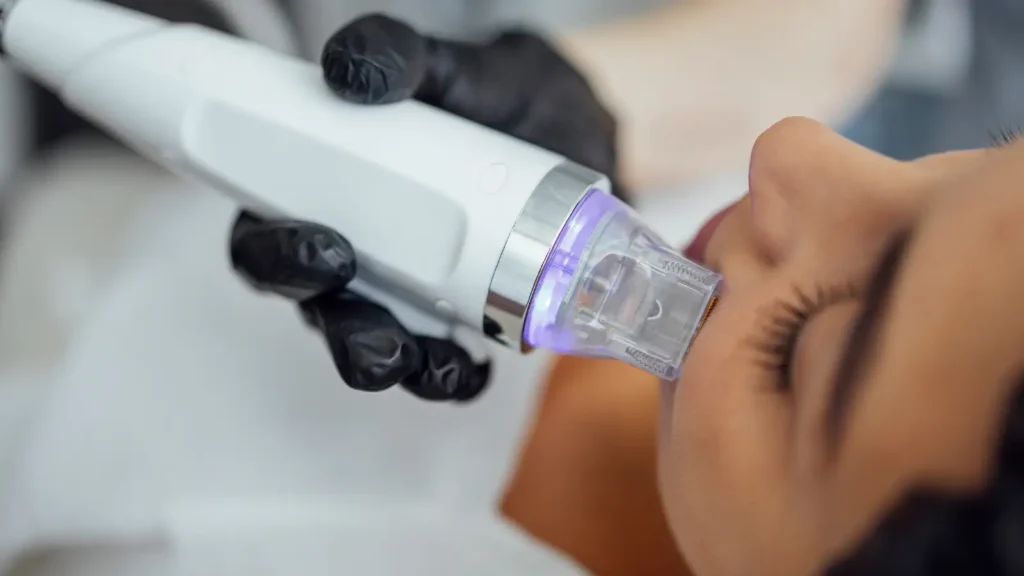
RF microneedling places most of its energy beneath the surface, so the outer layer that holds visible pigment is exposed to much less heat. That is why it is widely used for skin resurfacing for darker skin. The risk of pigment change is lower, though never zero, and good aftercare still matters. Daily sunscreen and avoiding harsh actives in the days after treatment protect your results whatever your skin tone.
“It’s mostly my pores and texture”
Enlarged pores are usually a sign of reduced firmness around the pore opening, often combined with oil production and the collagen loss that comes with age. A treatment for large pores has to rebuild that support, which is why surface products rarely make a lasting difference.
Both lasers and RF microneedling can help here. For many patients, RF microneedling is the more practical option because it targets collagen at depth with shorter recovery, and the same series also improves fine lines and rough texture. Results build gradually, with the best effects usually visible four to six weeks after treatment. A consistent routine at home, with gentle cleansing and daily sunscreen, helps keep pores looking refined between sessions.
“My main concern is brown spots”
Here the answer often leans away from microneedling. Surface pigment such as sun spots and age spots responds better to treatments that use light, because light can target the pigment directly. RF microneedling improves general tone as the skin renews, but it isn’t designed to break up individual spots.
At our office, V-IPL is the usual choice for that concern. Many patients combine a pigment treatment with RF microneedling for texture, spacing them according to their provider’s plan.
“I have acne scars, a C-section scar or stretch marks”
Indented acne scars, surgical scars and stretch marks all involve damaged or disorganized collagen. Both laser and RF microneedling can improve them, and the choice usually comes down to your skin tone and how much downtime you can accept. Our article on scar treatment options covers this in more depth, including which scars respond best.
A quick decision guide
If the microneedling vs laser decision still feels unclear, this summary is a useful starting point for your consultation.
| If this sounds like you | Usually the better fit |
|---|---|
| Little time for recovery | RF microneedling |
| Medium to deep skin tone | RF microneedling |
| Enlarged pores and rough texture | RF microneedling |
| Sun spots and surface pigment | A light treatment such as V-IPL |
| Deep wrinkles and can accept a long recovery | Ablative laser, at a practice that offers it |
| Loose skin on the face, neck or body | RF microneedling or fractional radiofrequency |
The right choice depends less on which device sounds newer and more on your skin tone, your goal and the downtime you can accept.
Why our office chose radiofrequency
To be transparent, Elite Women’s Care does not perform ablative laser resurfacing. We chose Secret RF microneedling and V-FR fractional radiofrequency because they treat texture, scarring and laxity across a wide range of skin tones with recovery that fits into real life. If your goals call for a laser we don’t offer, we will tell you, and we will explain why.
V-FR, short for volumetric fractional radiofrequency, works on a similar idea to a fractional laser, delivering energy in a grid of tiny points so that healthy skin between them speeds up recovery. It can be used on the face and neck as well as areas such as the chest, hands, abdomen and thighs. Redness and mild swelling after a session usually fade within a day or two.
A word about home microneedling
Rollers and pens sold for home use are a different category altogether. Their needles are short, they carry no radiofrequency energy, and they can’t reach the depth where scar remodeling happens. Used too often or without proper hygiene, they can also cause irritation, infection or new pigment problems. If you are comparing microneedling vs laser treatment based on results from a home device, you are not comparing like with like. Professional RF microneedling is performed with sterile tips and settings adjusted to your skin.
What a typical plan looks like
Most patients need more than one session, because collagen builds in stages. A common Secret RF plan involves three to four sessions spaced four to six weeks apart, with improvement continuing for months after the last visit. Our guide on what to expect before and after Secret RF walks through recovery day by day.
The colder months are a sensible time to begin. Resurfacing of any kind makes skin more sensitive to the sun for a while, and shorter, grayer days make protecting it much easier than in summer.
Talk it through in person
Only a look at your skin in person, along with your history and your goals, can settle which treatment suits you. Visit us at 1555 Barrington Road, Suite 415, in Hoffman Estates, convenient to Schaumburg, Arlington Heights and Barrington. Book a free consultation or call (847) 781-1894.
The right resurfacing plan is the one your skin and your schedule can both live with.