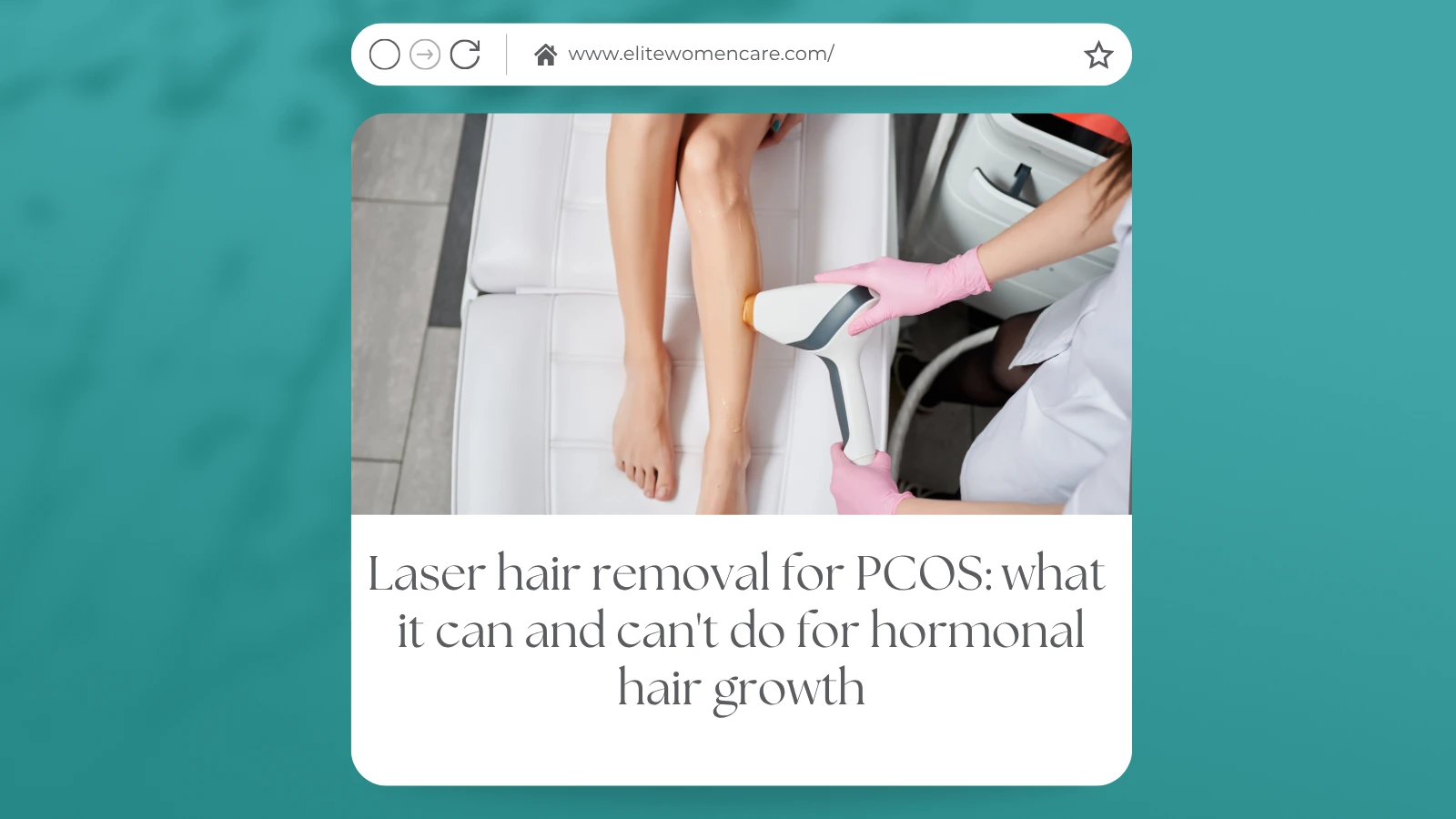
Laser hair removal for PCOS: what it can and can’t do for hormonal hair growth
If you have polycystic ovary syndrome, you may already own more tweezers than lipsticks. Laser hair removal for PCOS can make a real difference to that daily routine, but it works best when you understand why your hair grows the way it does and what a realistic result looks like.
We see this from two sides at Elite Women’s Care. Our OB-GYN providers diagnose and manage PCOS, and our med spa treats the hair growth that often comes with it. That combination shapes everything in this article.
Why PCOS changes hair growth
PCOS is a hormonal condition that affects roughly one in ten women of reproductive age, and one of its most common features is higher levels of androgens, the hormones often described as “male” hormones even though every woman makes them. Androgens act on hair follicles in specific areas of the body. Over time, fine, light hairs on the chin, jawline, upper lip, neck, chest and lower abdomen can turn into darker, coarser hairs.
Doctors call this pattern hirsutism. For many women it is the most visible sign of PCOS and, for some, the most distressing one. Unwanted facial hair in women is far more common than most people realize, yet it is rarely talked about openly, which leaves a lot of women quietly shaving, threading or plucking every single day.
If you haven’t been evaluated yet, our article on PCOS symptoms most women overlook is a good place to start.
How the laser actually works on hormonal hair
Laser hair removal targets pigment. The light is absorbed by the melanin in the hair shaft and converted into heat, which damages the follicle and reduces its ability to grow a new hair. Dark hair absorbs that energy best, which is fortunate, because androgen driven hair is usually dark and coarse.
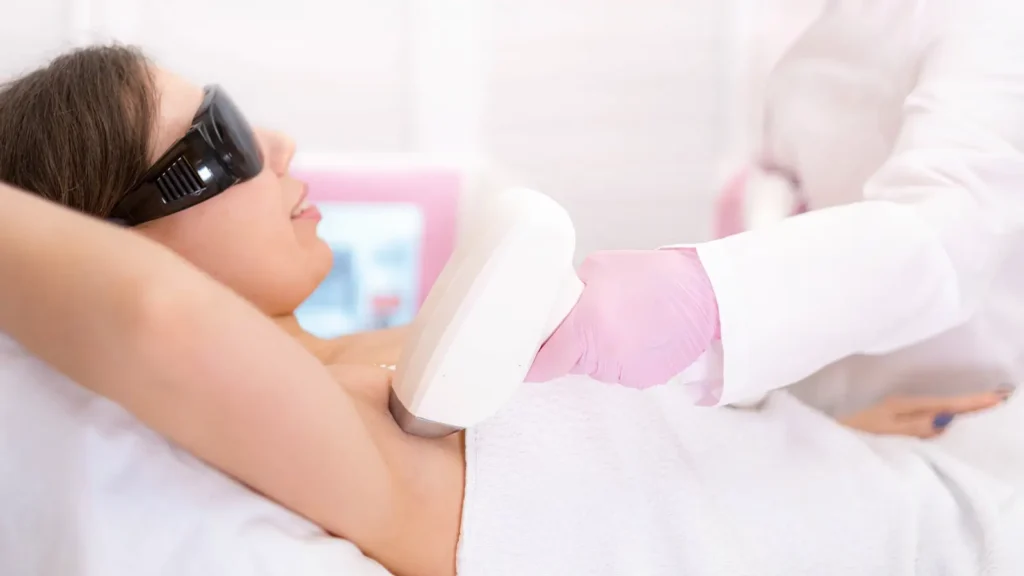
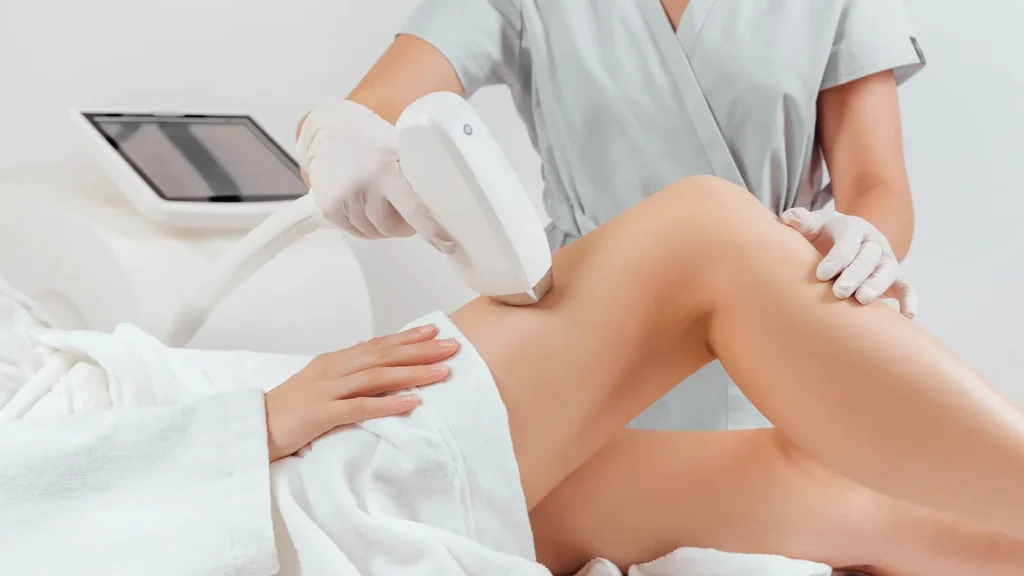
At our Hoffman Estates office we use the Soprano Titanium laser, which combines three wavelengths (755 nm, 810 nm and 1064 nm) in a single applicator. The handpiece moves across the skin continuously while the surface is cooled, so energy builds gradually in the follicle instead of arriving in one sharp pulse. For most people it feels like a wave of gentle warmth. The 1064 nm wavelength also makes treatment possible for deeper skin tones, a subject we covered in detail in laser hair removal on darker skin tones.
What the research says
The most useful summary so far is a systematic review published in JAMA Dermatology, which pooled six studies involving 423 women with PCOS. The authors found that laser and light therapies improved hirsutism and also improved psychological wellbeing. One included trial found that pairing a diode laser with combined oral contraceptives worked better than the laser alone. The authors rated the certainty of the evidence as low, mainly because the number of studies was small and darker skin types were underrepresented. You can read a plain language summary of the review here.
The international PCOS guideline that this review informed treats the management of hirsutism as a priority in women with PCOS. That matters, because excess hair is sometimes dismissed as a cosmetic complaint when it has a real effect on how women feel day to day. For anyone weighing laser hair removal for PCOS, the evidence points in an encouraging direction, with the honest caveat that more and larger studies are still needed.
What to expect from treatment
Will I need more sessions than other patients?
Possibly. Hair grows in cycles, and only follicles in the active growth phase respond well to the laser, so any patient needs a series. A typical course for Soprano Titanium is six to eight sessions spaced several weeks apart. With PCOS, the hormonal signal that created the hair is still present, which means some follicles that were quiet during your first course can become active later. Extra sessions or occasional maintenance visits are common, and we would rather plan for them at the start than surprise you later. Spacing also matters. Booking sessions too close together does not speed things up, because the laser can only reach follicles that have cycled back into the growth phase.
Will the hair come back?
Laser hair removal leads to long term hair reduction. Treated follicles tend to produce finer, lighter hair, and many stop producing hair altogether. What the laser cannot do is change your hormone levels. If androgens remain high, new hair can appear in the same areas over the years, which is why the medical side of PCOS care makes such a difference to how long results last.
Does it work on every hair color?
The laser needs pigment to aim at, so dark brown and black hair respond best. Blonde, red, gray and white hairs contain little or no melanin and usually do not respond well. If most of your unwanted hair is light, we will tell you that honestly at your consultation.
Why a combined plan works better
A complete hirsutism treatment plan usually has two parts. The laser removes the hair that is already there. Medical therapy, prescribed by a physician, lowers the hormonal drive that keeps producing new hair. Options can include combined oral contraceptives or antiandrogen medications, and the right choice depends on your health history, your symptoms and whether you are planning a pregnancy. Some of these medications are not safe during pregnancy, so this is a decision to make with your doctor, never on your own.
The laser clears the hair you have. Hormonal care helps decide how much grows back.
Because our med spa sits within an OB-GYN practice, you don’t have to coordinate between two unrelated offices. If PCOS has not been diagnosed, or if your current plan isn’t controlling symptoms, we can connect you with our gynecology team. You can also read more about how PCOS is managed, including approaches that do not rely on birth control.
Before and between sessions
Preparation is simple, and it protects your results:
- Shave the treatment area before each visit, but do not wax, pluck or thread between sessions, since the laser needs the root in place
- Avoid sun exposure and self tanner on the area for at least two weeks beforehand
- Mention any new medications, especially acne treatments or anything that increases sensitivity to light
- Expect treated hairs to shed over two to three weeks after each session
Mild redness and warmth after treatment are normal and usually fade quickly. A cool compress helps, and hot showers and intense workouts are best skipped for a day or two.
When hair growth needs a closer look
Most hormonal hair growth develops slowly over years. Hair that appears suddenly and spreads quickly, especially alongside a deepening voice, rapid acne or changes in your period, should be evaluated by a physician before any cosmetic treatment. These signs are uncommon, but they can point to conditions other than PCOS that need medical attention.
Getting started
Whether you already have a PCOS diagnosis or simply suspect your hair growth is hormonal, a consultation is the right first step. We will look at your skin type and hair color, then at the areas that bother you most, and we will talk through how laser and medical care can work together.
Elite Women’s Care offers laser hair removal in Hoffman Estates at 1555 Barrington Road, Suite 415, with easy access from Schaumburg, Palatine, Elgin and Barrington. Book a free consultation or call (847) 781-1894.
The tweezers can stay in the drawer a lot more often than they do now.