Category: Wellness & Beauty Trends

September 17, 2026

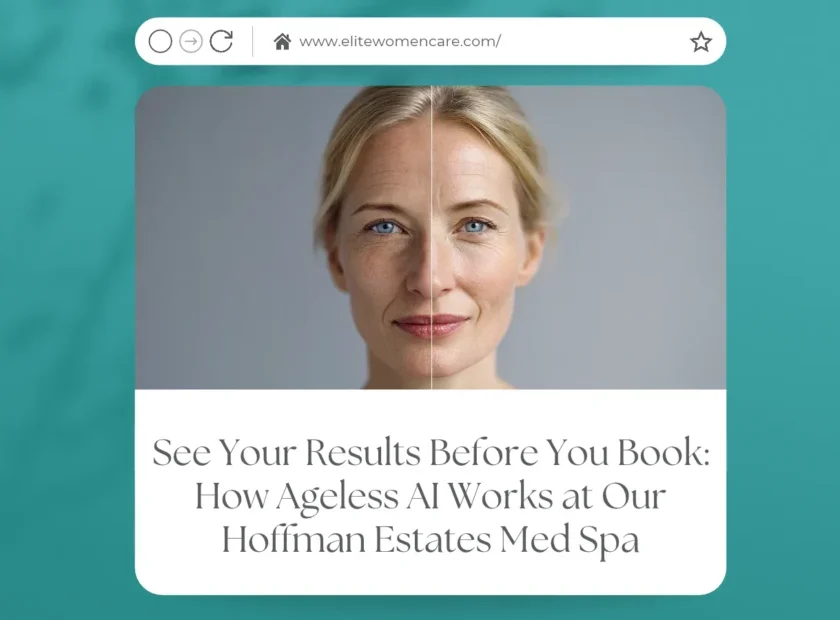
See Your Results Before You Book: How Ageless AI Works at Our Hoffman Estates Med Spa

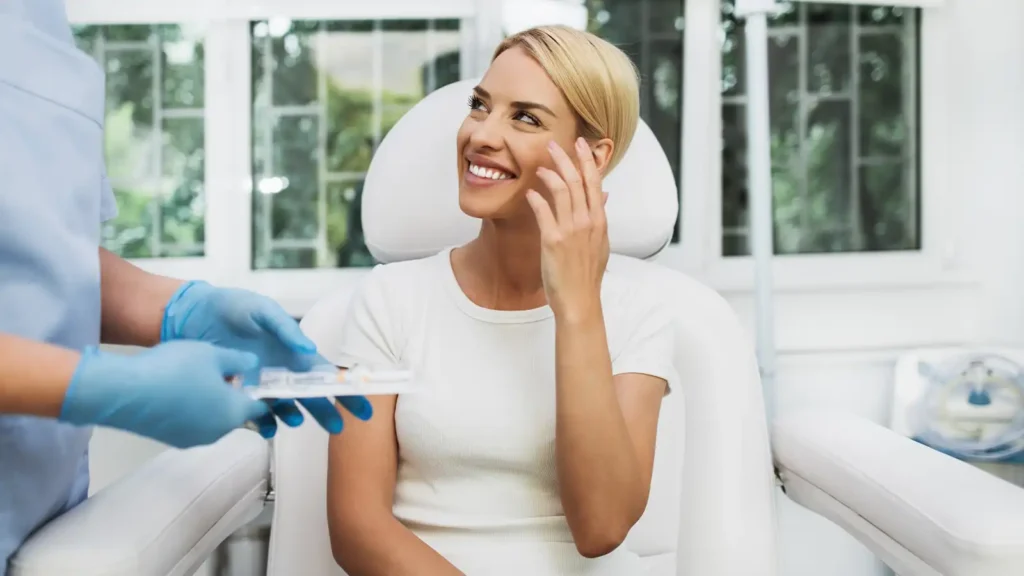
Most people who come in for a first aesthetic consultation arrive with a photo on their phone. Someone else’s face, usually. A celebrity caught in good lighting, an influencer, a friend of a friend who had something done and came back looking rested rather than altered. The photo is shorthand for a request that words rarely manage: I want to look like myself, only less tired. Ageless AI exists because a picture of someone else has never been a good way to say that.

The difficulty is that a stranger’s before and after tells you very little about your own outcome. Bone structure, skin thickness, muscle strength, how much your face moves when you talk, all of it changes the result. Two women can receive the same number of units in the same muscle and look nothing alike a week later.

That gap between what a patient pictures and what actually happens is why we brought Ageless AI into the practice. Instead of asking you to imagine a result, it renders one on your own face, before you book, before you pay, and before anyone picks up a syringe.
What Ageless AI Actually Does

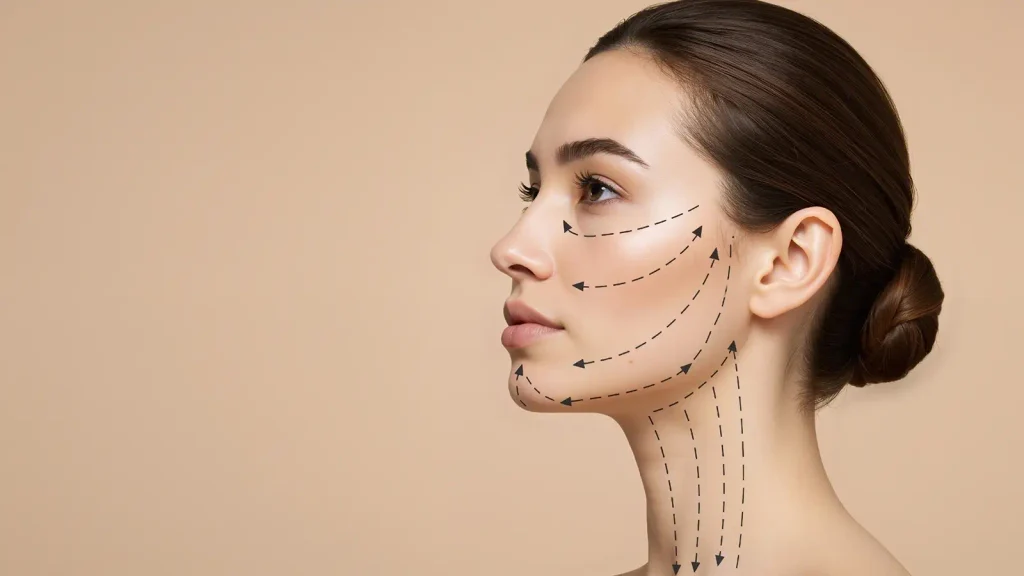
Ageless AI is a visualization platform developed with input from board certified physicians and trained on clinical outcomes rather than filtered social media images. You upload a selfie. Within seconds you get a photorealistic preview of how a specific treatment would look on your face, not on a model’s.

Underneath that preview sits an AI skin analysis engine that reads your photograph the way a provider reads your face across the treatment chair. It maps texture, tone, pigment, volume loss, fine lines, and laxity, then models how a given intervention would change each of those variables. The result is not a smoothing filter. It is a simulation built on clinical data, which is a different thing entirely, and it is what makes AI treatment visualization med spa patients can actually trust possible in the first place.

Nearly every first consultation contains the same question, asked a dozen different ways: will this still look like me? An Ageless AI preview answers it before treatment day.

Why Stock Galleries Stopped Being Enough

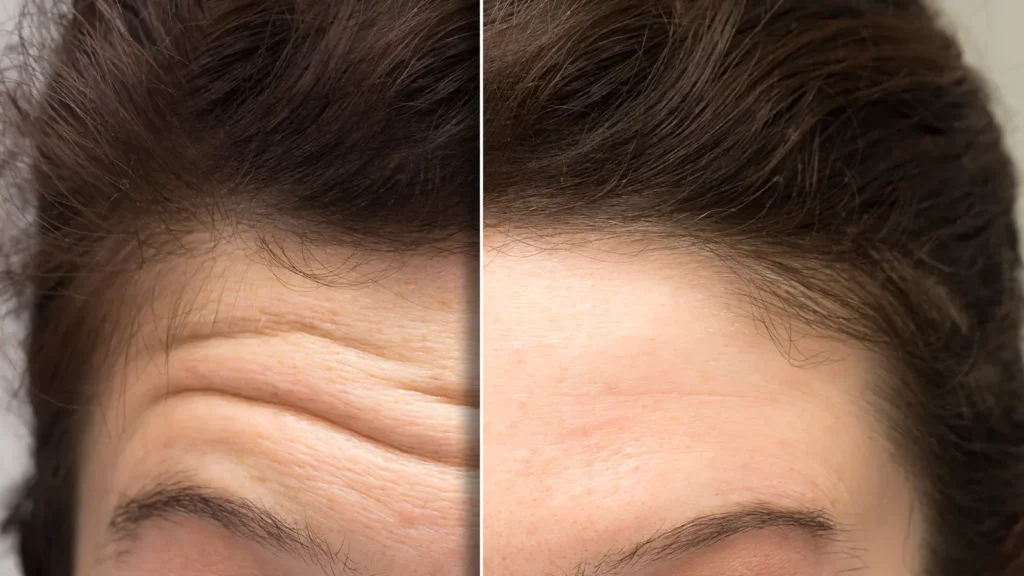
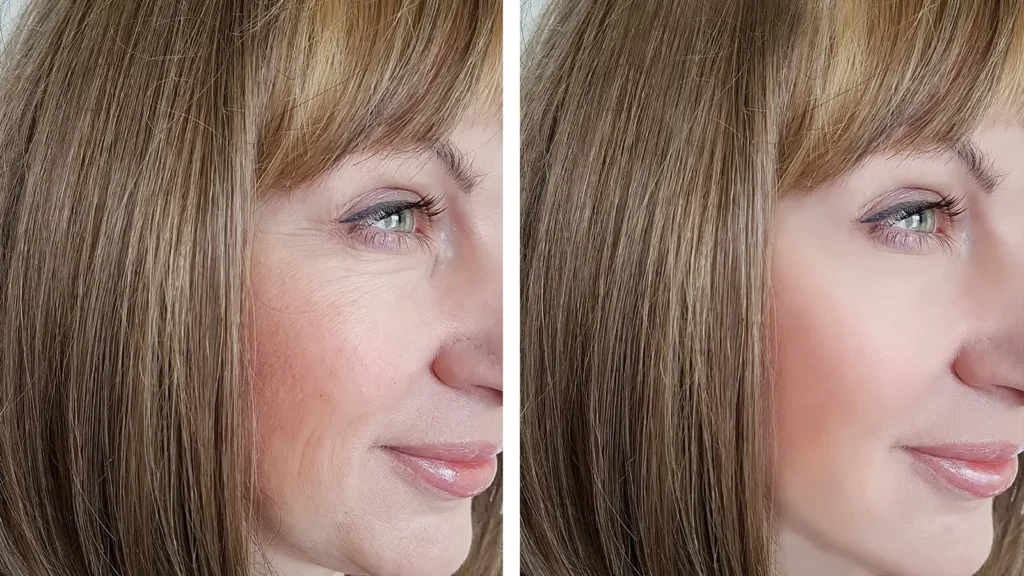
If you have searched for a med spa Hoffman Estates offers, you have scrolled through a hundred galleries. Those photos are not useless. They prove a provider can do the work, and that matters. What they cannot tell you is anything about your face. You cannot see Botox results before treatment in someone else’s photograph, no matter how many you scroll past.

Practice galleryAgeless AI preview
Whose faceAnother patient’sYours
What it demonstratesThe injector’s skillYour likely outcome
Skin tone and textureRarely a matchExact
Question it answersCan they do this well?Should I do this at all?
Most useful forChoosing a providerChoosing a treatment

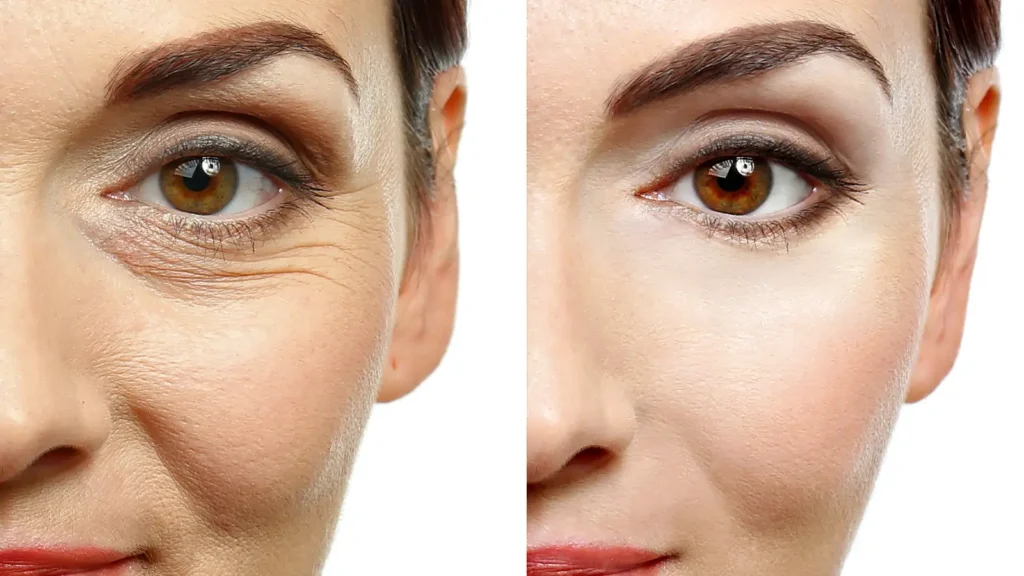
Search for virtual before and after aesthetic treatments and most of what surfaces is still the gallery model in newer packaging. An AI treatment visualization med spa tool changes which question the photograph answers, and that is a smaller shift than the marketing suggests but a far more useful one. The face in the after image belongs to the person making the decision.

How a Preview Comes Together

Start with an honest photo

Natural light, minimal makeup, no filter, a relaxed expression. The AI skin analysis reads exactly what you give it, so a heavily edited selfie produces a preview of an edited face, which helps nobody.

Let the analysis run

It takes seconds. The system looks for the signals a provider looks for, and it often names concerns patients have felt without articulating: sun damage across the cheekbones, early volume loss at the temples, a texture that reads as tired in photographs.

Compare treatments side by side

Wrinkle relaxers, filler, skin tightening, resurfacing, and body treatments each render separately. Patients who want to see Botox results before treatment usually start there, then run three more simulations out of curiosity and change their minds. That happens often enough that we now expect it, and it is the point of putting a preview in front of every med spa Hoffman Estates patient before the consultation rather than after.
Bring it to a person

This is the step that counts. Ageless AI produces a starting point, not a prescription. You come in with an image of what you want, and your provider tells you plainly whether the plan behind it suits your anatomy, your budget, and your timeline.

The Treatments Worth Previewing First

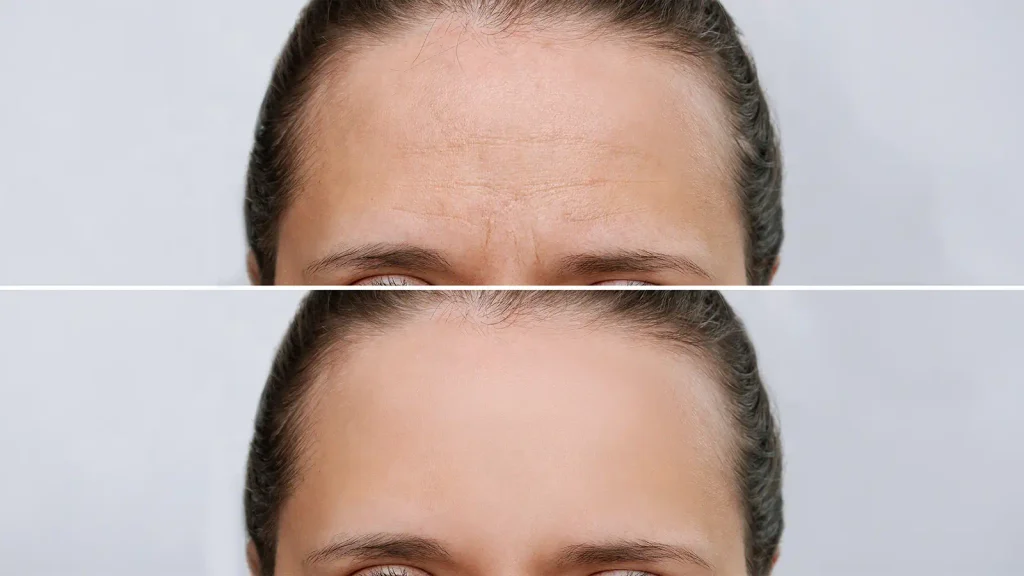
Most patients want to see Botox results before treatment, and that is the simulation they run first. It answers the fear that keeps people out of the chair for years, which is not the needle but the frozen forehead.

The platform covers the rest of our menu as well: dermal filler for volume, Secret RF microneedling for texture and acne scarring, IPL for pigment and redness, PRP for thinning hair, and body contouring. Running virtual before and after aesthetic treatments across several categories tends to clarify priorities faster than any consultation script, which is one reason the med spa Hoffman Estates patients visit for gynecology and aesthetics now opens most consultations with the preview already on screen.

The Preview Nobody Expects

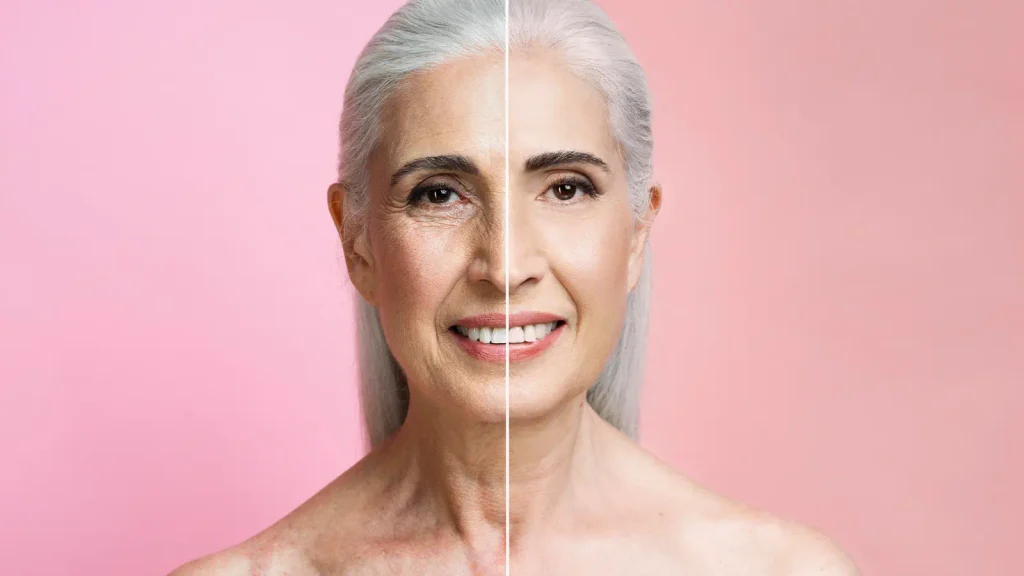
There is a second mode worth knowing about. Alongside treatment simulations, Ageless AI can project your face fifteen to twenty years forward, with and without ongoing care. It is a sobering image and an unexpectedly motivating one. Prevention is difficult to argue for in the abstract. It becomes obvious when you can see both versions of your own future in the same frame. The same AI skin analysis that models a treatment can model time.
Where the Technology Stops

A simulation is a model, not a guarantee. Virtual before and after aesthetic treatments cannot predict how your body metabolizes a product, how much movement your muscles retain, or how your skin heals. Ageless AI does not diagnose anything, and an AI skin analysis is not a substitute for a licensed provider examining your face in three dimensions, reviewing your medical history, and telling you when the honest answer is no.

We treat it as a communication tool. It takes guesswork out of the conversation so consultation time goes to the parts that require real expertise: dosing, sequencing, and knowing when to do less.

Run Yours Before You Call

If a treatment has been on your mind for a year and you still have not picked up the phone, a preview is a low stakes place to begin. It costs nothing and requires no appointment, and the AI skin analysis alone is worth the two minutes it takes.

Elite Women’s Care is the med spa Hoffman Estates residents rely on for gynecology, wellness, and aesthetics under one roof, which means the provider previewing your treatment already knows your health history. Having an AI treatment visualization med spa patients can use at home, then reviewing it together in the room, shortens the distance between curiosity and a decision you feel good about. When you are ready to see Botox results before treatment, or anything else on our menu, call (847) 781-1894.
September 11, 2026

Acne Scars, Surgical Scars, and C-Section Scars: Scar Treatment Options in Hoffman Estates

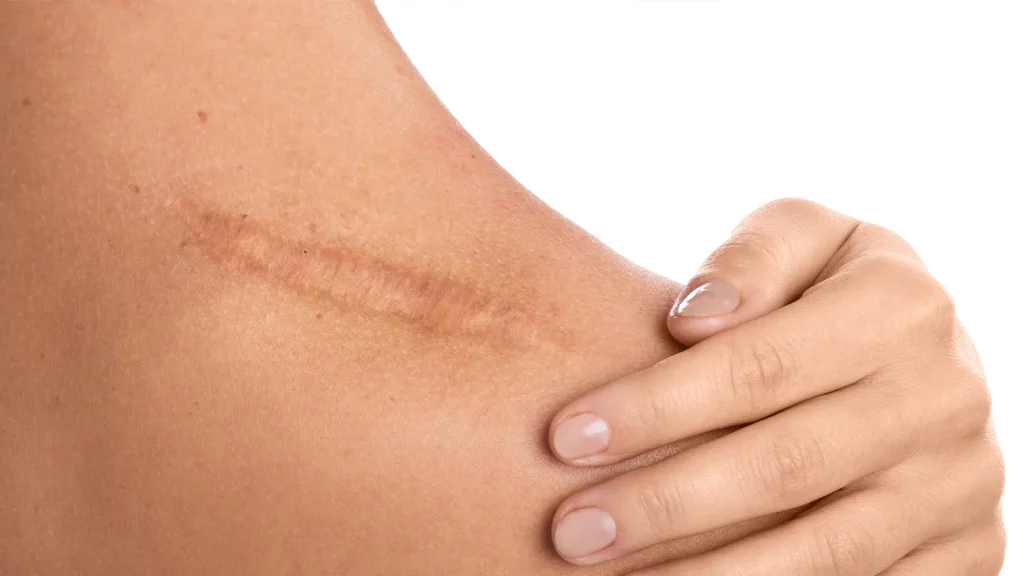
A scar is the body finishing a repair quickly rather than perfectly. When skin is injured past a certain depth, it does not rebuild the original architecture. It lays down collagen in a hurry, in the wrong direction, and moves on to the next problem. What remains is functional tissue that looks and behaves differently from everything around it, and every acne scar treatment worth paying for starts from that single fact.

That holds whether the injury was a cystic breakout at nineteen, an appendectomy at thirty five, or a cesarean delivery last spring. The mechanism is identical, which is why acne scar treatment and the work we do on surgical scars overlap far more than most patients expect. What differs is depth, age, location, and how much of the scar is texture rather than color.

Three Kinds of Scars, Three Different Answers

Scars that sit below the surface

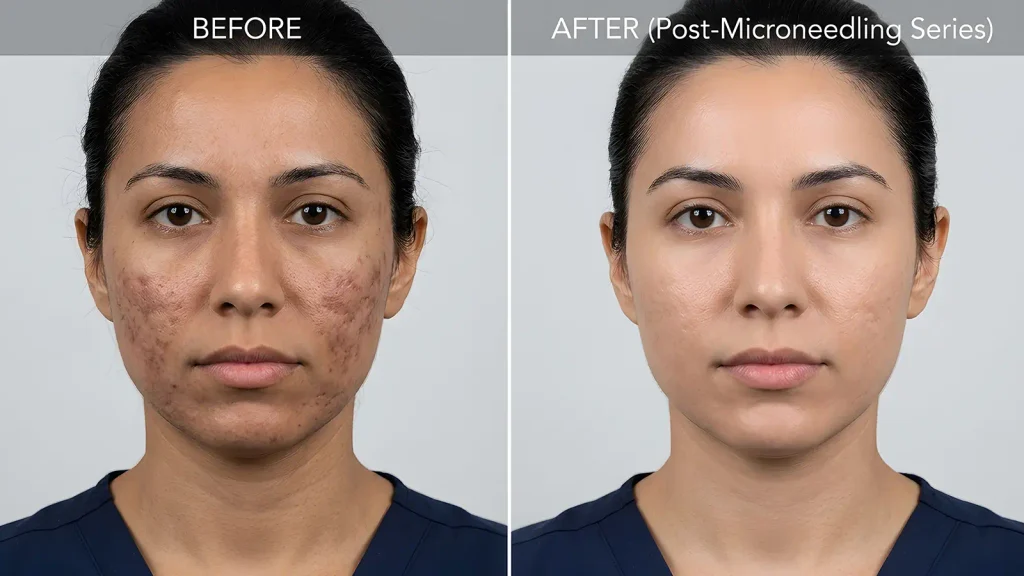
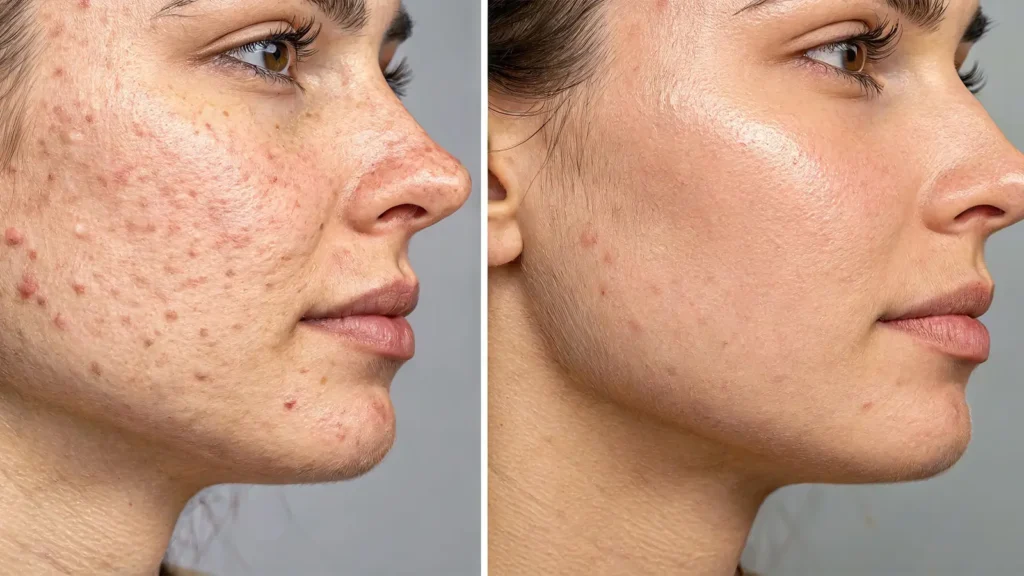
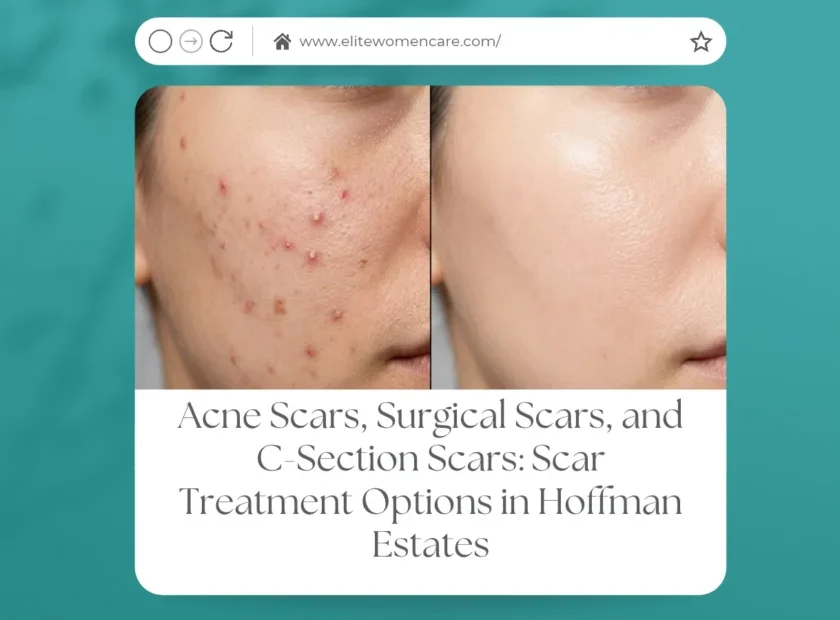
Atrophic scars are the pitted, indented marks most people picture when they say acne scarring. Boxcar, rolling, and ice pick scars all describe the same shortfall: collagen that was never replaced. Anything that helps has to rebuild volume from underneath, which is why microneedling for acne scars targets the dermis and why creams do nothing at all.

Scars that sit above it

Hypertrophic scars and keloids are the opposite failure, collagen overproduction. They are firm, raised, sometimes itchy or tender, and they are far more common along surgical incisions than on the face. Deeper skin tones are more prone to them, which changes how aggressively we treat.

Scars that are only color

Postinflammatory hyperpigmentation, along with the pink or purple of a scar still in its first year, is not a texture problem at all. Run a finger across it and the skin is smooth. The color simply has not resolved yet. These respond to light based tools and to time, and treating them as though they were pitted scars wastes both.

Sorting a scar into the right category is most of the work in any acne scar treatment plan. It is also the step patients skip when they buy a device online and start rolling it across their cheeks at home.

Matching the Tool to the Scar

Acne scar treatment at our practice relies on a combination of technologies selected according to the type of scar, its depth, and the patient’s skin type. The honest answer is that most patients need a treatment plan tailored to what is actually causing the scar’s appearance.

Radiofrequency microneedling

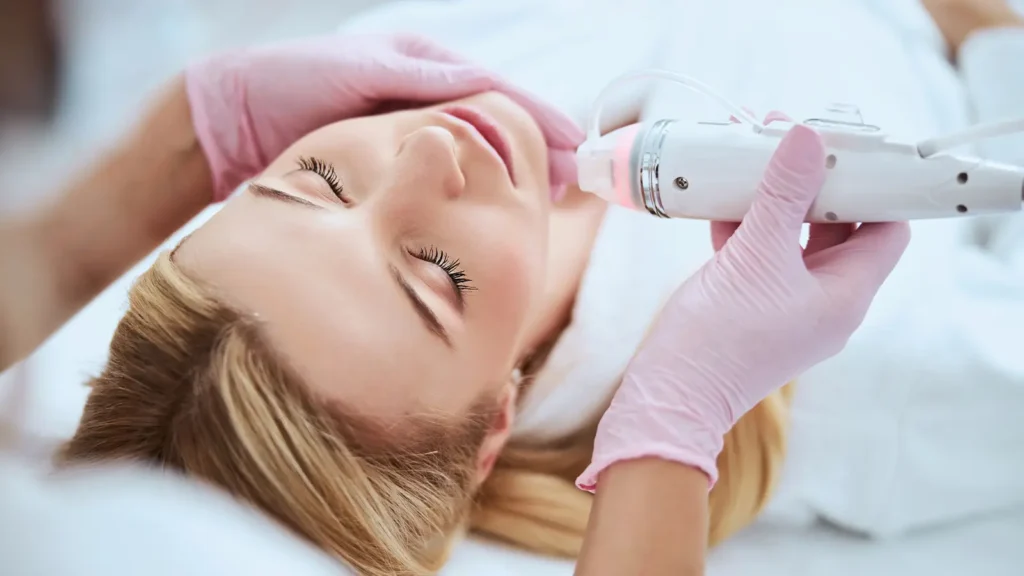
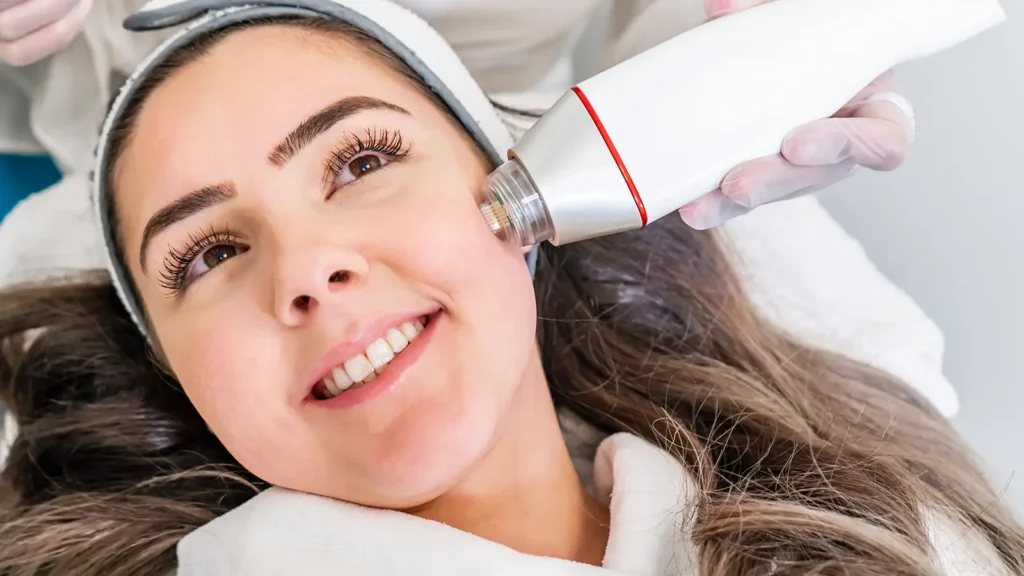
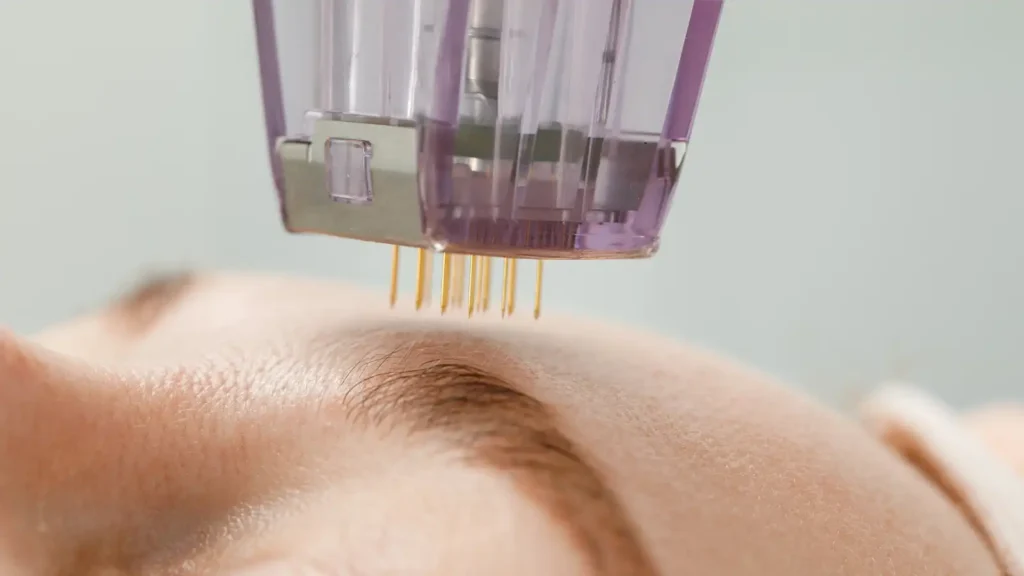
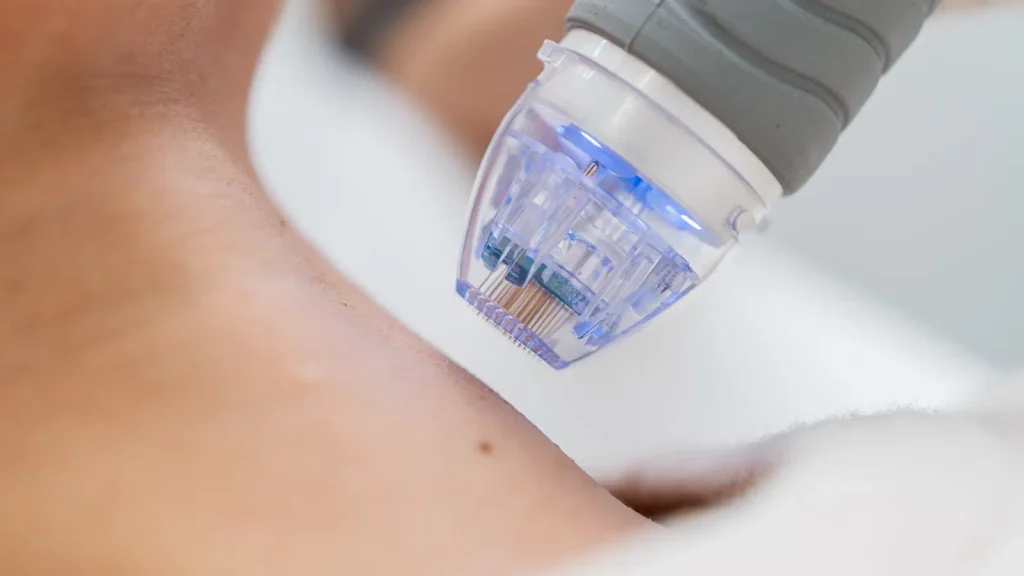
Secret RF drives insulated needles to a set depth and releases radiofrequency energy at the tip, injuring the dermis in a controlled pattern while leaving the surface largely intact. The body answers by producing new collagen over the months that follow. This is the workhorse of microneedling for acne scars, particularly rolling and boxcar types, and it is safe across a wide range of skin tones because so little of the energy is absorbed at the surface.

A course of RF microneedling scar treatment usually runs three to four sessions spaced about a month apart. Redness lasts a day or two. Results arrive slowly and keep arriving, with most of the change visible between months three and six. Patients who judge RF microneedling scar treatment at week two always conclude it did nothing, which is why we photograph rather than ask.

Light for the color that lingers

IPL addresses what texture treatments cannot: the redness of a young scar and the brown marks left behind by inflammation. It does nothing for depth. Used alongside an acne scar treatment plan, it usually delivers the earliest visible difference, because color reads on camera long before contour does.

TechnologyBest forTypical courseDowntimeWhen results show
Secret RF microneedlingRolling and boxcar acne scars, general texture3 to 4 sessions, monthly1 to 2 days of rednessMonths 3 to 6
IPLRedness, brown pigment, young scars3 to 5 sessionsMinimalAfter 2 to 3 sessions

Cesarean and Surgical Scars

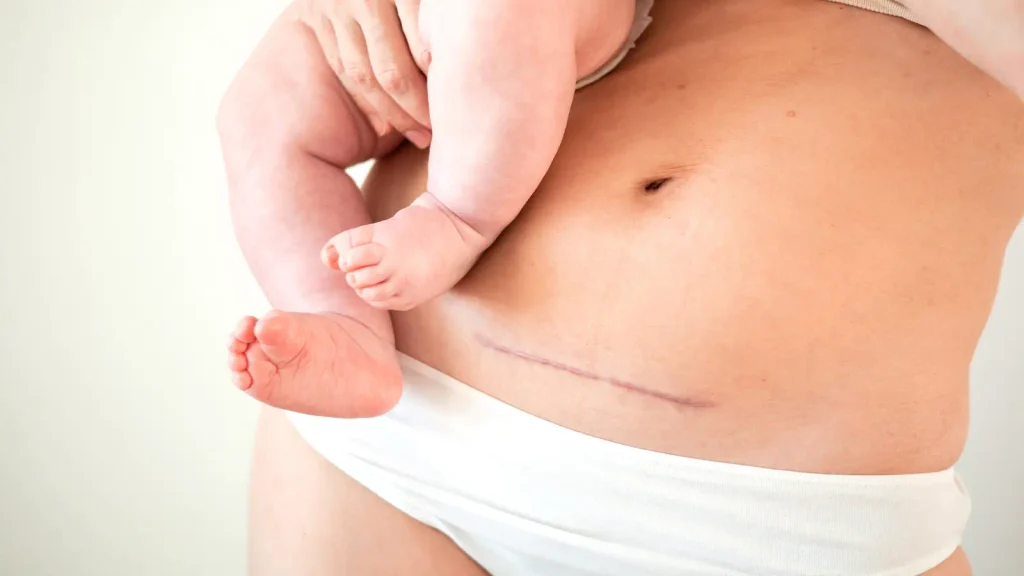
A cesarean scar is a different animal from acne scar treatment and deserves its own conversation. It is long, linear, often numb along one edge, and frequently adhered to the tissue underneath, which is why many women describe a pulling sensation years later rather than a cosmetic complaint.

Effective c-section scar treatment addresses three things in order: the texture, the appearance of the scar tissue, and the color. Treatment is selected according to whether the scar is raised, indented, firm, discolored, or associated with surrounding tissue tightness. RF microneedling scar treatment may help improve texture and soften the appearance of the scar, while IPL can address persistent redness or pigmentation once the scar has matured.

Timing matters here more than anywhere else. A c-section scar treatment started at six months, once the incision has fully closed and the redness has begun to settle, can produce meaningful improvement. Patients who wait until the scar has gone white may still benefit from treatment, although color-based treatments have less to target at that stage.

The phrase surgical scar removal turns up constantly online, and it is worth saying plainly: scars are not removed. They are softened, flattened, faded, and made less noticeable. A realistic goal for surgical scar removal is a scar you stop noticing in the mirror, not one that vanishes from your skin. Any provider promising vanish is selling something. Honest surgical scar removal is measured in shadows that no longer catch the light.

Why Waiting Is Rarely the Right Move

Patients often assume a scar should settle for years before anyone touches it. For color, patience genuinely helps. For texture and firmness, waiting may not always be necessary. Collagen remodels most readily in the first twelve to eighteen months, which is when the same acne scar treatment produces the most change for the least effort. An eight year old ice pick scar can still improve. It simply takes more sessions to get there, and treating acne scars late is more expensive than treating them on time. The scar treatment Hoffman Estates patients delay longest is usually the one that would have worked fastest.

Questions We Hear in Consultation

Is there a way to erase acne scars completely?

No, and anyone who says otherwise should worry you. How to get rid of acne scars is the most searched phrase on this subject, and the truthful answer is that a well built plan typically improves depth and shadowing by half or better, which in practice means scars that no longer catch the light across a room. Complete erasure is not an outcome of acne scar treatment at any price point, and asking how to get rid of acne scars entirely is the wrong question to walk in with.

How many sessions will I need?

Microneedling for acne scars typically runs three to four sessions, occasionally six for deep ice pick scarring. We reassess at the third session using standardized photography rather than memory, which is the only fair way to judge an acne scar treatment course.

Does it hurt?

Comfort is rarely the barrier to acne scar treatment that patients expect it to be. Topical numbing for forty five minutes makes RF microneedling comfortable for nearly everyone. Treatment is generally well tolerated, although the experience and level of discomfort can vary depending on the area being treated and the intensity of the procedure.

Can an old cesarean scar still improve?

Yes. C-section scar treatment can improve the appearance of scars even years after surgery. Texture and firmness may respond to treatment even when a scar is no longer new. Color is the part that responds less well once it has faded to white, because there is less pigment or redness left to target.

Is any of this safe for deeper skin tones?

RF microneedling scar treatment is, because the energy is delivered below the surface rather than absorbed by pigment, which makes microneedling for acne scars a reasonable first choice across skin types. IPL calls for more caution and a careful consultation. Ask any provider this before booking, not after, and be wary of a quick yes. The best acne scar treatment for deeper skin is the one chosen conservatively.

Where to Begin

The scar treatment Hoffman Estates patients ask us about most often is not a single treatment at all. It is a sequence, built after someone has looked at the scar in person and named what type it is, whether that ends in microneedling for acne scars, light therapy, or some combination of the two. Any scar treatment Hoffman Estates offers should begin with a diagnosis rather than a device, and booking without that step is how people end up three sessions into the wrong one. If you have spent a year searching how to get rid of acne scars, this is where that search should end.

Elite Women’s Care keeps gynecology and aesthetics under one roof, which matters more than it sounds for c-section scar treatment, since the providers treating the scar understand the surgery that created it. To talk through scar treatment Hoffman Estates residents can rely on, with someone who will tell you what is realistic before you spend anything, call (847) 781-1894.
August 26, 2026

Secret RF Microneedling: What to Expect Before and After

Secret RF microneedling tends to get lumped in with standard microneedling, and that comparison undersells what it actually does. The two treatments share a needle-based delivery method, but the similarities mostly stop there once radiofrequency energy enters the picture.

Patients considering this treatment for the first time usually have the same two questions: how much does it actually hurt, and how long until the results are worth showing off. Both deserve honest, specific answers rather than vague reassurance.

What Secret RF Microneedling Actually Does Beneath the Surface

Traditional microneedling creates controlled micro-injuries with fine needles, prompting the skin to repair itself and produce fresh collagen. Radiofrequency microneedling adds a second mechanism on top of that: as the needles reach a set depth, they release RF energy directly into the deeper skin layers, heating tissue in a way surface-only tools cannot replicate.

That combination is why the treatment tends to outperform standard needling for concerns like laxity, deeper texture irregularities, and stubborn scarring. The needles do the initial work, and the radiofrequency component reaches structural layers that needling alone rarely touches. It is also why recovery tends to run a little longer for radiofrequency microneedling than for surface-only needling, even though both are considered minimally invasive procedures with a fast bounce-back.

Before Your First Session

Preparation is fairly simple compared to more involved procedures. Most providers ask patients to avoid retinoids, exfoliating acids, and excessive sun exposure for about a week beforehand, since irritated or freshly sunburned skin does not respond well to the additional heat involved. Arriving with clean skin, free of makeup and lotion, also helps the numbing cream absorb evenly.

Patients on certain medications, or with active skin infections in the treatment area, are typically asked to reschedule rather than proceed, which is a normal and appropriate precaution rather than a red flag. It is also a good moment to ask your provider directly what to expect during recovery, based on your specific skin and the areas being treated.

During the Appointment

A topical numbing agent sits on the skin for roughly thirty to forty-five minutes before treatment begins, which is genuinely the least exciting part of the visit but makes the rest of it far more comfortable. The device itself passes over the treatment area in sections, with depth and energy adjusted based on the concern being addressed and the thickness of skin in that particular zone.

Most sessions run somewhere between thirty and sixty minutes. Patients describe the sensation as a rhythmic pressure with occasional warmth, rarely described as sharp pain thanks to the numbing.

Your Recovery, Day by Day

Downtime is one of the most common questions we field, and the honest answer is that it is real but short. Here is the recovery timeline most patients follow after Secret RF microneedling:

Day 0, right after treatment → skin looks flushed, similar to a moderate sunburn, with pinpoint bleeding possible in the first hour.

Day 1 to 2 → redness softens noticeably. Mild swelling, especially around the eyes if that area was treated, typically peaks here before improving.

Day 3 to 5 → fine flaking or peeling can appear as the outer skin layer sheds. This is normal and should not be picked at or exfoliated.

Week 2 → skin generally looks and feels close to normal, often with a visible brightness that patients notice before anything else changes.

Week 4 and beyond → early collagen induction becomes visible, with texture looking noticeably smoother and pores appearing tighter.

Month 3 → deeper structural remodeling continues well after the skin looks fully healed, since new collagen keeps forming for months after the actual appointment.

Following this recovery timeline closely, particularly the sun protection and gentle skincare parts, has a real effect on how even the final results look.

What Results Look Like Over Time

The visible glow patients notice around week two is not the main event. It is a preview. Real collagen induction unfolds gradually over the following months as the body rebuilds structural tissue in response to the controlled heat delivered during treatment. Collagen induction of this depth is simply not something surface-level skincare products can replicate on their own, which is part of why patients who switch from at-home tools to an in-office device are often surprised by the difference.

How Many Sessions Most Patients Book

Most providers recommend a series of three to four sessions spaced four to six weeks apart for meaningful, lasting change. A single session can soften mild concerns, but the layered effect of repeated treatments is where skin texture improvements become genuinely dramatic rather than subtle. Each additional session builds on the collagen induction triggered by the last, which is part of why spacing matters more than most patients initially assume.

Who It Helps Most: Scarring, Texture, and Laxity

Acne scarring is one of the most common reasons patients book Secret RF microneedling, particularly rolling or boxcar scars that have not responded well to topical treatments. The combination of mechanical injury and heat reaches deeper into scar tissue than surface treatments typically can.

Beyond acne scarring, patients also seek it out for enlarged pores, mild skin laxity, and uneven skin texture left behind by sun damage or aging. It is not a substitute for surgical procedures addressing significant sagging, but for early to moderate concerns, results are often meaningfully more noticeable than what standard microneedling delivers alone, and the improved skin texture tends to hold up well over time.

How It Compares to Traditional Microneedling

The core difference comes down to depth and mechanism. Standard microneedling works entirely at the surface, relying on the needles alone to trigger repair. Radiofrequency microneedling adds thermal energy at a controlled depth, which is why recovery, while still short, tends to involve slightly more redness and a day or two more downtime than standard needling alone.

For patients with mild concerns, standard microneedling may be sufficient. For scarring, texture irregularities, or early laxity, the added radiofrequency component generally produces results worth the extra recovery day, and the improvement in skin texture tends to be noticeably more even by the third session.

Quick Answers Before You Book

How many sessions of Secret RF microneedling will I need? Most patients see meaningful change after three to four sessions, though a single treatment can soften minor concerns on its own.

Does radiofrequency microneedling hurt more than regular microneedling? Not significantly, thanks to topical numbing, though some patients notice slightly more warmth during the radiofrequency portion of treatment.

Is Secret RF microneedling safe for acne scarring on darker skin tones? Yes. Because it works beneath the surface rather than targeting surface pigment, it carries a favorable safety profile across a wide range of skin tones.

What does the recovery timeline look like if I have sensitive skin? Expect slightly more redness in the first two days, but the overall recovery timeline rarely extends beyond a week even for sensitive skin types.

Who Should Wait or Choose Something Else

This treatment is not the right fit for everyone, and a good provider will tell you that plainly rather than upselling a series you do not need. Patients who are pregnant, have active skin infections, or have a history of keloid scarring are typically advised to explore other options or wait until circumstances change. Very recent sun exposure, active cystic acne, or certain blood-thinning medications can also push a consultation toward a different treatment path.

For patients who are cleared to proceed, the honest expectation is gradual improvement rather than an overnight transformation. Skin texture rarely changes dramatically after one appointment. What tends to happen instead is a steady accumulation of small gains, session after session, until the cumulative difference becomes obvious in photos taken months apart, even if it was hard to notice week to week in the mirror.

Booking at Elite Women’s Care in Hoffman Estates

Our Hoffman Estates providers build each treatment plan around your specific skin concerns, whether that means acne scarring from years ago or early texture changes you have only recently started noticing. Depth, energy, and session spacing are all adjusted individually rather than run on a single default setting.

If you are curious whether Secret RF microneedling fits your skin’s needs, a short consultation will answer that far more accurately than researching on your own. Reach out to schedule an assessment, and we will map out a realistic timeline for recovery and results, built around your skin, your goals, and how your skin texture responds along the way.

August 20, 2026

Laser Hair Removal on Darker Skin Tones: Why the Device Matters

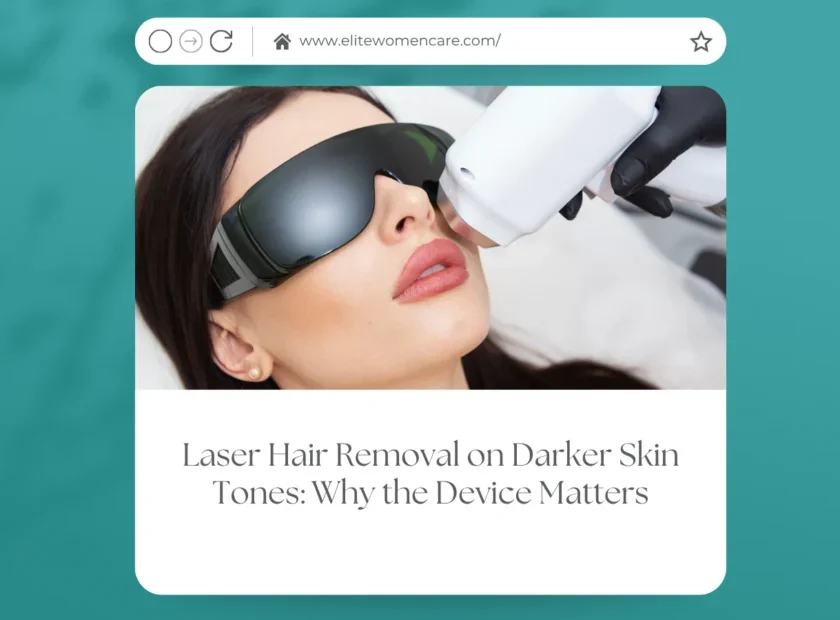
For years, laser hair removal for darker skin tones carried a reputation it never fully deserved: risky, unpredictable, prone to burns or lingering discoloration. That reputation was not really about the treatment itself. It was about the equipment doing the treating, and a lot of clinics simply were not using the right machine for the skin sitting in the chair.

Technology has moved on considerably since those early warnings became common knowledge, though plenty of patients still walk in with understandable hesitation, and that hesitation deserves a real answer rather than a brush-off.

Why Older Lasers Left Darker Skin Behind

Most first-generation hair removal lasers relied on a single, high-intensity pulse targeting melanin, the pigment responsible for hair color. The problem is that melanin does not only live in the hair follicle. It also sits in the surrounding skin, and in melanin-rich skin, a strong single pulse struggles to tell the difference between the two.

That confusion is where hyperpigmentation risk comes from. When a laser dumps too much energy into the skin’s surface rather than the follicle beneath it, the result can be burns, patchy discoloration, or dark marks that take months to fade. Patients with Fitzpatrick IV through VI skin types were, for a long time, told to simply avoid laser treatment altogether rather than risk it.

That advice was not wrong given the tools available at the time. It is outdated now, and treating it as gospel today does a disservice to patients who could otherwise get excellent, predictable results.

What Actually Makes Soprano Titanium Different

Soprano Titanium approaches the problem from an entirely different angle. Instead of firing one aggressive pulse and hoping the follicle absorbs more heat than the surrounding tissue, it delivers energy gradually, in a slow sweep, using a cooled handpiece that keeps the skin’s surface comfortable throughout the session.

This gradual heating method, sometimes described as an in-motion or sweeping technique, gives heat time to build safely at the follicle without overwhelming the skin above it. Patients typically describe the sensation as a steady warmth rather than a sting, and it is one of the main reasons Soprano Titanium has become the standard many providers now recommend for melanin-rich skin.

“The biggest misconception patients bring in is that laser hair removal for darker skin tones is inherently more dangerous. It isn’t. It’s the device that was dangerous, not the skin. Once you switch to a machine built for gradual heating, the safety profile changes completely.”

That distinction, between skin being risky and outdated equipment being risky, sits at the center of nearly every conversation we have about laser hair removal for darker skin tones.

Where Fitzpatrick Skin Type Comes Into the Conversation

Every laser hair removal consultation should start with an honest look at your Fitzpatrick skin type, a classification scale running from I, very fair, to VI, deeply pigmented. This scale exists precisely because skin does not behave uniformly under laser energy, and a device calibrated for type II skin can genuinely injure someone with type V or VI skin if used carelessly.

Knowing your Fitzpatrick skin type before booking is not a formality. It determines settings, pulse duration, and in older systems, whether treatment should happen at all. With multi-wavelength platforms, that same classification instead becomes a guide for fine-tuning rather than a reason for exclusion, which is a meaningful shift for anyone who was turned away in the past.

The Nd:YAG Advantage for Deeper Melanin

The technical detail that matters most for darker skin is wavelength. Soprano Titanium combines three: 755nm, 810nm, and 1064nm. That last figure, the Nd:YAG wavelength, penetrates more deeply and is far less attracted to surface melanin than shorter wavelengths.

Because Nd:YAG energy bypasses much of the pigment sitting near the skin’s surface, it can reach the follicle beneath without overheating the layers above it. This is the physics behind why laser hair removal for darker skin tones works reliably on a properly equipped multi-wavelength device but carries real hyperpigmentation risk on a single-wavelength alexandrite laser, which was never designed with deep melanin in mind.

Preparing for Your Appointment

A little preparation goes a long way toward keeping hyperpigmentation risk as low as possible. Shave the treatment area within a day of your appointment rather than waxing or plucking, since the laser needs a hair root to target, not surface hair. Avoid sun exposure and self-tanner for at least two weeks beforehand, since freshly tanned or sunburned skin temporarily raises surface melanin and complicates settings.

Retinoid products and certain acne medications can also increase sensitivity, so most providers ask patients to pause these for a few days before treatment. None of this is complicated, but skipping it is one of the more common reasons results end up less even than expected.

What a Session Actually Feels Like

Most appointments run between fifteen and forty-five minutes depending on treatment area. The handpiece stays cool to the touch throughout, and patients frequently comment that the sensation resembles a warm massage more than the snapping-rubber-band feeling associated with older devices.

Redness is possible immediately afterward, generally subsiding within a few hours. There is no meaningful downtime, no blistering, and no reason to avoid daily activities.

How Many Sessions You’ll Actually Need

A typical course, usually six to eight sessions spaced several weeks apart, produces a lasting reduction in hair growth as follicles cycle through their natural growth phases. Fewer sessions than that tend to undertreat the follicle, since hair grows in staggered cycles rather than all at once.

Aftercare That Actually Protects Your Skin

Sun protection matters more after treatment than before it. Freshly treated, melanin-rich skin is briefly more reactive, and unprotected sun exposure in the days following a session raises hyperpigmentation risk unnecessarily. A broad-spectrum sunscreen, reapplied if you are outdoors, is the single most useful habit here.

Keep the area cool for the first 24 hours, skip hot showers and saunas if you can, and moisturize gently rather than applying active skincare ingredients like retinol or exfoliating acids until any redness has fully settled.

A surprising number of the myths still circulating about laser hair removal for darker skin tones trace back to a handful of bad outcomes from a decade ago, long before multi-wavelength devices became widely available.

Common Myths Worth Retiring

Myth: Darker skin should always avoid laser hair removal. This was reasonable advice a decade ago and is no longer accurate for patients treated with modern multi-wavelength equipment built for melanin-rich skin.

Myth: Tanned skin makes any laser safer to use. The opposite is often true. Tanned skin temporarily raises surface melanin, and even devices well suited to darker skin generally recommend avoiding recent sun exposure before treatment.

Myth: More painful means more effective. Comfort and effectiveness are not the same variable. A gradual heating approach can be both more tolerable and more precise than a harsh single pulse.

Quick Answers Before You Book

Is laser hair removal for darker skin tones painful? Most patients describe warmth rather than pain, particularly with in-motion, multi-wavelength devices designed with comfort in mind.

Why does Nd:YAG matter so much for my skin tone? Its longer wavelength travels deeper and skips past most of the surface pigment, which lowers hyperpigmentation risk considerably compared to shorter-wavelength lasers used alone.

What if I’m not sure of my Fitzpatrick skin type? That’s exactly what your consultation is for. A trained provider will assess it in minutes and choose settings accordingly, no guesswork required on your part.

Booking at Elite Women’s Care in Hoffman Estates

Our Hoffman Estates team treats every consultation as an assessment first, not a sales pitch. We evaluate your Fitzpatrick skin type, discuss your hair growth pattern, and walk through exactly how Soprano Titanium settings will be tailored to you before a single pulse is delivered.

If you have been told in the past that laser hair removal for darker skin tones was not an option for your complexion, we would genuinely welcome the chance to have that conversation again with current technology on the table. Reach out to schedule a consultation, and we will show you the device, explain the settings, and answer every question before you commit to anything.

August 11, 2026

How Long Does Botox Last? A Hoffman Estates Provider Explains

Ask ten patients how long does Botox last, and you will likely hear ten slightly different answers, most of them partly right. The honest response sits somewhere between three and four months for the average adult, though the real number depends on your muscles, your metabolism, and how you use the treated area every single day.

At Elite Women’s Care in Hoffman Estates, this question comes up in nearly every injectable consultation. Patients want a number they can circle on a calendar. We can give them a range, but the exact fade date is something only their own face reveals, session by session.

So, How Long Does Botox Last in the First Place?

The three to four month figure gets repeated so often it almost sounds like marketing, but it holds up in practice for most healthy adults treated at a standard dose. How long does Botox last for any one person depends on variables no chart fully captures: muscle strength, treatment area, injection technique, and simple genetics.

What tends to surprise first-time patients is that the fade is not a cliff. It is a slope. Movement returns gradually, in small increments, over several weeks rather than all at once.

The Timeline Nobody Explains Properly

Botox does not work the moment the needle leaves your skin, and it does not vanish the instant you notice a line reappearing. The process runs on its own internal clock, one most patients are never actually walked through.

Within 24 to 72 hours, the neurotoxin begins binding to nerve endings at the treated site. Most people see the first softening of movement around day three, with full Botox results settling in by day 10 to 14. That peak, when results look their smoothest, typically holds steady for six to eight weeks before a slow, gradual decline sets in rather than a sudden drop-off.

By month three, muscle activity usually starts returning in small increments. Some patients notice a faint line when they raise their eyebrows; others do not see movement return until closer to month four. It fades the way daylight fades in the evening, slowly enough that you may not clock the exact moment it happened.

Average Duration by Treatment Area

Not every area of the face responds the same way, and patients are often surprised by how much location changes the math.

Treatment AreaTypical DurationWhy
Forehead lines3 to 4 monthsFrequent muscle use can shorten this slightly
Frown lines (glabella)3 to 4 monthsOften the longest-lasting area for most patients
Crow’s feet2.5 to 3.5 monthsMuscles here are smaller and more expressive
Bunny lines (nose)2 to 3 monthsShorter window due to muscle size
Jawline and masseter4 to 6 monthsLarger muscle mass extends the timeline

Botox duration clearly is not one-size-fits-all, which is exactly why the chart above should be treated as a starting point rather than a promise.

Why Your Results and Your Friend’s Never Quite Match

No two patients metabolize Botox identically, and that difference is the root of most “why did hers last longer than mine” conversations we field at the practice. Botox duration depends heavily on how quickly your body processes the protein, which is largely genetic and mostly outside anyone’s control.

Muscle strength plays an equally large role. Someone who works out heavily, uses very expressive facial movements for their job, or grinds their teeth at night tends to burn through Botox results faster than someone with a calmer facial pattern. The muscle is, in a sense, working against the treatment every time it contracts with force.

Dosage matters too. An injector who underdoses to save cost, or dilutes the product more than recommended, hands you a shorter window before movement returns. This is one of the clearest arguments for choosing a provider who calculates dosing according to your anatomy rather than a fixed template applied to everyone who walks through the door.

Consistency of visits shifts the equation as well. Patients who return every three to four months, rather than waiting until results fully wear off, often report their muscles settling into a more relaxed resting pattern, which can gradually stretch Botox duration over repeated visits. This is not guaranteed for everyone, but we see the pattern often enough at our Hoffman Estates location to mention it during consultations.

Signs You’re Due for a Touch-Up

You do not need to wait until lines return to their pre-treatment depth before booking again. Most patients notice a handful of early signals first: expression lines becoming faintly visible at rest, a subtle return of movement in the treated muscle, or makeup settling differently into forehead creases by late afternoon.

Booking a Botox touch-up around week 10 to 12, rather than waiting for a complete fade, tends to produce a smoother transition and avoids the jarring contrast some patients dislike seeing in the mirror. Spacing each Botox touch-up on a fairly consistent schedule also tends to soften the muscle’s rebound, so results hold a little longer with each visit, and how long does Botox last on the next round often improves slightly as a result.

Getting More Mileage From Every Treatment

A few habits genuinely help extend how long results hold, even if none work miracles alone. Daily sunscreen protects the treated area from UV-driven collagen breakdown, which indirectly supports smoother skin between sessions. Staying hydrated and limiting alcohol in the days following treatment helps the product settle evenly through the muscle tissue.

None of these habits will double your Botox results. Combined, though, they can realistically add a few meaningful weeks between each Botox touch-up, which matters if you are planning around a wedding, a reunion, or simply your own patience for rebooking.

Botox Versus Filler: Why the Clocks Run Differently

Patients frequently ask why their filler seems to last so much longer than their Botox, and the answer comes down to mechanism rather than product quality. Botox works by temporarily relaxing muscle activity, so results fade as nerve signaling gradually returns. Filler physically occupies space beneath the skin and breaks down far more slowly, often lasting eight months to two years depending on the product.

This is why many patients pair the two: filler addresses volume loss, while anti-wrinkle injections handle the dynamic movement that creates expression lines in the first place. For patients newer to anti-wrinkle injections, starting with a slightly lower dose is often the smarter first move, since it makes future sessions easier to calibrate.

Quick Answers to the Question Everyone Asks

How long does Botox last for a first-time patient? Often a touch shorter than for repeat patients, sometimes closer to eight or ten weeks, since the muscle has not yet adjusted to a relaxed pattern of movement.

Are anti-wrinkle injections safe to repeat every few months? Yes, for most healthy adults. Regular, appropriately spaced anti-wrinkle injections are standard practice and typically well tolerated.

How soon can I book my next Botox touch-up? Most providers recommend waiting until you notice the earliest signs of fading, generally around week 10 to 12, rather than booking on a fixed calendar date.

Does Botox duration change as I age? Somewhat. Skin thickness and muscle tone shift over the years, and both factor into how the treatment settles and how gradually it wears off.

What Booking Looks Like at Elite Women’s Care

Our team in Hoffman Estates treats injectables as a precision service rather than a one-size-fits-all appointment. Dosing is mapped to your muscle strength, your goals, and how your Botox results have held up after previous sessions, whether this is your very first visit or your fifteenth return trip.

If you are trying to plan around a specific event, or you are simply tired of guessing how long does Botox last for your particular face, a quick consultation will give you a far more accurate personal timeline than any general chart. Our approach to Botox duration is individual by design, built around your muscle patterns rather than a generic average. Reach out to schedule an assessment, and we will walk through exactly what your face, and your schedule, actually need.

July 19, 2026

You Just Got Botox. Now What Actually Matters for Your Results

The injections took ten minutes. You barely felt them. You are already back in your car checking your forehead in the rearview mirror, wondering if anything is different yet. Here is the truth nobody tells you. Those ten minutes in the chair were the easy part. What you do over the next few hours and days will determine whether your Botox aftercare gets you the smooth, natural results you paid for or leaves you disappointed.

At Elite Women’s Care Med Spa in Hoffman Estates, we have seen the difference proper aftercare makes. We have also seen what happens when patients ignore it. This guide is everything we wish every patient knew before they walked out our door.

Your Aftercare Timeline: The First 48 Hours

TimeframeDo ThisAvoid This
First 4 HoursStay upright. Keep head above heart. Light walking only.Lying down, bending over, touching face, strenuous exercise.
First 24 HoursGentle skincare, broad spectrum sunscreen, hydration.Alcohol, blood thinners, heat exposure, aggressive products.
First WeekNormal facial expressions, consistent skincare, patience.Facial massage, lasers, peels, sleeping face down.

Why the First Four Hours Are Everything

Botox is a neurotoxin. It works by blocking the signals between your nerves and your facial muscles. But here is the catch. Right after injection, it is still moving. It has not fully attached to your muscle receptors yet. That means gravity, pressure, and blood flow can all shift it to places you do not want it to go. Your Botox aftercare during this window is not optional. It is the foundation of your entire result.

Stay Vertical

Do not lie down. Do not bend over to tie your shoes. Do not do that thing where you hang your head upside down to dry your hair. For four solid hours, keep your head above your heart. Gravity is either your ally or your enemy right now. Choose ally.

Hands Off

Your skin feels weird. Small bumps might appear at the injection sites. You want to touch them. Do not. Rubbing or massaging can push the product into adjacent muscles. Next thing you know, your eyelid is drooping or one eyebrow sits higher than the other. Let the Botox settle exactly where your provider placed it.

Skip the Gym

We know. You had a workout planned. But intense exercise increases blood flow and raises your heart rate. That circulation boost can cause Botox to migrate beyond the targeted muscles. Light walking is fine. Anything that makes you sweat heavily or gets your heart pumping hard needs to wait until tomorrow.

The First Twenty Four Hours: Your Checklist

Do ThisAvoid This
Use gentle cleanser and simple moisturizerHarsh exfoliants, retinoids, active ingredients
Apply broad spectrum sunscreenSaunas, hot tubs, steam rooms, tanning beds
Stay hydrated with waterAlcohol and blood thinning supplements
Sleep on your back if possibleSleeping face down or on your side

“I got Botox twice before and never noticed much difference. Then my provider at Elite actually explained aftercare to me. Third time was completely different. I finally understood why it matters.”
— Elite Women’s Care Med Spa patient, age 35

The First Week: Setting Yourself Up for the Long Game

Manage Your Expectations

Botox does not work instantly. Most people start noticing changes around day three to five. Full results appear at about two weeks. Do not panic if you still see movement after a few days. Do not judge your outcome prematurely. If something genuinely concerns you after the two week mark, call us. We would rather adjust than have you worry silently.

Use Your Face Normally

Old advice used to say make exaggerated expressions to work the Botox in. That is nonsense. Just use your face normally. Smile, frown, raise your eyebrows. Natural movement helps the product integrate properly. Forced, repeated expressions do nothing helpful and might actually cause uneven distribution.

Keep Up Your Skincare

Healthy skin makes Botox look better and last longer. Continue with medical grade products that support collagen production and hydration. Daily broad spectrum sunscreen is non-negotiable. UV damage breaks down collagen and accelerates the return of wrinkles. You just invested in smoothing them. Protect that investment.

Plan Your Next Appointment

Results typically last three to four months. The patients who maintain the most consistent, natural appearance book their next appointment before the current treatment fully wears off. Over time, many people find their results last longer because the treated muscles become trained to stay relaxed.

Side Effects: What Is Normal and What Is Not

Normal (No Action Needed)Call Us Immediately
Mild redness at injection sites
Slight swelling or tiny bumps
Minor bruising
Mild headache or tenderness
Drooping eyelid or eyebrow
Difficulty swallowing or breathing
Severe or persistent headache
Signs of infection
Uneven results after 2 weeks

These are rare, but they matter. At Elite Women’s Care Med Spa, we are always available to address concerns. Your safety and satisfaction are not afterthoughts. They are the point.

“My first Botox experience was a disaster because I went to a party the same night and drank wine. Bruised everywhere and the results were uneven. Second time I followed every rule. Completely different story.”
— Elite Women’s Care Med Spa patient, age 44

The Habits That Make Botox Last Longer

Sun Protection Every Single Day

This cannot be overstated. UV exposure is one of the fastest ways to undo everything Botox does for you. Broad spectrum SPF 30 or higher, every morning, rain or shine. Reapply if you are outside for extended periods. Your skin will age slower, and your results will hold longer.

Hydration Inside and Out

Drink water. Use hydrating serums and moisturizers. Dehydrated skin looks dull and emphasizes fine lines. Well hydrated skin looks plump and smooth. The difference is visible, and it is entirely within your control.

Stress Management

Chronic stress causes facial tension. That tension deepens expression lines over time. Meditation, adequate sleep, regular exercise, whatever works for you. Your mental state shows on your face. Taking care of one helps the other.

Consider the Bigger Picture

Botox handles dynamic wrinkles from muscle movement. It does not replace volume or improve skin texture. For comprehensive rejuvenation, many patients combine it with dermal fillers, microneedling, or medical grade facials. We can design a plan that addresses everything you want to improve, not just one piece of the puzzle.

The Hard No List

To protect your results, completely avoid these for the specified timeframes:

Activity/ProductHow Long to Avoid
Facial massages or aggressive skincare2 weeks
Laser treatments or chemical peels2 weeks
Blood thinning medications (unless prescribed)24 hours minimum
Sleeping face downFirst night
Excessive alcohol consumption24 hours minimum

Your provider will give you a tailored list based on exactly what was treated and how.

“I used to think Botox was just for celebrities. Now I get it every four months and my skincare routine actually works better because the wrinkles are not fighting against everything I put on my face.”
— Elite Women’s Care Med Spa patient, age 39

The Bottom Line

Botox aftercare is not complicated. It is not time consuming. But it does require paying attention for a few days and making small choices that protect your investment. The patients who follow these guidelines consistently get smoother, more natural, longer lasting results. The ones who do not sometimes end up needing correction or simply seeing their results fade faster than necessary.

At Elite Women’s Care Med Spa, we do not just inject and send you on your way. We partner with you through the entire process, from your first consultation through every follow up. If you are considering Botox or have questions about your upcoming appointment, call our Hoffman Estates office. Ask us anything. We will give you honest answers, realistic expectations, and the guidance you need to get the most from every treatment.

July 18, 2026

Does Microneedling Skin Tightening Actually Work? Here Is What Happens to Your Skin

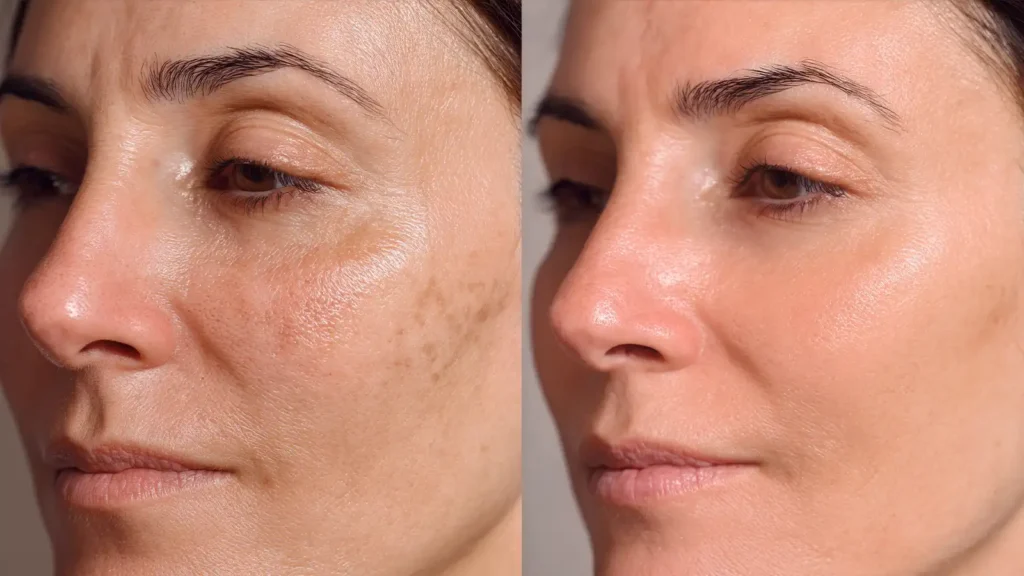
You look in the mirror one morning and notice your jawline is not as defined as it used to be. The skin around your cheeks feels a little softer, a little less bouncy. It is not dramatic, but it is there. And it bothers you. That is exactly where microneedling skin tightening has emerged as one of the most effective non-surgical solutions for restoring firmness and achieving a more youthful complexion. At Elite Women’s Care Med Spa in Hoffman Estates, Illinois, we specialize in advanced radiofrequency microneedling treatments that go far beyond traditional needling. This comprehensive guide explains how the technology works, what results you can expect, and why it has become a cornerstone of modern aesthetic medicine.

RF Microneedling vs Standard Microneedling: At a Glance

FeatureStandard MicroneedlingRF Microneedling
Depth of ActionEpidermis (surface layer)Dermis (deep collagen layer)
Energy TypeMechanical onlyMechanical + Radiofrequency heat
Best ForTexture, minor scarsLaxity, deep wrinkles, scars, tightening

What Is Actually Happening During the Treatment

Here is the thing most people do not realize. Standard microneedling pokes tiny holes in your skin to trigger healing. That is fine for texture and minor scars. But RF microneedling does something entirely different. Those same tiny needles go deeper, and right at the tip they release radiofrequency heat. Think of it like this. The needle creates the pathway, and the heat does the real work down in the dermis where collagen actually lives. That heat causes immediate contraction of existing collagen fibers, which is why some patients swear they see a difference within days. But the bigger story happens over the next three to six months when your fibroblasts go into overdrive producing brand new structural support.

We use the Secret™ RF device at our clinic because it lets us control both depth and energy with serious precision. Your neck needs a different approach than your cheeks. Your décolletage is not the same as your forehead. Cookie cutter settings do not work, and we refuse to use them.

The Three Phases Nobody Talks About

PhaseWhat Happens
Phase 1: Controlled Micro-InjuriesMicroscopic needles create precise channels. Skin launches repair protocol. White blood cells and growth factors activate. Depth adjusts from 0.5mm to 3.5mm based on treatment area.
Phase 2: Deep Thermal EnergyRadiofrequency heat reaches fibroblast cells standard needling cannot touch. Cells get shocked into production mode. New collagen and elastin form at accelerated rate.
Phase 3: Long Term RemodelingResults build gradually over 3-6 months. Skin rebuilds itself from inside out. No pulled skin. No frozen expression. Just firmer, natural looking skin.

“After my third session, I finally stopped using the filter on my selfies. My jawline is back, and my skin just looks healthier. I wish I had started sooner.”
— Elite Women’s Care Med Spa patient, age 42

What Our Patients Actually Notice

The Jawline That Comes Back

This is the number one reason people book. That softening along the jawline where the face meets the neck. After a series of treatments, patients tell us they can see their jawline again in photos. Not dramatically. Just enough to look like themselves from five years ago.

Pores That Finally Behave

Enlarged pores drive people crazy. Topical products help minimally because the issue is structural. The skin around each pore has lost its tautness. Radiofrequency microneedling rebuilds that support structure, so pores sit tighter and appear smaller. Patients who have tried every pore strip and serum on the market are usually shocked that this actually moves the needle.

Scars That Stop Stealing Attention

Acne scars, surgical scars, stretch marks. The deep thermal energy remodels scar tissue in a way surface treatments never could. Flattening happens gradually. Blending happens over time. We have patients who stopped wearing heavy foundation because their scars became something they did not think about anymore.

The Recovery That Fits Real Life

You are red for a day, maybe two. Slightly puffy. Then you are back to work, back to the gym, back to your routine. Compare that to weeks of hiding after aggressive laser resurfacing or the downtime of surgery. For busy professionals and parents, this convenience is not a minor detail. It is often the deciding factor.

“I was terrified of looking overdone. But after RF microneedling, nobody asked if I had work done. They just said I looked well rested. That is exactly what I wanted.”
— Elite Women’s Care Med Spa patient, age 38

Your Treatment Timeline: What to Expect

TimeframeWhat HappensWhat You See
Day 1-2Skin appears red and warm. Mild swelling possible.No visible change yet. Skin feels sensitive.
Week 2-4Early collagen production begins. Surface texture improves.Skin looks smoother and more radiant.
Month 2-3Fibroblasts in full production mode. Deep remodeling active.Noticeable firming and tightening. Jawline more defined.
Month 3-6Peak collagen and elastin levels reached.Optimal results visible. Skin looks firmer, younger, natural.

Who Should Consider This

We do not believe in pushing treatments on people who do not need them. But if you are noticing mild to moderate skin laxity, early fine lines, or textural issues that bother you in certain lighting, this is worth exploring. It is also brilliant as a preventive strategy. Patients in their late twenties and early thirties are starting to use radiofrequency microneedling to stay ahead of aging rather than chasing it later.

The inclusivity matters too. Unlike certain lasers that carry real risks for darker skin tones, this technology does not target melanin. We treat every skin type safely and effectively.

What a Session Actually Looks Like

You come in. We numb you for about thirty minutes. The treatment itself takes another thirty to forty five minutes depending on the areas. You feel warmth and a prickling sensation. Not comfortable, but absolutely manageable. Afterward your skin looks sunburned and feels warm. We send you home with specific aftercare instructions. No mystery. No confusion.

Most people need three to four sessions spaced four to six weeks apart. Then maintenance every six to twelve months depending on your goals and how aggressively you want to preserve results.

Pairing It With Other Treatments

TreatmentHow It Works With RF Microneedling
Medical Grade SkincareSupports collagen production between sessions. Speeds up visible results.
Hyaluronic Acid SerumsDeep hydration enhances plumping effect. Skin looks dewy and youthful.
Broad Spectrum SunscreenProtects newly formed collagen from UV breakdown. Essential for lasting results.
Gentle Chemical PeelsSurface renewal while deeper layers rebuild. Maintains glow between sessions.

“I have done lasers, peels, and every expensive cream on the market. RF microneedling is the only thing that made my skin actually feel different. Firmer. Bouncier. Like it used to be.”
— Elite Women’s Care Med Spa patient, age 51

Ready to See What Your Skin Can Still Do?

Microneedling skin tightening is not about chasing perfection. It is about giving your skin the tools to rebuild what time and sun and stress have slowly taken away. At Elite Women’s Care Med Spa, we have watched hundreds of patients rediscover confidence they thought was gone. Not because they look different. Because they look like the best version of themselves.

If you are curious whether this is right for you, call our Hoffman Estates office at (847) 781-1894. Come in for a consultation. Ask every question you have. We will give you honest answers, realistic expectations, and a plan that actually fits your life.
June 26, 2026

How Long Does Botox Last? Everything You Need to Know Before Your First Treatment

For most people, the question surfaces somewhere between noticing the first forehead crease and reading about injectables for the third time in a month. Botox is one of the most widely performed cosmetic treatments in the country, but reliable, straightforward information can be genuinely hard to find. This article breaks down how long does Botox last, what a typical appointment actually looks like, and what really determines how well your results hold up over time.

The Basic Timeline and Why It Varies

On average, Botox results last between three and four months. That is an honest starting point, but not the complete picture. Several factors shape how long your specific results will hold: your metabolism, how active the treated muscles are, the dosage your provider used, and whether you have had Botox before.

People with faster metabolisms tend to process the neurotoxin more quickly, which can shorten the duration. First-time patients sometimes notice results fading sooner than those who have maintained consistent appointments over time. With regular treatments, many patients find their results naturally begin to extend. When targeted muscles spend so much time in a more relaxed state, they take longer to fully reactivate between sessions.

How the Treatment Area Shapes Longevity

Where you receive Botox matters almost as much as how much is used. Muscles that move frequently through daily expressions tend to break down the product faster than smaller, less active muscle groups.

Treatment AreaTypical Duration
Forehead lines3 to 4 months
Frown lines (between the brows)3 to 5 months
Crow’s feet3 to 4 months
Lip flip2 to 3 months
Masseter (jaw slimming)4 to 6 months
Neck bands3 to 4 months

Botox forehead results are among the most satisfying for new patients. Forehead lines often appear earlier than other signs of aging, so treating that area tends to produce a noticeable refresh without requiring changes across multiple areas at once. The improvement is visible but not dramatic, which is exactly what most patients are looking for. Botox forehead results also tend to be consistent from cycle to cycle, making the forehead one of the more predictable areas to treat.

What Your Appointment Will Actually Look Like

If you have been trying to figure out first time Botox what to expect, here is the practical version. Your visit starts with a consultation where your provider examines your facial muscles and listens to your concerns. They look at how your face moves in real expressions, not just at rest, because that information guides where and how they inject.

The injections themselves take 10 to 15 minutes. Most patients are surprised by how quickly the actual treatment goes. The needles used are very fine, considerably thinner than what you would encounter with most routine medical procedures.

Does Botox hurt? Most patients say no, or at least not meaningfully. The most accurate description is a quick pinch at each injection point, lasting a second at most. Areas around the eyes and lips are slightly more sensitive than the forehead, but even there, any discomfort passes within seconds. If you are particularly needle-averse, ask your provider about a topical numbing cream ahead of time.

Results take time to develop. You will not leave the office looking different. The neurotoxin takes a few days to begin working, and full effects are visible around 10 to 14 days after treatment. Many providers schedule a brief follow-up at the two-week mark to assess results and make any minor adjustments. That follow-up is also a good opportunity to revisit first time Botox what to expect in terms of maintenance, so you know what to plan for going forward.

Does Botox hurt enough to deter most patients? It does not. The bigger concern for most first-timers is whether the results will look natural, which largely depends on the skill and conservatism of the injector.

Units, Dosage, and the Right Conversation to Have

One of the first questions patients raise in consultations is about dosage. How many units of Botox do I need depends on your specific anatomy, the strength of the muscles being treated, and the depth of the lines involved.

General ranges by treatment area:

  • Forehead lines: 10 to 20 units
  • Between the brows (glabellar lines): 15 to 25 units
  • Crow’s feet: 5 to 15 units per side
  • Lip flip: 2 to 6 units

These are approximate ranges, not fixed prescriptions. A skilled injector assesses your muscles directly and adjusts from there. Under-dosing leads to weak, short-lived results. Over-dosing leads to the stiffened appearance that most patients specifically want to avoid.

Knowing how many units of Botox do I need is also useful when evaluating pricing. Many clinics charge per unit, so understanding typical dosage ranges gives you the context to compare providers accurately rather than reacting to headline prices alone.

Before and After: What the Change Actually Looks Like

Browsing Botox before and after photos can help set expectations, though they do not capture everything. The change Botox produces is subtle by intention. You will still look like yourself. Lines soften. The face reads as more rested and more open. It is not a dramatic overhaul, and patients who go in expecting a gradual, natural improvement tend to be the most satisfied.

In the hours immediately after your appointment, mild redness or small raised spots at the injection sites are normal and resolve within a few hours. A mild headache is possible, particularly after forehead treatment, but it typically passes the same day.

Botox before and after results develop gradually over the first two weeks. Patients who check their results in the first three or four days sometimes feel underwhelmed. The change continues to settle, and the full outcome is clearest at around day ten to fourteen. That is why the two-week follow-up appointment exists.

Aftercare That Protects Your Results

How long does Botox last is influenced not just by your body chemistry but by what you do in the 48 hours following your appointment. The Botox aftercare tips your provider gives you are specific and worth taking seriously.

Stay upright for at least four hours after treatment. Do not rub or press on the treated areas, as pressure can shift the product before it has fully settled into the muscle. Skip intense exercise for 24 hours, and hold off on saunas, hot tubs, and steam rooms for 48 hours. Avoid alcohol on the day of your appointment, and hold off on anti-inflammatory medications like ibuprofen if you can, as these increase bruising risk.

In the weeks and months that follow, consistent sunscreen use and a solid daily skincare routine help maintain your skin quality between sessions. Staying consistent with Botox aftercare tips across multiple treatment cycles also gives your provider cleaner data on how your body responds, which helps them refine your dosage and technique over time.

When to Book Your Next Appointment

How long does Botox last for you specifically becomes clearer after your first few treatment cycles. Most providers recommend returning around the three-month mark, before the product has fully worn off. Treating while some residual effect remains helps maintain continuity rather than resetting to zero each time.

If you notice results fading before the three-month window, bring it up at your next visit. Small adjustments in dosage or technique can often make a meaningful difference in longevity. On the other hand, if your results are lasting closer to five months, that is useful information too.

After a year of regular treatments, how long does Botox last becomes less of a preoccupation for most patients. The appointments fit into a routine, the results feel predictable, and the focus shifts from logistics to how they feel in between. That shift in perspective is usually a sign that Botox has become a natural part of someone’s self-care rhythm rather than a special occasion.

A Practical Starting Point

Botox is low commitment, quick, and, when done well, impressively natural in its results. It is not permanent, and it is not meant to be. What it offers is a reliable, non-surgical way to manage early signs of aging on a schedule that works around your life.

How long does Botox last matters most to people who are still deciding whether the maintenance cadence fits their life. For most patients who try it, the time investment is manageable and the results justify the schedule. A 15-minute appointment every three to four months is a commitment most people find easy to keep.

If you are ready to explore what Botox can do for you, a consultation with a qualified, experienced provider is the right first step. They can look at your specific concerns, give you a realistic picture of what to expect, and help you decide whether it aligns with your goals.

June 26, 2026

Medical Weight Loss in Hoffman Estates: Is Semaglutide the Right Option for You?

Weight loss is one of those topics where the conventional advice has stayed more or less the same for decades: eat less, move more, and be patient. For many people, that approach works. For many others, it simply does not, and the reason has very little to do with effort or discipline. The biology of weight regulation is far more complicated than a calorie equation, which is why medical weight loss in Hoffman Estates through a supervised clinical program has attracted so much genuine interest in recent years. Semaglutide, a medication originally developed for type 2 diabetes, has significantly changed what medically assisted weight management can accomplish.

Why Standard Approaches Fall Short for Many Patients

The body is remarkably effective at defending against weight loss. When caloric intake drops significantly, appetite increases, metabolism slows, and hunger signals become more persistent. That is not a willpower problem. It is a physiological response that has been well documented in clinical research for decades.

Medical weight loss works differently because it addresses those underlying mechanisms rather than just behavior. A supervised program accounts for hormonal factors, metabolic function, lifestyle variables, and health history, then applies interventions that align with how the body actually operates rather than how we wish it would.

For patients who have tried conventional methods without lasting results, medical weight loss in Hoffman Estates offers a more targeted and individualized path forward. It starts with a proper clinical evaluation rather than a generic plan that looks the same for every patient who walks through the door.

What Semaglutide Is and How It Works

Semaglutide belongs to a class of medications called GLP-1 receptor agonists. GLP-1 is a hormone the body produces naturally after eating. It signals fullness to the brain, slows the rate at which the stomach empties, and reduces hunger between meals.

As a prescription treatment, semaglutide in Hoffman Estates is administered as part of a comprehensive supervised program. The goal of medical weight loss in Hoffman Estates is not to substitute for healthy habits but to support them by reducing the constant biological pressure to eat beyond what the body needs. The medication works best alongside dietary adjustments and lifestyle changes, not as a replacement for them.

Originally developed to manage blood sugar in patients with type 2 diabetes, semaglutide was later found to produce significant weight reduction as a secondary outcome. That discovery led to its approval as a dedicated weight loss treatment under the brand name Wegovy, while the diabetes formulation sold as Ozempic became widely discussed in weight management contexts as well.

If you have been searching for semaglutide in Hoffman Estates, understanding how the medication fits into a broader supervised program is important before making any decisions about treatment.

Who Is a Good Candidate?

Not everyone who wants to lose weight is an automatic candidate for semaglutide or any injectable weight loss treatment. A proper clinical evaluation is necessary to determine whether the medication is appropriate for your specific situation.

Typical candidacy criteria include a body mass index of 30 or higher, or a BMI of 27 or higher combined with at least one weight-related health condition such as elevated blood pressure, high cholesterol, or type 2 diabetes. Your provider will review your full health history during the evaluation.

Certain conditions may make semaglutide inappropriate, including a personal or family history of specific thyroid cancers, certain gastrointestinal conditions, and pregnancy. A thorough consultation ensures these factors are considered individually.

Searches for weight loss injections near me have increased sharply in recent years, which reflects the genuine demand for supervised medical options. That popularity also means patients need to evaluate providers carefully. A reputable GLP-1 clinic in Hoffman Estates will conduct a real medical evaluation before writing any prescription. If a provider is ready to prescribe after a brief intake form with no lab work and no meaningful clinical conversation, that is a signal worth paying attention to.

What the Results Timeline Actually Looks Like

Semaglutide results timeline expectations are important to set clearly from the start, because the medication does not work the same way for everyone and progress is gradual by design. Here is a general picture of how results tend to develop:

Weeks 1 to 4

The starting dose is intentionally low to allow the body to adjust. Some patients notice reduced appetite within the first two weeks. Weight loss during this phase is typically modest, often in the range of one to three pounds.

Months 1 to 3

As dosing increases gradually, appetite suppression becomes more consistent. Most patients begin seeing more noticeable changes. Clinical studies report average weight loss of 5 to 10 percent of starting body weight during this window, though individual results vary considerably.

Months 3 to 6

Results become more visible and many patients describe a meaningful shift in their relationship with food. Portion control feels less effortful, and the compulsion to overeat diminishes for most patients during this period.

Six Months and Beyond

Studies show average weight loss of 15 percent or more of starting body weight over 12 to 18 months with continued use and lifestyle support. The semaglutide results timeline ultimately depends on starting weight, dosage, adherence to the program, and the lifestyle adjustments made alongside the medication.

Most patients in clinical trials using semaglutide for weight loss lost significantly more weight than those using a placebo, with many achieving reductions of 15 to 20 percent of their body weight over approximately 68 weeks of treatment, according to the STEP trial data published in the New England Journal of Medicine.

What a Supervised Program Involves

A medical weight loss program in Illinois that is properly structured includes considerably more than a prescription. At a qualified clinic, patients should expect an initial consultation and thorough health history review, baseline lab work to assess metabolic health and rule out contraindications, regular monitoring of weight, side effects, and overall health indicators, follow-up appointments to adjust the plan as needed, and access to nutritional guidance and lifestyle support throughout the process.

This structure matters because semaglutide performs best as part of a comprehensive approach. Medical weight loss in Hoffman Estates at a well-run practice combines the medication with the kind of ongoing support that addresses the full picture of a patient’s health, not just the number on the scale.

Patients who receive consistent support alongside the medication achieve better outcomes and maintain results more reliably than those who treat it as a standalone pharmaceutical intervention. Weight loss injections near me searches return a wide range of options. Asking specific questions about the evaluation process, monitoring frequency, and who supervises care is always a reasonable step before committing to any program.

A medical weight loss program in Illinois should also prepare patients for long-term maintenance. The goal is not simply to lose weight during the treatment period but to build habits and a health foundation that support sustained results.

Questions Patients Commonly Ask

Is semaglutide the same as Ozempic?

Ozempic and Wegovy both contain semaglutide but are formulated differently. Ozempic is approved for type 2 diabetes management, while Wegovy is the formulation specifically approved for chronic weight management. Dosing protocols differ between the two. Your prescribing provider determines which formulation and starting dose is appropriate based on your health history and goals.

What are the most common side effects?

Nausea is the most frequently reported side effect, particularly during the initial dose escalation phase. Most patients find it manageable and temporary. Other possible effects include mild stomach discomfort, constipation, and fatigue in the early weeks. These typically reduce as the body adjusts to the medication.

Does insurance cover semaglutide for weight loss?

Coverage varies widely depending on your specific plan and the diagnosis code under which the prescription is written. Your provider’s office can help verify coverage and discuss alternatives if the medication is not currently covered under your plan.

The Right Starting Point

Medical weight loss in Hoffman Estates at Elite Women’s Care begins with a real conversation about your health history, your goals, and whether semaglutide or another supervised approach makes sense for your situation. If you have been working to manage your weight without lasting success, or if you simply want to understand your options, a consultation is the logical first step.

This is not a program built for rapid, temporary results. The goal is lasting change, grounded in your actual health profile and supported throughout the process with the kind of clinical oversight that makes a real difference. If that is what you are looking for, the path forward starts with one appointment.

May 19, 2026

Secret RF: The Gold Standard for Non-Surgical Skin Tightening

If you have spent any time researching how to refresh your skin without going under the knife, chances are you have come across Secret RF Microneedling more than once. Secret RF Microneedling has earned a reputation as one of the most reliable, results driven aesthetic treatments available today, and the buzz around it is more than marketing.

What makes this treatment so different from the dozens of other options on the market? Why are dermatologists, aestheticians, and patients alike calling it a gold standard? Let us walk through the science, the experience, and the very real outcomes that have placed this treatment at the top of so many skincare conversations.

A New Era of Skin Renewal Has Quietly Arrived

For years, anyone hoping to firm up loose skin, fade deep scars, or smooth fine lines had two real choices. Either invest in surgery with all its costs and downtime, or accept that topical creams could only do so much. That gap left a lot of people frustrated, especially those in their thirties, forties, and fifties who wanted meaningful change without dramatic intervention.

Then came a wave of energy based devices that combined microneedling with radiofrequency. These technologies took the best of two proven worlds and merged them into a single, elegant treatment. The non-surgical skin tightening category exploded, and Secret RF quickly rose to the top of the conversation because of how reliably it delivered visible improvement.

The appeal is simple. Patients want results that look natural, recovery times that fit into a busy life, and a treatment plan that does not require them to disappear for weeks. Non-surgical skin tightening checks every one of those boxes when performed with the right device and the right hands.

Understanding What Secret RF Actually Does

At its core, Secret RF Microneedling is a fractional radiofrequency treatment that combines two well established principles. First, ultra fine needles create controlled micro channels in the skin. Second, those needles deliver radiofrequency energy directly into the deeper layers, exactly where collagen and elastin live and rebuild.

The reason this matters is that surface treatments can only reach so far. Many lasers heat the surface aggressively to trigger deeper change, which often means more downtime and risk for darker skin tones. A fractional radiofrequency treatment skips the surface and delivers heat where it does the most good, leaving the outer skin largely untouched.

Why the Combination Beats Either One Alone

Microneedling on its own is a respected treatment, but its impact lives mostly in the upper dermis. Radiofrequency on its own can be effective, but reaching deeper structures uniformly is tricky without needles. Bringing them together creates something far greater than the sum of its parts.

The needles open precise pathways. The radiofrequency energy travels through those pathways into the dermis, where it gently heats tissue to the temperature that signals the body to produce fresh collagen, elastin, and hyaluronic acid. The result is firmer, smoother, more elastic skin that looks like an improved version of yours rather than something artificial.

Safe for More Skin Tones Than Most Devices

One of the lesser discussed advantages of this fractional radiofrequency treatment is its versatility across the Fitzpatrick skin tone scale. Many resurfacing lasers carry a higher risk of pigmentation issues on medium to deeper skin tones. Because radiofrequency energy bypasses the melanin in surface skin, this approach is widely considered safer for a much broader range of patients.

The Concerns This Treatment Was Designed to Address

Few aesthetic treatments are as versatile. The RF Microneedling benefits stretch across a wide range of skin concerns, which is why so many providers consider it a core offering rather than a niche service.

“When patients ask me which single treatment offers the best overall return on their investment, I almost always start with this one. It addresses tone, texture, scarring, and laxity in one session.” A common reflection from board certified dermatologists

The RF Microneedling benefits include improvement in fine lines, mild to moderate skin laxity, enlarged pores, uneven texture, stretch marks, and the long discussed challenge of scarring. Patients who want fewer treatments with broader impact tend to gravitate toward this option for exactly that reason. Among the most appreciated RF Microneedling benefits is how natural the progression looks, with skin that improves quietly over weeks rather than announcing itself overnight.

A Closer Look at What This Treatment Can Improve

ConcernHow the Treatment HelpsAverage Timeline
Mild to moderate skin laxityBoosts deep collagen and tightens tissueVisible in 6 to 12 weeks
Acne scarringRemodels scar tissue with energy and micro injuryImprovement over 3 sessions
Fine lines and early wrinklesStimulates elastin renewalGradual over 8 to 10 weeks
Enlarged poresTightens surrounding tissue, refining appearanceOften noticed by session two
Uneven textureEncourages smooth, even surface regenerationSteady improvement over months

This versatility is part of why skin rejuvenation results from a single treatment plan can feel so transformative. Rather than chasing each concern with a different machine, patients can address multiple goals at once.

Real Talk on Acne Scars and Long Term Texture

Scarring, particularly from cystic or persistent acne, is one of the toughest aesthetic concerns to address. Topicals rarely make a dent, and aggressive resurfacing can be harsh. This is where acne scar removal solutions powered by RF microneedling have changed the landscape.

By targeting the fibrous tissue beneath atrophic scars and stimulating fresh collagen in those areas, this approach gradually fills in depressions and softens the texture. Most patients see meaningful change after three sessions, with continued improvement over the following months as collagen matures. The shift in confidence that follows is hard to overstate. Many people who tried every other option describe acne scar removal solutions of this kind as the first thing that truly delivered.

For those with rolling or boxcar scars in particular, acne scar removal solutions built around fractional radiofrequency tend to outperform more traditional methods, especially on skin tones that historically struggled to find safe options.

What an Actual Treatment Day Looks Like

The experience itself is far less intimidating than many newcomers expect. A numbing cream is applied first, usually sitting on the skin for 30 to 45 minutes. Once the area is properly numbed, the treatment itself takes around 20 to 40 minutes depending on the zones being treated.

Patients commonly describe the sensation as a series of warm pressure points rather than sharp pain. Afterward, the skin looks flushed, similar to a strong workout glow, and that subsides within one to three days. Most people return to normal activities the next day, with mild redness being the only visible reminder.

How Many Sessions to Expect

A typical protocol involves three sessions spaced four to six weeks apart. Skin rejuvenation results tend to build through this series rather than appearing all at once, which is actually a good thing because the change looks gradual and natural. Skin rejuvenation results continue to improve for up to six months after the final session as collagen continues to remodel.

Setting Honest Expectations Before You Book

This treatment is powerful, but it is not a face lift in disguise. For severe sagging or deep volume loss, surgical or injectable solutions may still be appropriate. The candidates who tend to be happiest are those with mild to moderate concerns who want meaningful but realistic improvement.

Skin rejuvenation results also depend on aftercare. Diligent sun protection, hydration, and a sensible skincare routine multiply the impact of every session. Non-surgical skin tightening works best when treated as a partnership between provider and patient rather than a one off appointment. The most striking RF Microneedling benefits tend to show up in patients who follow through on home care between sessions.

Choosing the Right Provider Matters More Than the Machine

Two providers with the same device can produce noticeably different outcomes. Technique, depth selection, energy settings, and post care guidance all influence how well a fractional radiofrequency treatment performs. Look for clinics where the practitioner takes time to understand your skin goals, examines your concerns thoroughly, and tailors the protocol to your specific anatomy and tone.

A trustworthy provider will be honest if Secret RF Microneedling is not the right fit for your particular concern. That honesty is worth more than any promotional offer. Non-surgical skin tightening at its best is consultative, customized, and grounded in realistic conversation.

Why Patients Keep Coming Back to This Treatment

Trends come and go in aesthetics, yet certain treatments earn their place because they consistently deliver. Secret RF Microneedling sits firmly in that category. It addresses a wide spectrum of concerns, suits a broad range of skin tones, requires modest downtime, and produces the kind of refined, natural looking improvement that people actually want.

If you have been searching for something that bridges the gap between topical skincare and surgical intervention, this is the conversation worth having. The combination of safety, versatility, and genuinely visible improvement explains why Secret RF Microneedling has become the benchmark by which other skin tightening treatments are now measured, and why so many patients return for maintenance year after year.

Network Insurances
  • Aetna HMO
  • Aetna POS
  • Aetna PPO
  • Ambetter
  • Ascension Health
  • BCBS
  • BCBS HMO & PPO
  • Bright Health
  • Cigna
  • CIGNA Healthspring Medicare Advantage
  • Cigna HMO
  • Cigna POS
  • Cigna PPO
  • Clear Spring
  • GEHA
  • Health Network Option (Open Access)
  • HealthLink PPO
  • Humana
  • Medicare Advantage
  • MultiPlan
  • PHCS
  • SmartHealth
  • Unite Here Health
  • United Health Care
  • WellCare