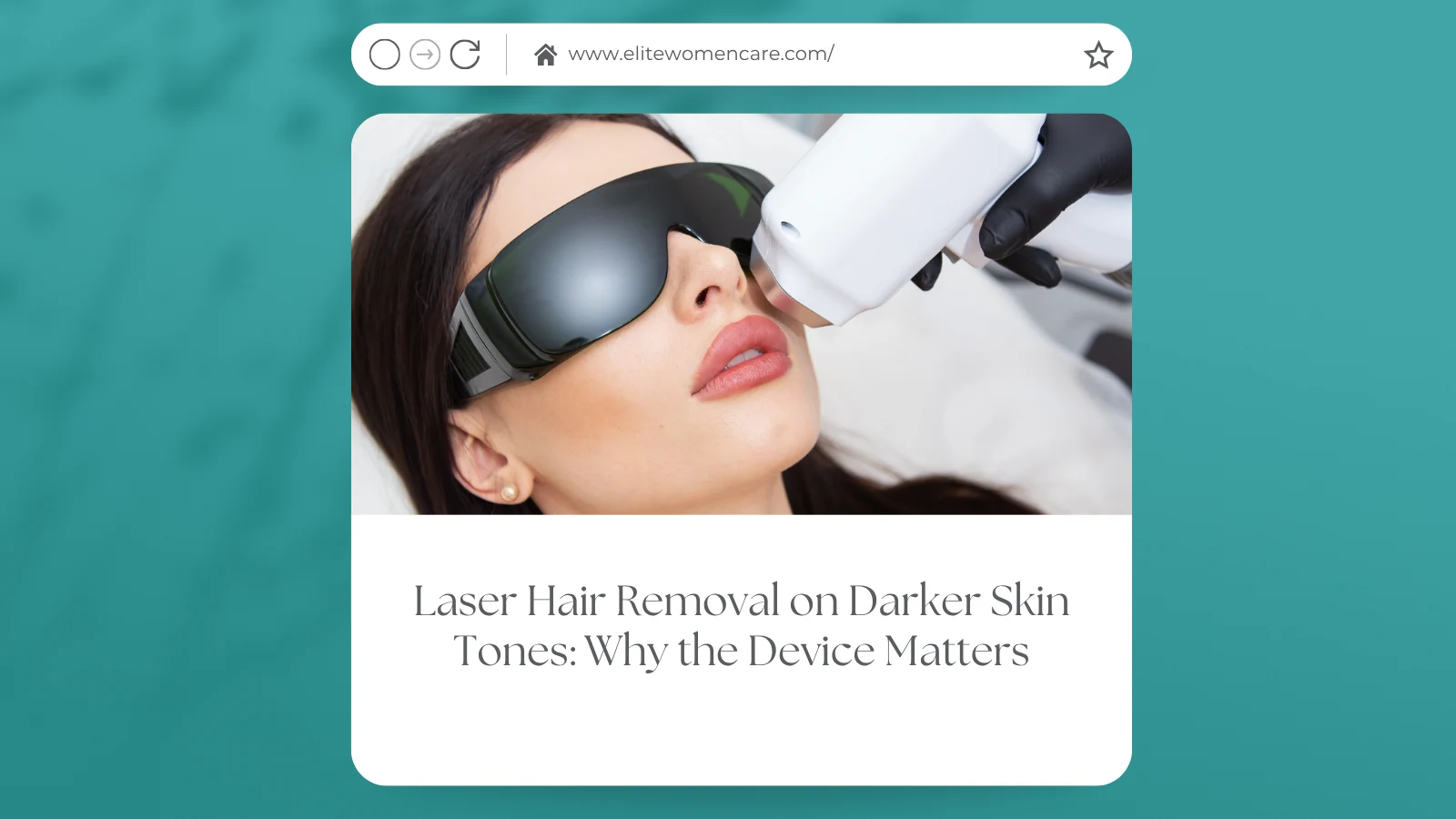
Laser Hair Removal on Darker Skin Tones: Why the Device Matters
For years, laser hair removal for darker skin tones carried a reputation it never fully deserved: risky, unpredictable, prone to burns or lingering discoloration. That reputation was not really about the treatment itself. It was about the equipment doing the treating, and a lot of clinics simply were not using the right machine for the skin sitting in the chair.
Technology has moved on considerably since those early warnings became common knowledge, though plenty of patients still walk in with understandable hesitation, and that hesitation deserves a real answer rather than a brush-off.
Why Older Lasers Left Darker Skin Behind
Most first-generation hair removal lasers relied on a single, high-intensity pulse targeting melanin, the pigment responsible for hair color. The problem is that melanin does not only live in the hair follicle. It also sits in the surrounding skin, and in melanin-rich skin, a strong single pulse struggles to tell the difference between the two.
That confusion is where hyperpigmentation risk comes from. When a laser dumps too much energy into the skin’s surface rather than the follicle beneath it, the result can be burns, patchy discoloration, or dark marks that take months to fade. Patients with Fitzpatrick IV through VI skin types were, for a long time, told to simply avoid laser treatment altogether rather than risk it.
That advice was not wrong given the tools available at the time. It is outdated now, and treating it as gospel today does a disservice to patients who could otherwise get excellent, predictable results.
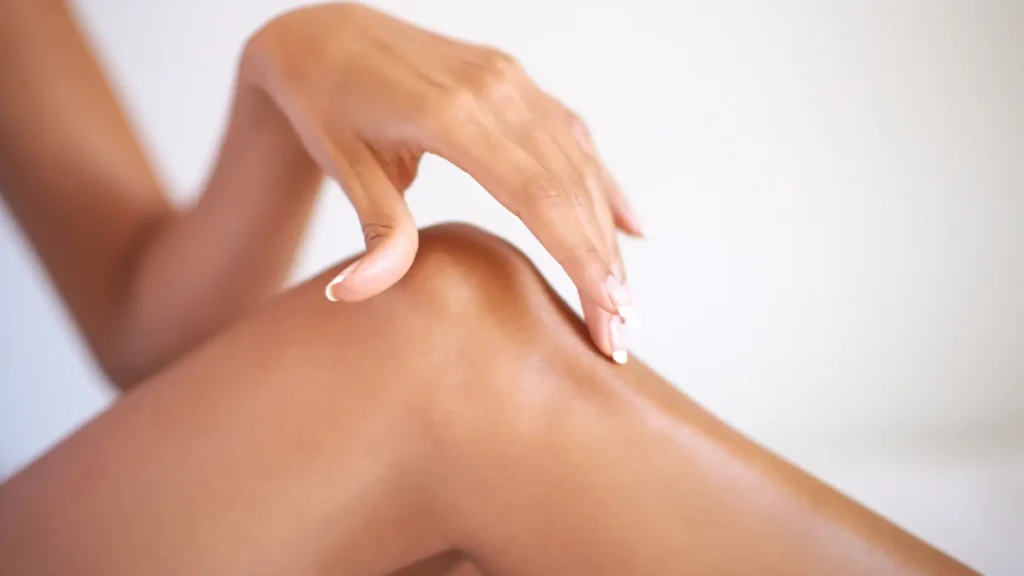
What Actually Makes Soprano Titanium Different
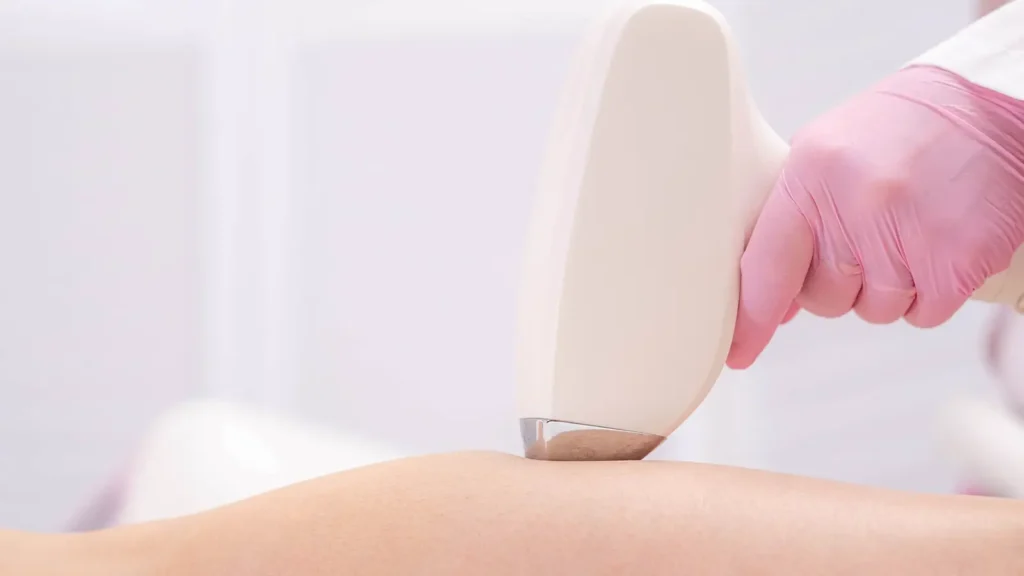
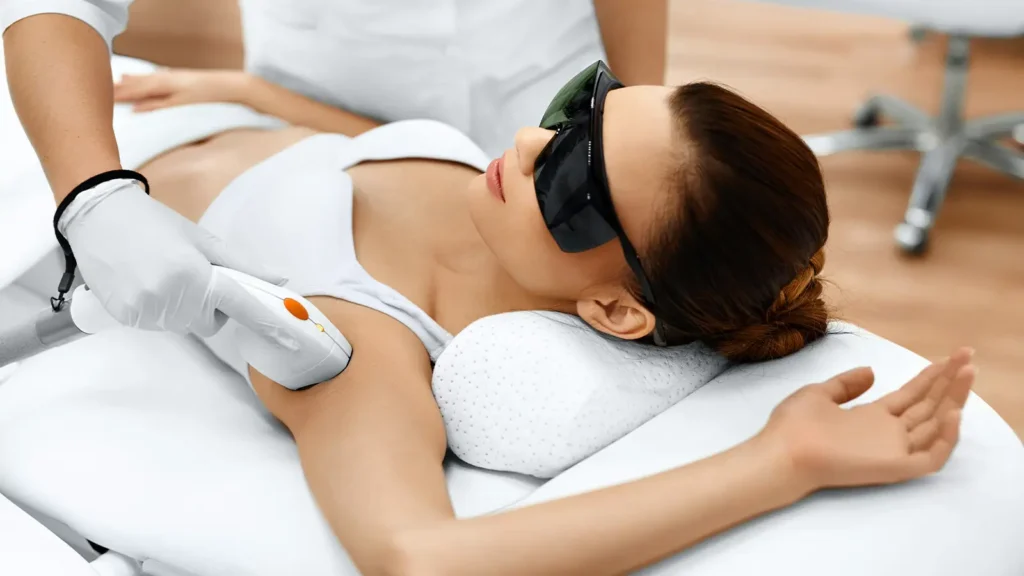
Soprano Titanium approaches the problem from an entirely different angle. Instead of firing one aggressive pulse and hoping the follicle absorbs more heat than the surrounding tissue, it delivers energy gradually, in a slow sweep, using a cooled handpiece that keeps the skin’s surface comfortable throughout the session.
This gradual heating method, sometimes described as an in-motion or sweeping technique, gives heat time to build safely at the follicle without overwhelming the skin above it. Patients typically describe the sensation as a steady warmth rather than a sting, and it is one of the main reasons Soprano Titanium has become the standard many providers now recommend for melanin-rich skin.
“The biggest misconception patients bring in is that laser hair removal for darker skin tones is inherently more dangerous. It isn’t. It’s the device that was dangerous, not the skin. Once you switch to a machine built for gradual heating, the safety profile changes completely.”
That distinction, between skin being risky and outdated equipment being risky, sits at the center of nearly every conversation we have about laser hair removal for darker skin tones.
Where Fitzpatrick Skin Type Comes Into the Conversation
Every laser hair removal consultation should start with an honest look at your Fitzpatrick skin type, a classification scale running from I, very fair, to VI, deeply pigmented. This scale exists precisely because skin does not behave uniformly under laser energy, and a device calibrated for type II skin can genuinely injure someone with type V or VI skin if used carelessly.
Knowing your Fitzpatrick skin type before booking is not a formality. It determines settings, pulse duration, and in older systems, whether treatment should happen at all. With multi-wavelength platforms, that same classification instead becomes a guide for fine-tuning rather than a reason for exclusion, which is a meaningful shift for anyone who was turned away in the past.
The Nd:YAG Advantage for Deeper Melanin
The technical detail that matters most for darker skin is wavelength. Soprano Titanium combines three: 755nm, 810nm, and 1064nm. That last figure, the Nd:YAG wavelength, penetrates more deeply and is far less attracted to surface melanin than shorter wavelengths.
Because Nd:YAG energy bypasses much of the pigment sitting near the skin’s surface, it can reach the follicle beneath without overheating the layers above it. This is the physics behind why laser hair removal for darker skin tones works reliably on a properly equipped multi-wavelength device but carries real hyperpigmentation risk on a single-wavelength alexandrite laser, which was never designed with deep melanin in mind.
Preparing for Your Appointment
A little preparation goes a long way toward keeping hyperpigmentation risk as low as possible. Shave the treatment area within a day of your appointment rather than waxing or plucking, since the laser needs a hair root to target, not surface hair. Avoid sun exposure and self-tanner for at least two weeks beforehand, since freshly tanned or sunburned skin temporarily raises surface melanin and complicates settings.
Retinoid products and certain acne medications can also increase sensitivity, so most providers ask patients to pause these for a few days before treatment. None of this is complicated, but skipping it is one of the more common reasons results end up less even than expected.
What a Session Actually Feels Like
Most appointments run between fifteen and forty-five minutes depending on treatment area. The handpiece stays cool to the touch throughout, and patients frequently comment that the sensation resembles a warm massage more than the snapping-rubber-band feeling associated with older devices.
Redness is possible immediately afterward, generally subsiding within a few hours. There is no meaningful downtime, no blistering, and no reason to avoid daily activities.
How Many Sessions You’ll Actually Need
A typical course, usually six to eight sessions spaced several weeks apart, produces a lasting reduction in hair growth as follicles cycle through their natural growth phases. Fewer sessions than that tend to undertreat the follicle, since hair grows in staggered cycles rather than all at once.
Aftercare That Actually Protects Your Skin
Sun protection matters more after treatment than before it. Freshly treated, melanin-rich skin is briefly more reactive, and unprotected sun exposure in the days following a session raises hyperpigmentation risk unnecessarily. A broad-spectrum sunscreen, reapplied if you are outdoors, is the single most useful habit here.
Keep the area cool for the first 24 hours, skip hot showers and saunas if you can, and moisturize gently rather than applying active skincare ingredients like retinol or exfoliating acids until any redness has fully settled.
A surprising number of the myths still circulating about laser hair removal for darker skin tones trace back to a handful of bad outcomes from a decade ago, long before multi-wavelength devices became widely available.
Common Myths Worth Retiring
Myth: Darker skin should always avoid laser hair removal. This was reasonable advice a decade ago and is no longer accurate for patients treated with modern multi-wavelength equipment built for melanin-rich skin.
Myth: Tanned skin makes any laser safer to use. The opposite is often true. Tanned skin temporarily raises surface melanin, and even devices well suited to darker skin generally recommend avoiding recent sun exposure before treatment.
Myth: More painful means more effective. Comfort and effectiveness are not the same variable. A gradual heating approach can be both more tolerable and more precise than a harsh single pulse.
Quick Answers Before You Book
Is laser hair removal for darker skin tones painful? Most patients describe warmth rather than pain, particularly with in-motion, multi-wavelength devices designed with comfort in mind.
Why does Nd:YAG matter so much for my skin tone? Its longer wavelength travels deeper and skips past most of the surface pigment, which lowers hyperpigmentation risk considerably compared to shorter-wavelength lasers used alone.
What if I’m not sure of my Fitzpatrick skin type? That’s exactly what your consultation is for. A trained provider will assess it in minutes and choose settings accordingly, no guesswork required on your part.
Booking at Elite Women’s Care in Hoffman Estates
Our Hoffman Estates team treats every consultation as an assessment first, not a sales pitch. We evaluate your Fitzpatrick skin type, discuss your hair growth pattern, and walk through exactly how Soprano Titanium settings will be tailored to you before a single pulse is delivered.
If you have been told in the past that laser hair removal for darker skin tones was not an option for your complexion, we would genuinely welcome the chance to have that conversation again with current technology on the table. Reach out to schedule a consultation, and we will show you the device, explain the settings, and answer every question before you commit to anything.